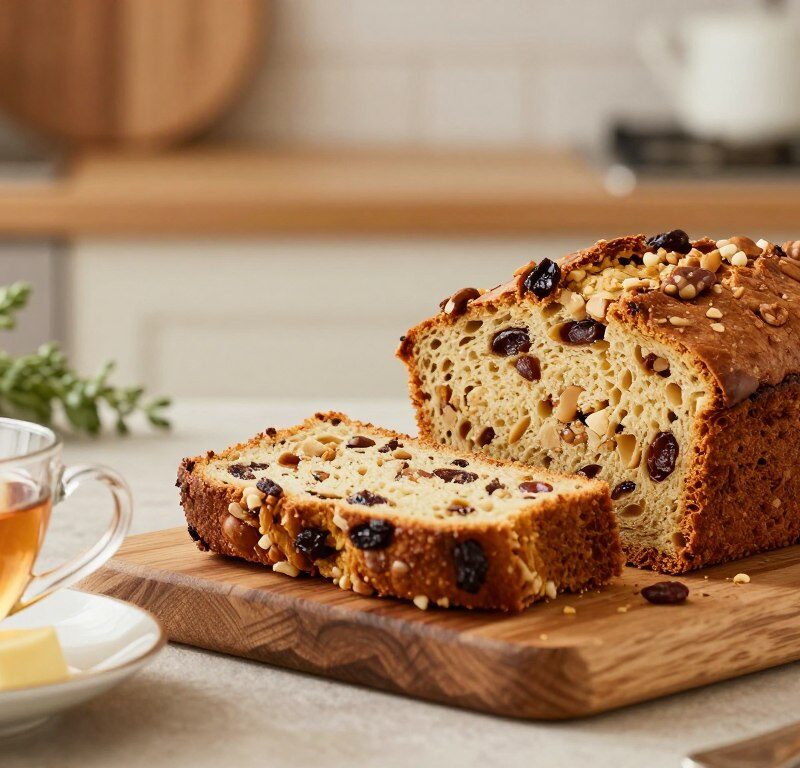
This classic British loaf is lightly spiced, gently sweet and wonderfully moist. The method is simple: soak bran cereal and dried fruit in brewed tea, then mix and bake into a homely loaf.
It suits a lazy morning or a cosy afternoon. The recipe is reliable and comes together with minimal effort, making it ideal for cooks who want steady results. Resting the loaf improves the flavour, so it often tastes best a day after baking.
Serve slices with a hot cup tea and you have a comforting snack or breakfast. We will explore simple techniques that help you master this fruit loaf and achieve a perfect bake every time.
Key Takeaways
- The loaf blends wholesome cereal with rich, steeped tea flavour.
- The recipe is straightforward and uses basic pantry staples.
- Soaking fruit and cereal in tea gives extra moisture and depth.
- Allowing the loaf to rest enhances the flavour.
- Pairs beautifully with a cup tea for breakfast or a snack.
The Timeless Appeal of Mary Berry All Bran Tea Bread
A simple soak of cereal and dried fruit in hot brew transforms pantry staples into a satisfying, everyday loaf made for slicing and sharing.
The recipe’s charm is its honest approach: basic ingredients, clear steps and dependable results that any home baker can trust.
The crumb is lighter than a rich cake and the texture feels wholesome and tender. This makes the loaf ideal for daily breakfasts or a mid‑afternoon treat with butter.
It also keeps exceptionally well. Flavours deepen overnight, so the bake often tastes best the next day. That reliability is why many choose to make mary recipes when they want a steady, crowd‑pleasing result.
- Simple ingredients yield consistent flavour and moisture.
- Accessible method suits bakers of all levels.
- Stays fresh for several days and improves with resting.
Essential Ingredients for Your Loaf
A well-balanced ingredient list makes this comforting loaf both easy and forgiving. Gather simple storecupboard items and measure them before you start to keep the process calm and steady.
For this mary berry inspired bake you will need 150g All‑Bran cereal and 200g mixed dried fruit to form the base. Use 300ml of strong hot tea to rehydrate the fruit and give depth to the flavour.
- Soft brown sugar – 100g to add sweetness and moisture.
- Self‑raising flour – 150g to ensure the loaf rises well.
- Egg – one large, the main binder for the batter.
- Mixed spice – 1 teaspoon for warm notes.
Tip: These plain ingredients make the recipe reliable and budget friendly. Preparing them in advance keeps mixing quick and helps produce a consistent, moist loaf every time.
Selecting the Perfect Dried Fruit Mix
A well‑chosen fruit mix is the secret to a loaf that sings. Use 200 g of mixed dried fruit as the base and pick combinations that balance sweetness and chew.
Raisins and sultanas work well together. Raisins give a deep, caramel note while sultanas add brightness and a soft texture. You can include currants for extra tang, or add dried cranberries or cherries for a sharper hit.
Raisins and Sultanas
Choose high‑quality raisins and sultanas. If using ready mixed packets you will usually find raisins, sultanas, currants and mixed peel already blended for convenience.
Adding Citrus Peel
For freshness, fold in a little orange or lemon zest. The tiny amount of zest brightens the entire loaf and pairs especially well with dried cherries or apricots.
- Chop larger pieces (apricots, prunes, dried apple) so fruit distributes evenly.
- Use a variety of textures — chewy raisins and plump sultanas create interest.
- Adjust the mix to taste; currants add a pleasant tartness.
| Fruit | Role | Use in 200 g mix |
|---|---|---|
| Raisins | Deep flavour, chew | 60–80 g |
| Sultanas | Sweetness, softness | 60–80 g |
| Currants / cherries | Tart contrast | 30–50 g |
| Chopped apricots / prunes | Texture variety | 20–40 g |
“Selecting high‑quality mixed dried fruit is the secret to a flavourful loaf.”
Why Soaking the Fruit is Crucial
Allow the cereal and dried fruit to sit in hot tea for at least an hour. This simple step softens the bran and gives the loaf a reliably tender crumb.
Hot liquid works faster. Pour brewed tea over the All‑Bran and dried fruit, then leave to soak. The fruit soaks up the brew and plumps beautifully.

If you are short of time, two hours is the minimum to avoid a dry centre. Many bakers prefer to prepare the night before; longer soaking almost always improves moisture and flavour.
The process also transforms the mixture. Properly fruit soaked ingredients prevent a dense texture and help the loaf bake evenly.
- Leave soak: at least one hour for softened bran and fruit.
- Minutes count: hotter brew shortens the soak time and speeds plumping.
- Tip: soak overnight for the best depth of flavour and moistness.
“Soaking converts pantry staples into a moist, steady loaf that slices cleanly and keeps well.”
Choosing the Right Tea for Depth of Flavour
Selecting a strong infusion gives your loaf a clear flavour base. The brew you use will colour the background notes and lift the dried fruit inside the batter.
Earl Grey brings a delicate, floral edge thanks to bergamot. This is the suggestion often linked to mary berry for a refined finish.
Earl Grey versus black blends
For a more traditional profile, use a robust black brew. It pairs well with sweet fruit and supports the loaf’s spice.
- Try Chai for spicy warmth that echoes mixed spice.
- Rooibos (redbush) gives a smooth, caffeine‑free option with maple‑like notes.
- Fruit‑infused varieties (lemon & ginger, red fruits) can add bright or tangy accents.
Brewing tip: Use two strong teabags to 300ml boiling water and steep for at least five minutes before pouring over the mix. This ensures maximum depth and well‑rounded flavour.
| Tea type | Character | Best pairing |
|---|---|---|
| Earl Grey | Floral, citrus | Raisins, sultanas |
| Strong black | Robust, malty | Currants, mixed spice |
| Chai / Rooibos | Spiced or smooth | Chopped apricots, walnuts |
| Fruit infusions | Tangy, bright | Dried cherries, cranberries |
“Choose a brew you enjoy drinking — it will define the loaf’s final tone.”
Preparing Your Loaf Tin
Take a few minutes to dress your 900 g tin and you’ll avoid sticky, broken slices later.
Grease and line the loaf tin with baking parchment. Brush the base and sides with a little softened butter or a light oil spray, then press a trimmed sheet of parchment into the tin so it sits flat against the sides.
I always use a parchment liner — it makes unmoulding effortless and keeps the tin looking clean.
A well‑prepared tin promotes even heat distribution. That helps the loaf rise steadily and brown evenly. Take care at this stage and you reduce the chance of cracks or sticking.
- Prepare the 900 g tin before you mix the batter to save time.
- Greasing first then lining adds an extra non‑stick layer.
- Proper preparation is a small step with a big payoff for your bake.
“Proper lining is a simple yet effective technique that professional bakers use to ensure their loaves look as good as they taste.”
For further tips on tin preparation and similar recipes, see our 900g loaf guidance.
Mixing the Batter for a Moist Texture
Start in a large bowl: combine the soaked mixture with the brown sugar and mixed spice until evenly distributed. This brings warmth and sweetness to every slice and prepares the base for a tender loaf.
Beat the egg and stir it into the bowl. Work quickly so the wet ingredients bind and form a cohesive batter that will bake evenly.
Add the self-raising flour last. Fold the flour in gently with a spatula, turning from the centre and lifting the batter rather than stirring hard.
Avoid over-mixing. Vigorous beating develops gluten and creates a dense texture. Gentle folding preserves air and keeps the crumb light and moist.
When the batter is just combined, scrape it into your prepared tin. Smooth the top lightly and tap once to settle the mixture before it goes into the oven.
“Careful folding is the small technique that makes a reliably moist loaf every time.”
Mastering the Low and Slow Baking Method
Low heat and patience transform a heavy mixture into a tender, evenly baked loaf.
Preheat your oven to 170°C, or 150°C for fan-assisted models. This lower temperature is essential for a dense loaf that needs gentle, even heat so the outside does not set before the centre cooks through.
Bake initially for 50–55 minutes to allow the loaf to rise steadily. For a really dense mix, you may need about 1¼ to 1½ hour until it is well risen and cooked through.
- Use a well-lined loaf tin and place it in the centre of the oven for even heat.
- Monitor the temperature with an oven thermometer; small fluctuations change the result.
- Allow patience: the correct time and temperature reward you with a moist crumb.
“Gentle, steady heat is the baker’s best friend for reliable, professional results.”

Checking for Doneness with a Skewer
A simple skewer test will tell you if the loaf needs more oven time. After about 50 minutes, insert a clean skewer into the centre to check progress. Colour alone can mislead, so trust the skewer rather than the crust.
If the skewer inserted into the loaf comes out with wet batter, return the tin to the oven for a few more minutes. Recheck at regular intervals; gentle additional time avoids an undercooked centre without drying the edges.
The loaf is ready when the skewer comes out clean or with just a few moist crumbs clinging to it. For denser mixes, check again at 1¼ hours — this extra check gives you confident timing and a steady result.
Tip: When the skewer comes clean, remove the tin and leave the loaf to cool for a few cool tin minutes before turning out. This resting time helps the structure to set and makes slicing easier.
- Insert a clean skewer into the centre; it should come out clean when ready.
- Test after about 50 minutes to avoid overcooking the fruit mixture.
- A few moist crumbs are fine; wet batter means more oven time is needed.
- Allow cool tin minutes before unmoulding to stabilise the loaf.
Cooling and Resting Your Bake
A brief rest in the tin followed by full cooling on a rack helps the loaf set and slice neatly.
Leave the loaf in the tin for 10 tin minutes after removing it from the oven. This short pause lets the structure settle and reduces the risk of a collapsed centre.
Turn the loaf out and place it on a wire rack to cool fully before cutting. Cutting while still warm often causes crumbly slices and uneven cuts.
Take your time: as the loaf cools the texture improves and moisture redistributes. Flavours also mellow with this rest, so patience rewards you with a better result.
- Allow 10 minutes in the loaf tin to help the crumb set.
- Cool fully on a rack; avoid slicing while warm.
- Ensure the loaf is completely cold before storing to prevent condensation.
“A proper cool tin and enough time make neat slices and a more enjoyable loaf.”
Creative Serving Suggestions
A warm slice and a thin spread of butter bring out the loaf’s mellow fruit notes. Keep accompaniments simple to let the loaf shine at breakfast or during a relaxed afternoon.
The Classic Butter Spread
For true comfort, spread a little soft butter on warm slices. The fat rounds the flavours and balances the natural sweetness of the fruit.
Tip: because the recipe is lower in fat, a light pat at the table restores richness without overwhelming the loaf.
Pairing with Cheese
Try thick slices with a sharp cheddar for a traditional contrast — the tang cuts through sweetness and adds savoury depth.
Soft cream cheese also works well; serve with a cup tea or coffee and a smear of marmalade for brightness.
- The classic way is buttered slices for a creamy contrast.
- Thick slices with sharp cheddar make a hearty, regional pairing.
- Serve a cup tea and a dollop of soft cream cheese for afternoon elegance.
- A little butter at the table balances the loaf’s lower fat content.
- Plain or topped with marmalade, the loaf suits snacks and light meals.
“Simple pairings let the loaf’s fruit and spice sing — choose what you enjoy drinking alongside it.”
Storing and Freezing Your Tea Bread
How you store a cooled loaf determines whether slices stay moist and the fruit keeps its brightness.
For short-term storage, wrap the loaf tightly in foil and place it in an airtight tin. At room temperature it will remain good for up to five days.
Avoid plastic bags for long storage; tins protect the crust and stop the crumb becoming soggy.
To freeze: cool completely, wrap in cling film, then a layer of foil. Freeze for up to three months. You can freeze the whole loaf or individual slices for easy portions.
- Maintain freshness by wrapping in foil inside an airtight tin for up to five days.
- Freeze individual slices to pull out a portion without thawing the whole loaf.
- Defrost at room temperature while still wrapped — this can take several hours or overnight (allow the necessary time).
- Refresh slices gently in the oven rather than using a microwave; this preserves texture and avoids a tough crumb.
“Proper storage is the key to ensuring your bake stays moist and flavourful long after baking.”
Customising Your Recipe with Spices and Nuts
A few simple swaps — nuts, extra spice or a different flour — can lift the loaf and make it your own. These tweaks keep the base recipe familiar while adding texture and aroma.
Adding Chopped Walnuts
Stir 50–75 g chopped walnuts into the batter for a pleasant crunch and nutty note. Fold them in gently so the mixture stays airy and the batter bakes evenly.
Tip: Toast nuts briefly in a dry pan for five minutes to boost flavour before adding them to the batter.
Incorporating Orange Zest
Grate the zest of one orange into the soaked dried fruit. The bright citrus lifts the brown sugar and cinnamon and cuts through the loaf’s natural sweetness.
This zest works especially well with raisins, sultanas and currants, offering a fresh counterpoint that ages nicely over time.
Using Wholemeal Flour
Replace up to a third of the self-raising flour with wholemeal flour to add depth and more fibre. The loaf will gain a gentle nuttiness without needing extra fat.
Reduce mixing once the flour is folded in to avoid a tough crumb. The change is simple but effective for a heartier loaf.
| Addition | Effect | Use |
|---|---|---|
| Chopped walnuts | Crunch, nuttiness | 50–75 g, toasted optional |
| Extra cinnamon / nutmeg | Warm spice boost | ½–1 tsp cinnamon, pinch nutmeg |
| Orange zest | Bright, citrus lift | Zest of 1 orange with mixed dried fruit |
| Wholemeal flour | Deeper flavour, more fibre | Replace up to ⅓ of self-raising flour |
“Small changes let you adapt the loaf while keeping the low‑fat, fruit‑forward profile intact.”
Conclusion
Simple steps — soak, fold and bake low and slow — deliver consistent texture and flavour every time.
This recipe rewards small attentions: line 900g tin, leave soak for an hour and use a gentle temperature so the centre cooks through without drying. Check doneness with the skewer inserted; the loaf is ready when it comes clean.
Let the loaf rest in the cool tin for a few minutes, then turn out to cool fully before you cut slices. A smear of butter or a cup tea makes a fine match.
Make mary with confidence: keep notes on time, flour and sugar ratios, and you’ll return to this comforting bake again and again.
FAQ
What ingredients do I need to make this classic loaf?
How long should I soak the dried fruit before mixing?
Which tea gives the best depth of flavour?
How do I prepare my loaf tin to prevent sticking?
What temperature and baking time produce a moist, well-baked centre?
How can I check if the cake is done without overbaking?
What’s the best way to cool and rest the loaf?
Can I add nuts or extra spices to the recipe?
Is it possible to use wholemeal flour or make a lighter loaf?
How should I store or freeze slices for later?
What are tasty serving suggestions for this fruit loaf?
How do I prevent the top from browning too quickly?
Can I use other dried fruit like cherries or apricots?
Mary Berry All Bran Tea Bread
This classic British loaf is lightly spiced, gently sweet and wonderfully moist. The method is simple: soak bran cereal and dried fruit in brewed tea, then mix and bake into a homely loaf.
Ingredients
- 150g All-Bran cereal
- 200g mixed dried fruit
- 300ml strong hot tea
- 100g soft brown sugar
- 150g self-raising flour
- 1 large egg
- 1 teaspoon mixed spice
Method
- Soak the All-Bran cereal and mixed dried fruit in hot tea for at least one hour.
- Preheat the oven to 170°C (150°C for fan-assisted models).
- Grease and line a 900g loaf tin with baking parchment.
- In a large bowl, combine the soaked mixture with brown sugar and mixed spice.
- Beat the egg and stir it into the mixture until well combined.
- Gently fold in the self-raising flour until just combined.
- Pour the batter into the prepared tin and smooth the top.
- Bake in the preheated oven for 50-55 minutes, or until a skewer inserted into the center comes out clean.
- Allow the loaf to cool in the tin for 10 minutes before transferring it to a wire rack to cool completely.