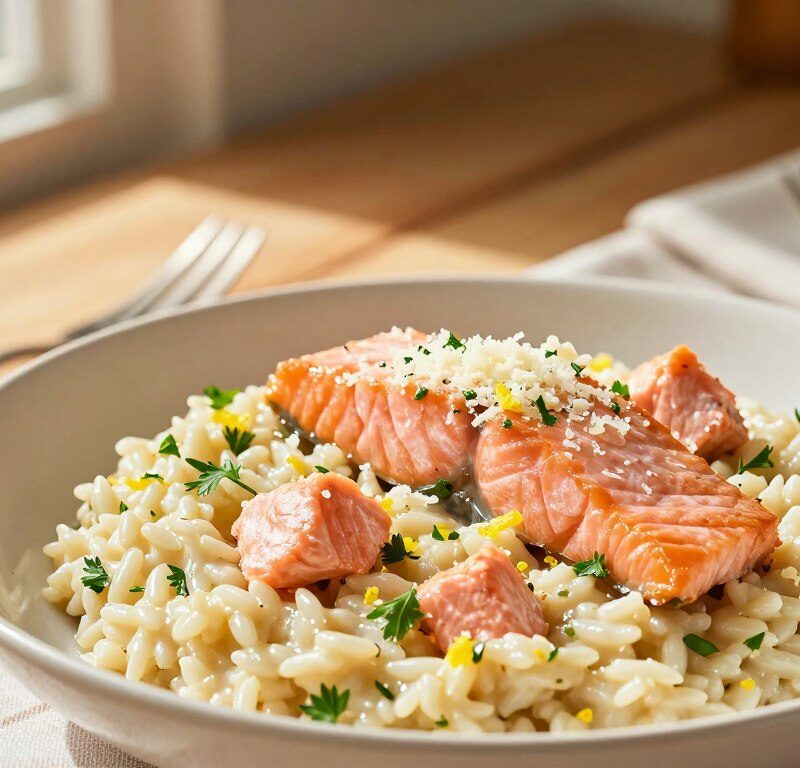
This classic, Italian-inspired dish brings together Arborio rice, flaky salmon fillets, white wine and a fragrant stock for a silky finish. It feels indulgent yet is simple to prepare, making it ideal for a cosy family supper or a special meal with friends.
One-pan comfort meets elegant flavour. Tender flakes of fish fold through creamy rice, with a hint of lemon to lift the taste. The stovetop method takes under an hour and allows easy swaps of vegetables or herbs to suit tastes and dietary needs.
Key Takeaways
- An elegant, nourishing one-pot meal ready in under an hour.
- Combines protein, grains and veg for balanced flavour and texture.
- Uses simple pantry staples: Arborio rice, stock and white wine.
- Easy to adapt with extra vegetables or herbs.
- Stovetop method yields the creamiest, most reliable result.
The Appeal of Mary Berry Salmon Risotto
This one-pan risotto balances silky rice and delicate fish for a dish that feels both special and homely. The creaminess of Arborio rice hugs tender flakes of salmon, while a bright hit of lemon lifts each mouthful.
It looks impressive but is easy to make. Home cooks often tell me it delivers restaurant-quality flavour without fuss. That makes it ideal for cosy family evenings or a small celebration.
Flexible and forgiving, the recipe works with fresh or smoked fish and a range of vegetables. Follow the classic technique and you get depth, glossy texture and consistent results.
“An elegant, nourishing one-pot meal that combines protein, grains and veg into a single satisfying plate.”
- Creamy texture with a citrus lift.
- Impressive presentation, simple method.
- Customisable to suit tastes and seasons.
Essential Ingredients for Your Risotto
A short list of fresh, well-chosen ingredients makes all the difference in texture and taste. Start by gathering what you need so cooking stays smooth.
Rice and stock form the backbone. Use 250g of made Arborio rice for the classic creaminess. Keep 700ml of hot vegetable or fish stock at the ready so the grains cook evenly and release starch.
The aromatics are simple but vital. Finely chop one onion and mince one garlic clove. Sauté them in 2 tbsp of oil with 25g of butter to build a flavourful base.
Finish with dairy and herbs. Stir in 50g grated parmesan for richness and 2 tbsp of chopped dill or parsley for brightness. A squeeze of lemon will lift the fish and rice at the end.
- 250g Arborio rice — for that glossy, creamy texture.
- 700ml hot vegetable or fish stock — prevents temperature shocks.
- 50g parmesan, 2 tbsp oil, 25g butter — for depth and silkiness.
Selecting the Best Salmon Fillets
Opt for two skinless fillets weighing about 300g in total. Choose pieces that look moist, feel springy and have an even thickness so they cook through at the same rate.
High-quality fillets lift the whole dish. Fresh fish gives a clean, gentle flavour when folded into a creamy base. Check for pin bones and remove any you find before cooking.
You can poach or steam the fillets separately for 5–6 minutes until just tender. Alternatively, cut small raw cubes and add them to the rice about five minutes before the end to cook gently in the liquid.
The delicate flesh pairs beautifully with a little lemon zest and a squeeze of juice to brighten each spoonful.
“Choose even, fresh fillets and you will taste the difference in every bite.”
If you want a bolder note, swap the fillets for smoked fish or trout for deeper savoury tones.
Preparing Your Kitchen Equipment
Gathering the right tools before you switch on the hob saves time and cuts stress. Lay out what you need so each step of the recipe feels calm and unhurried. This helps you focus on timing and texture while you cook.
- Saucepan or wide sauté pan: choose a large non-stick pan to give the rice room to expand.
- Wooden spoon or silicone spatula: for gentle, consistent stirring without breaking grains.
- Ladle and measuring jug: keep a ladle for gradual stock additions and a jug to measure 700ml precisely.
- Zester, lemon squeezer, knife and board: ready for zest, juice and quick prep of onion, garlic and fish.
- Cheese grater: for the 50g Parmesan that finishes the dish.
Proper prep makes cooking simpler. An organised workspace speeds the process and helps you deliver a flawless mary berry salmon risotto with perfectly cooked rice and silky sauce.
The Importance of Warm Stock
Keeping your stock warm makes a clear difference to texture and timing. For a mary berry salmon dish, steady temperature is the key to a glossy finish. Always heat your hot vegetable fish or stock before you begin.
Preventing temperature shocks
Preventing Temperature Shocks
Never add cold liquid to the pan. Cold stock lowers the pan heat and will slow cooking. That stops the grains from releasing starch and can make the rice cook unevenly.
Keep stock in a small saucepan over low heat. Use a ladle to add stock little by little. This gradual method lets each grain absorb liquid and swell correctly.
- Always keep your hot stock on a low flame so it stays ready.
- When you add stock, stir gently to maintain an even heat.
- Warm stock helps rice cook evenly and keeps the cooking time steady (about 18–20 minutes).
“Keeping the stock hot is one of the simplest ways to achieve a creamy, cohesive result.”
Sautéing Aromatics for Depth
Warm the oil and butter together, then let the onion sweat slowly to coax out its natural sweetness.
In a large pan, heat 2 tbsp of olive oil and 25g of butter over medium heat. Add the finely chopped onion and cook for about 5 minutes until soft and translucent. Control the heat so the onion melts without colouring.
Stir in the minced garlic and cook for another minute until fragrant. Be careful not to burn it; burned garlic tastes bitter and will spoil the base.
The garlicin large pan step is key. This stage infuses the fat with flavour that will coat every grain of rice later. The savoury backbone created by onion and garlic complements the delicate salmon and creamy risotto.
- Use medium heat and gentle stirring.
- Take your time—this step takes a few minutes but rewards you with depth of flavour.
Toasting the Arborio Rice
Add the 250g of arborio rice to the warmed pan and stir for 1–2 minutes. Cook until the grains are lightly toasted and each is coated in the flavoured oil and butter.
Toasting is a critical step in this mary berry salmon recipe. You will see the rice become translucent at the edges — that change shows the grains are ready for the white wine.
Light toasting helps the made arborio rice hold its shape during simmering. It prepares the starch so the gradual addition of hot stock yields a glossy, non-mushy finish.
- Toast briefly to develop a nutty note that balances the richness of the fish.
- Once translucent, pour in the wine and let it simmer until nearly absorbed.
- This short arborio rice cook stage prevents overcooking later and keeps the grains distinct.
“A quick toast gives the rice structure, texture and a subtle, nutty depth.”
Deglazing with Dry White Wine
Pouring a splash of dry white wine onto the toasted rice lifts every caramelised scrap from the pan.
Measure 100ml of dry white wine and add it to the rice straight after toasting. Let it simmer until almost fully absorbed so the alcohol evaporates and a gentle acidity remains.
If you prefer not to use wine, replace it with an equal amount of extra hot stock and a splash of lemon juice. This keeps the balance and still brightens the dish.
The acidity of the wine helps cut through the butter and Parmesan. That contrast makes the final risotto feel more refined and less heavy.

- Pour 100ml to deglaze and lift flavourful bits from the pan.
- Simmer until nearly absorbed before adding the first ladle of stock.
- Using a good quality wine adds complexity; otherwise use hot stock plus lemon.
“Deglazing ensures no flavour is left behind, and the aroma as it reduces signals your risotto is building depth.”
For a classic touch in this mary berry salmon recipe, allow the wine to reduce fully — the scent tells you the step is done and the rice is primed for stock.
Mastering the Ladle Technique
A steady hand and a patient ladle turn good rice into something truly silky. This stage is where the dish becomes glossy and cohesive.
Stirring frequency
Stirring Frequency
Add a ladleful of hot stock, then stir gently until it is almost absorbed. Repeat, one ladle at a time, keeping a soft, consistent motion. This gentle action helps the grains release starch and build that sought-after creamy texture.
Achieving Al Dente Texture
The arborio rice cook time should be about 18–20 minutes. Taste the grains regularly so they are soft at the edge but still firm inside. You will know the rice is nearly done when roughly 250ml/9fl oz of stock remains in the pan.
- Add stock with a ladle and stir until absorbed — this is the core method.
- Keep the heat steady; too high heat shortens time and may leave uneven grains.
- Pay full attention during these minutes to achieve a rice creamy tender finish.
“Mastering the ladle ensures even cooking and a non-mushy, glossy result.”
Incorporating Salmon and Peas
When the rice is glossy and tender, it’s time to introduce the fish and sweet peas.
Poach or steam the fillets for 5–6 minutes until just cooked through. Break them into large, succulent flakes so the texture stays obvious when folded through the rice creamy tender base.
Gently stir in 150g of fresh or frozen peas. The peas give a bright colour and a subtle sweetness that contrasts the richness of the parmesan and fish.
Add the flaked salmon and peas with careful, upward folds. Keep movements light so the flakes remain intact and do not break down into the rice.
Stir in a squeeze of lemon juice and a little zest to lift the flavours. Season with salt and black pepper to taste and check balance before serving.
The garlicin large pan base and a drizzle of oil will support this delicate combination, creating a harmonious, visually appealing mary berry salmon dish.
“Fold gently to keep large flakes and preserve the contrast between creamy rice and fresh peas.”
Finishing Touches for Creaminess
A few simple final steps will lift the dish from good to memorable. Take the pan off the heat before you add the final dairy to keep the sauce smooth and glossy.
Adding Crème Fraîche
Stir in 2 tbsp crème fraîche as soon as the pan is off the heat. This cools the mixture slightly and gives the rice a silkier body without thinning it too much.
Next, add 50g grated parmesan and fold gently. The cheese melts into the warm rice and helps bind the sauce so every spoonful feels cohesive.
Be careful as you mix so the salmon flakes remain intact. Use slow, upward folds to distribute the fish through the rice without crushing it.
“Finishing the dish off the heat prevents the cream and cheese from splitting, keeping the sauce smooth.”
If the texture seems too tight, add a small splash of extra hot stock to loosen it until you reach the ideal consistency.
- Adjust seasoning with a little salt and black pepper—cheese and cream mellow flavours.
- Add a squeeze of lemon juice and a touch of zest to brighten the finish.
- Serve immediately so the rice keeps its creamy, tender texture.
Serving Suggestions and Pairings
Bring the pan to the table so everyone can enjoy the rice at its creamiest.

Top it simply with fresh dill or parsley and an extra sprinkle of grated parmesan. A lemon wedge on the side lets guests add a final squeeze of juice for brightness.
Drink pairing: a crisp glass of dry white wine, such as Sauvignon Blanc, complements the citrus and cream notes. White wine cuts through the richness and lifts the flavours.
For sides, choose contrasting textures. A crisp green salad, steamed asparagus or sautéed spinach adds colour and balance. Garlic bread is handy for mopping up any leftover sauce.
- Serve immediately so the dish stays glossy and tender; it will thicken after a few minutes.
- Roasted cherry tomatoes add sweet, tangy contrast to the fish and peas.
- Offer extra parmesan at the table for those who like more savoury depth.
“Serve straight from the pan for best texture and flavour.”
Storing and Reheating Leftovers
Let the dish cool to room temperature so steam does not trap moisture in the container. Transfer the cooled rice and fish into an airtight box and refrigerate for up to two days.
Avoid freezing: the delicate grains and fillets will become mushy and lose their rice creamy tender texture when thawed. If you expect leftovers, store the fish separately where possible.
To reheat on the stovetop, warm a small splash of hot stock in a pan over low heat. Stir the risotto gently and add a little more stock so the grains loosen. The warm stock helps keep the rice hydrated while you heat it.
For the microwave, heat in short bursts of about 30–40 seconds, stirring between intervals. This prevents hot spots and preserves texture. If needed, add a tiny splash of water or stock and a knob of butter or a spoon of crème fraîche to revive creaminess.
“Store chilled, reheat gently and add warm stock to bring back the silky finish.”
- Do not exceed the recommended rice cook minutes when reheating — avoid turning grains into a paste.
- Season lightly with pepper, a little lemon juice or a sprinkle of parmesan before serving.
- Serve with quick greens such as spinach or asparagus to refresh the meal.
Conclusion
Takeaway: patient stirring and hot stock are the small details that deliver a silky, professional finish.
This mary berry salmon risotto blends creamy rice, tender fillets and a bright squeeze of lemon into a comforting, elegant dish. Use good-quality rice and fresh fish to lift the flavour and texture.
Keep your stock warm and add it gradually; that method helps rice cook evenly and keeps the rice cook minutes predictable. Fold in parmesan near the end for richness and remove from the heat to keep the sauce smooth.
Whether cooking for a weeknight supper or guests, this recipe rewards attention to timing and simple technique. Enjoy the wine with the meal and savour every spoonful.
FAQ
What rice should I use for a creamy risotto?
Why is warm stock recommended?
How much dry white wine should I add and when?
How often should I stir the rice?
How do I know when the rice is al dente?
When should I add the fish and peas?
Can I substitute crème fraîche to finish the risotto?
What aromatics build the best flavour base?
How should I cook the salmon fillets before adding them?
What are suitable side dishes and wine pairings?
How do I store and reheat leftovers?
Can I use vegetable stock instead of fish stock?
How much Parmesan should I add?
Any tips to prevent the risotto from becoming gluey?
Mary Berry Salmon Risotto
This classic, Italian-inspired dish brings together Arborio rice, flaky salmon fillets, white wine and a fragrant stock for a silky finish. It feels indulgent yet is simple to prepare, making it ideal for a cosy family supper or a special meal with friends.
Ingredients
- 250g Arborio rice
- 700ml hot vegetable or fish stock
- 2 tbsp olive oil
- 25g butter
- 1 onion, finely chopped
- 1 garlic clove, minced
- 100ml dry white wine
- 50g grated parmesan
- 2 tbsp chopped dill or parsley
- 2 tbsp crème fraîche
- 2 skinless salmon fillets (about 300g total)
- 150g fresh or frozen peas
- Juice and zest of 1 lemon
- Salt and black pepper to taste
Method
- Heat the olive oil and butter in a large pan over medium heat. Add the finely chopped onion and cook for about 5 minutes until soft and translucent.
- Stir in the minced garlic and cook for another minute until fragrant.
- Add the Arborio rice to the pan and stir for 1–2 minutes until the grains are lightly toasted.
- Pour in the dry white wine and let it simmer until nearly absorbed.
- Gradually add the hot stock, one ladle at a time, stirring gently until each addition is absorbed before adding the next.
- Cook the rice for about 18–20 minutes until it is al dente, tasting regularly.
- Meanwhile, poach or steam the salmon fillets for 5–6 minutes until just cooked through, then flake them into large pieces.
- When the rice is nearly done, stir in the peas and the flaked salmon, along with a squeeze of lemon juice and zest.
- Remove the pan from the heat and stir in the crème fraîche and grated parmesan gently.
- Adjust seasoning with salt and black pepper, and serve immediately with extra lemon wedges and herbs on top.