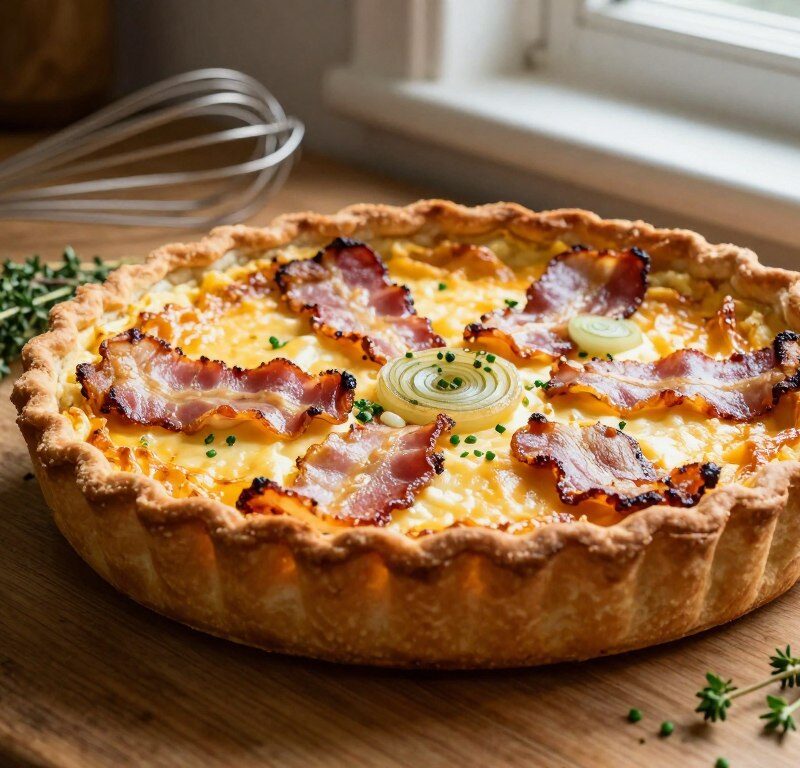
This classic dish brings French elegance to a home kitchen.
The Mary Berry Quiche Lorraine traces its roots to eastern France nearly 500 years ago. It blends a flaky pastry with a rich filling of cream, eggs, cheese and bacon to create a timeless savoury tart.
As a celebrated food writer, mary berry has taught home cooks how to make this quiche with confidence. The recipe suits a relaxed lunch, a picnic or a simple supper for guests.
The balance of smoky bacon and creamy cheese gives a decadent yet familiar flavour. This version honours tradition while remaining easy enough for cooks at every skill level.
Key Takeaways
- The dish dates back about 500 years and comes from Lorraine in France.
- Mary Berry’s version makes the quiche accessible to home cooks.
- Key ingredients: pastry, cream, eggs, cheese and bacon.
- Perfect for lunch, entertaining or a comforting midweek meal.
- The recipe combines classic technique with reliable flavour results.
The History and Appeal of Mary Berry Quiche Lorraine
This iconic savoury tart moved from regional courts to international kitchens during the twentieth century. Its roots lie in Lorraine about 500 years ago, where cooks made a simple pastry filled with eggs and cream.
This modern version comes from the Mary Berry cookery course published by DK. The author refined the classic so home cooks can make it with confidence. Many people trust these recipes for reliably good results.
While the earliest forms lacked cheese, the contemporary taste favours a richer, creamier filling. That change gives the tart a savoury depth that suits both casual and formal meals.
- Originated in Lorraine about 500 years ago.
- Popularised beyond its region during the 20th century.
- Mary Berry’s recipe keeps the dish easy enough for everyday cooking.
- Serve warm or hot for lunch, a picnic or a relaxed supper.
“A timeless balance of flaky pastry and a creamy, smoky filling makes this quiche a favourite.”
Essential Ingredients for Your Quiche
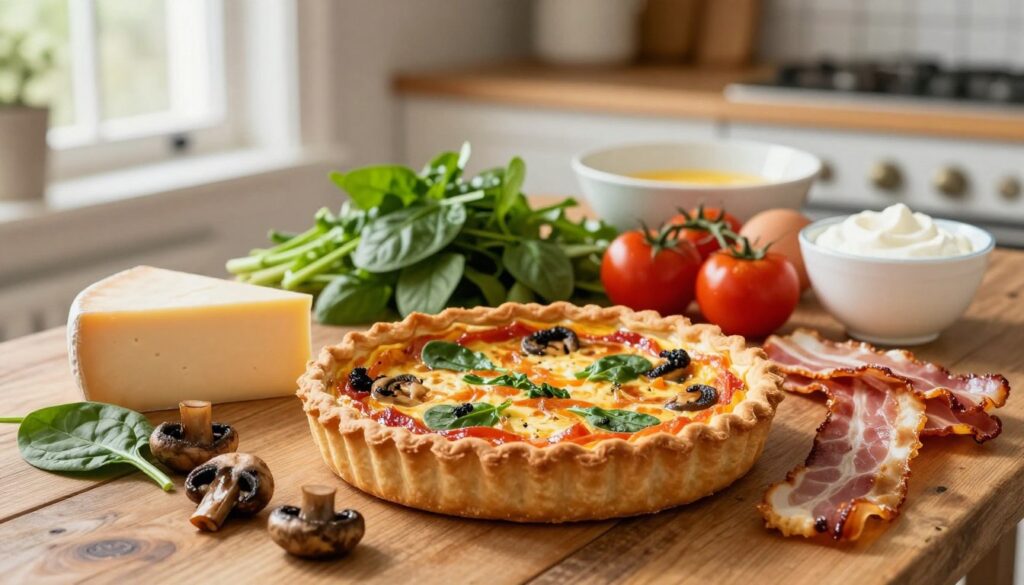
A great quiche begins with carefully chosen ingredients that work together for texture and flavour. Below are the components you need and a few simple tips to get them right before you start.
The Pastry Components
Plain flour and cold fat give the base its lift. Use 175g plain flour with 85g chilled butter or hard block margarine.
Rub the butter into the flour using only your fingertips until the mixture looks like fine breadcrumbs.
Add 3 tablespoons cold water and bring the dough together in a bowl. Chill the ball briefly so it rests before rolling.
The Filling Elements
For the filling, fry or gently cook 175g unsmoked streaky bacon until crisp, then set aside to cool slightly.
Combine 250ml single cream with 2 large eggs in a bowl. Stir in 125g grated gruyère cheese and one sliced onion.
Season the mixture with a pinch of salt and freshly ground black pepper. Pour over the pastry case and bake as directed in the recipe.
- Tip: Use fine breadcrumbs to help absorb any extra moisture from the filling.
- Timing: Chill pastry for at least 15 minutes before blind baking for best results—this avoids shrinkage.
Mastering the Perfect Pastry Case
A crisp, evenly baked pastry case is the backbone of any successful quiche. Keep steps simple and work with cold ingredients for the best result. Small, steady actions give the pastry case its neat edges and even colour.
Tips for Blind Baking
Start by rolling your dough on a well-dusted surface. Dust with extra flour to stop sticking and to keep the pastry uniform in thickness.
- After rolling, carefully line a 20cm loose-bottomed flan tin and chill the pastry case in the fridge for 30 minutes.
- Preheat your oven to 220°C (fan 200°C) so the pastry sets quickly when it goes in.
- Blind bake the case for 15 minutes to avoid a soggy bottom and ensure the base is cooked through.
- Use a fluted tin to help the pastry maintain its shape, and 85g of butter in the dough for a rich, shortcrust finish.
- Always handle the dough gently to keep the texture light and tender.
Quick final note: chilling in the fridge and a hot oven are the two simple tricks that make a professional-looking pastry case every time.
“A well-made pastry case sets the stage for a perfect filling.”
For a vegetarian twist or alternate filling ideas, see this vegetarian quiche recipe.
Preparing the Savoury Filling
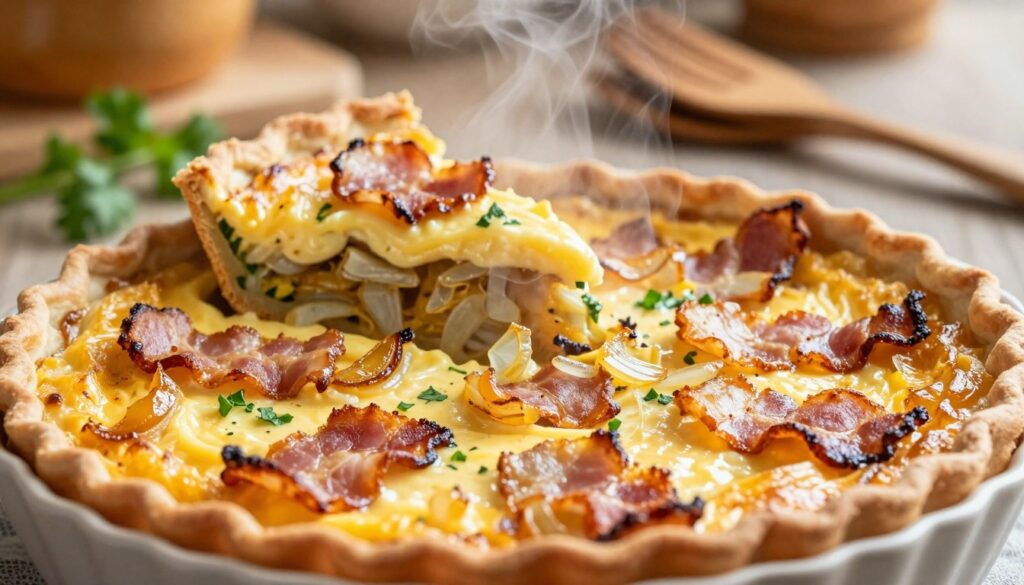
Begin by crisping the bacon in a sauté pan over a medium heat for 10 minutes. Let it brown until golden and crisp, then lift it out with a slotted spoon so excess fat drains away.
Leave the juices in the pan and add the chopped onion. Cook over medium heat for 8 minutes until the onion is soft and golden. This captures the savoury notes and deepens the flavour of the filling.
In a bowl, whisk together 2 large eggs with 250ml single cream. Season with a pinch of salt and freshly ground black pepper to taste. The mixture should be smooth and creamy before it hits the pastry case.
Assembling: scatter the crisp bacon and golden onions into the blind-baked pastry. Sprinkle 125g of gruyère cheese evenly over the base. Pour the egg and cream custard slowly so it settles around the layers.
- Fry bacon for 10 minutes until crisp.
- Cook onion in the same pan for 8 minutes to retain bacon flavour.
- Whisk eggs and cream with salt and ground black pepper.
- Layer bacon, onions and gruyère, then pour over the custard.
This method ensures each slice has balanced bacon, cheese and custard. For a simple starter to serve alongside, try a classic French onion soup recipe here.
Baking to Golden Perfection
A hot, golden quiche needs careful timing and a steady oven to reach its best texture. Start with the blind-baked case at a high temperature, then lower the heat so the filling sets gently.
Oven temperature settings
After blind baking, reduce the oven to 180°C (fan 160°C). This lower heat helps the cream and eggs set without browning too fast.
Bake the tart for 25–30 minutes until the top is golden and the centre is just set. Use a gentle jiggle test: the edges should feel firm, the middle slightly wobbly.
Avoiding overcooked filling
Be careful overcook the filling; overbaking makes the custard tough and full of holes. Watch the bake minutes closely — a few extra minutes can dry the filling.
Tip: if the top browns too quickly, lay a loose sheet of foil over the pan for the last 10 minutes.
Serving suggestions
Distribute the bacon and cheese evenly in the pan before you pour in the cream mixture. This helps each slice balance savoury and creamy notes.
Serve warm from the oven in winter, or with a zesty escarole salad for a light summer lunch. A slice keeps well and reheats in an oven for a few minutes to restore the crisp pastry.
| Stage | Temperature | Time (minutes) |
|---|---|---|
| Blind bake base | 220°C (fan 200°C) | 15 |
| Final bake | 180°C (fan 160°C) | 25–30 |
| Top protection (if needed) | 180°C (fan 160°C) | Last 10 with foil |
Note:This simple oven routine will yield a reliable result for a classic mary berry quiche lorraine recipe without overcooking the filling.
Conclusion
,Follow the method and you’ll find this recipe fits both quick lunch plates and more formal evenings.
Mastering the mary berry quiche lorraine gives you a clear path to crisp pastry, a silky filling and reliably good results.
Use fresh ingredients, mind oven times and chill the dough for a firmer base. These small steps keep the filling smooth and the base crisp.
Try different cheeses or add herbs to make new versions from this core recipe. The cookery course approach ensures you repeat success across recipes.
FAQ
What ingredients do I need for the pastry case?
How do I blind bake the pastry without it rising or shrinking?
Can I make the filling ahead of time?
What oven temperature and baking time give a golden top?
How can I tell if the filling is fully cooked without overcooking?
Are there good substitution options for dairy or bacon?
How long can I store leftovers in the fridge?
What cheese works best for a rich flavour?
Any tips to prevent a soggy base when using moist fillings?
Can I freeze the pastry or the finished quiche?
Mary Berry Quiche Lorraine
This classic dish brings French elegance to a home kitchen, blending a flaky pastry with a rich filling of cream, eggs, cheese, and bacon to create a timeless savoury tart.
Ingredients
- 175g plain flour
- 85g chilled butter or hard block margarine
- 3 tablespoons cold water
- 175g unsmoked streaky bacon
- 250ml single cream
- 2 large eggs
- 125g grated gruyère cheese
- 1 onion
- Salt
- Freshly ground black pepper
Method
- Preheat your oven to 220°C (fan 200°C).
- Rub the butter into the flour using your fingertips until the mixture looks like fine breadcrumbs.
- Add 3 tablespoons of cold water and bring the dough together in a bowl. Chill the dough for at least 15 minutes.
- Roll out the dough on a well-dusted surface and line a 20cm loose-bottomed flan tin. Chill the pastry case in the fridge for 30 minutes.
- Blind bake the pastry case for 15 minutes to avoid a soggy bottom.
- Fry the bacon in a sauté pan until crisp, then set aside to cool slightly.
- In the same pan, cook the chopped onion over medium heat for 8 minutes until soft and golden.
- In a bowl, whisk together the eggs and cream, and season with salt and pepper.
- Scatter the crisp bacon and golden onions into the blind-baked pastry, then sprinkle the grated gruyère cheese evenly over the base.
- Pour the egg and cream mixture over the filling slowly so it settles around the layers.
- Reduce the oven temperature to 180°C (fan 160°C) and bake the quiche for 25–30 minutes until the top is golden and the centre is just set.
- Serve warm or hot, and enjoy!