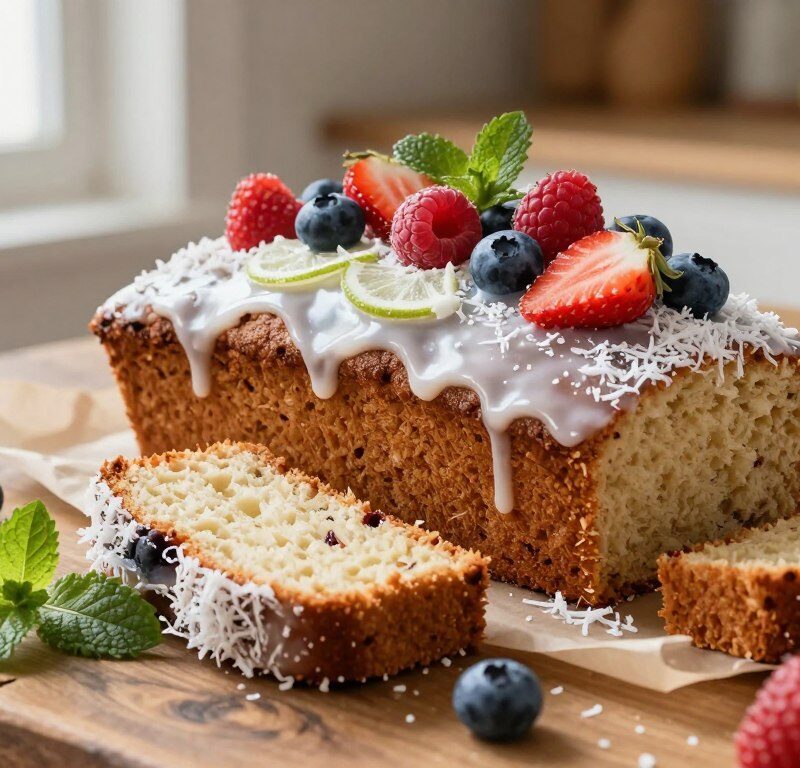
This classic British sponge pairs the warm, nutty notes of desiccated coconut with the bright zing of fresh lime zest and juice. The result is a soft, moist loaf that feels both comforting and refreshingly light.
Perfect for afternoon tea, the bake suits a plain finish or a delicate lime drizzle to lift each slice. The method is clear and dependable, so home bakers can confidently reproduce a professional result.
Whether you choose a round tin or a loaf tin, the texture stays tender and the citrus keeps flavours clean. This accessible recipe shows how a simple drizzle transforms a basic sponge into something special.
Key Takeaways
- The recipe balances sweet coconut with sharp lime for a lively flavour.
- A loaf or round tin both yield a tender, moist sponge.
- A light lime drizzle adds a bright finish without weighing the bake down.
- The method is straightforward, ideal for home baking.
- This berry coconut style is suitable for casual gatherings and afternoon tea.
Why You Will Love This Mary Berry Coconut And Lime Cake
This loaf combines tropical warmth with a bright citrus snap that wakes the palate. The balance of sweet desiccated coconut and sharp lime makes each slice feel fresh rather than cloying.
The Flavour Profile
The flavour hinges on a clean contrast: toasted coconut gives a gentle, nutty body while lime zest and juice cut through the sweetness.
A little sugar rounds the edges so the citrus shines without tasting tart. The final drizzle adds an extra lift that ties the loaf together.
Why It Works
- Balanced taste: sweet and tangy notes play nicely on the palate.
- Moist crumb: shredded coconut helps the sponge stay soft for days, so you can make mary berry style bakes ahead.
- Versatile: ideal for everyday snacking or a proper afternoon tea with friends.
- Simple technique: no special kit needed — fold, bake and finish with a light lime drizzle.
Essential Ingredients for Your Tropical Bake
Gathering the right pantry staples makes this tropical loaf both simple and reliable.
To start: you will need 175g unsalted butter and 175g caster sugar to create a light, fluffy base for the cake.
Dry and flavour: use 175g self-raising flour with 1 teaspoon baking powder, and fold in 75g desiccated coconut plus the lime zest from two fruits.
“Good cakes rely on measured ingredients and fresh citrus to lift the sponge.”
| Ingredient | Amount | Role |
|---|---|---|
| Unsalted butter | 175 g | Structure and moistness |
| Caster sugar | 175 g | Sweetness and tenderness |
| Self-raising flour | 175 g | Rise and crumb |
| Desiccated coconut | 75 g | Texture and coconut lime flavour |
| Fresh lime juice | 3 tbsp | Tang and drizzle base |
- Bind the mix with three large eggs and add 2 tbsp milk for a tender loaf.
- Keep extra lime juice and a little sugar to make a bright drizzle at the end.
- This ingredient list follows a simple mary berry style approach so the recipe stays dependable.
Recommended Baking Equipment
Choosing the right tools makes all the difference when you want an even bake and a neat finish.
Start with a 900 g loaf tin or a 20 cm round cake tin; both support even cooking and will help the sponge rise uniformly.
- Baking parchment: line the tin thoroughly so the loaf releases cleanly without tearing.
- Electric hand mixer: speeds up creaming butter and sugar and delivers a light, aerated batter.
- Sturdy mixing bowl: makes folding in desiccated coconut and zest easy and tidy.
- Cooling rack: lifts the loaf so air circulates and prevents moisture pooling underneath.
“Proper preparation of your tin and tools is the first step toward a professional-looking loaf.”
Tip: the cookery expert mary berry often stresses using the correct tin and kit to avoid uneven baking. Preparing equipment well saves time and keeps the texture light.
Preparing Your Oven and Tin
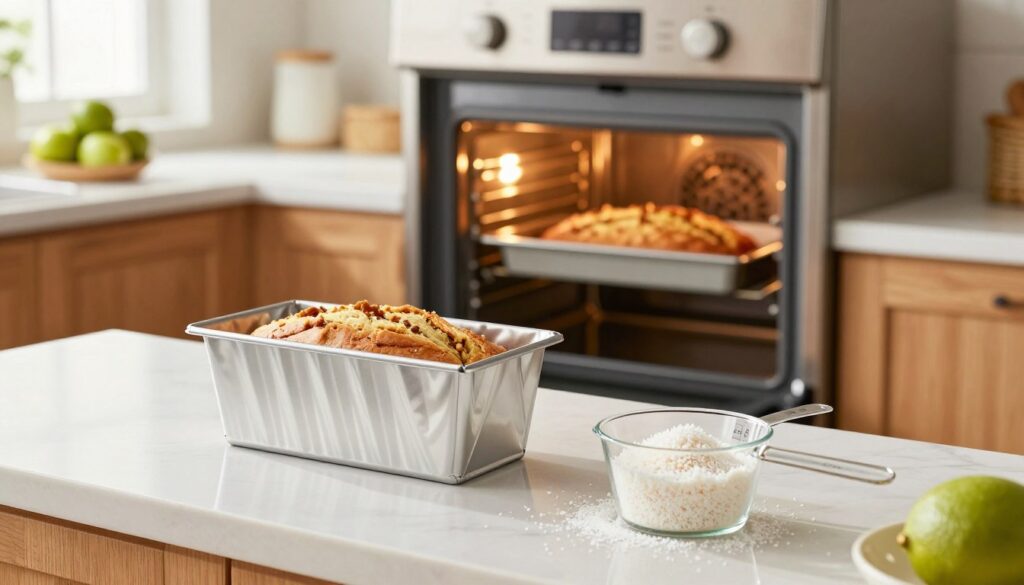
Get the oven and tin ready first so your sponge can rise steadily and colour evenly.
Preheat to 180°C (160°C fan). This temperature helps the cake gain lift and a golden finish.
Bring butter, eggs and milk to room temperature before you start. Soft butter and warm eggs mix more smoothly and give a better texture.
Line a loaf tin with parchment. This simple step prevents sticking and gives a neat release every time — a technique mary berry often recommends.
Have the zest of two limes and fresh lime juice measured out. Keep your caster sugar, self-raising flour and baking powder close at hand so you can combine ingredients without delay.
“A well-prepared tin and accurate oven temperature are the quiet heroes of any good bake.”
| Step | Action | Why it matters |
|---|---|---|
| Preheat oven | 180°C (160°C fan) | Even rise and golden crust |
| Room prep | Butter & eggs at room temperature | Smoother batter, tender crumb |
| Line tin | Parchment in loaf tin | Clean release and neat finish |
Mixing the Perfect Sponge Batter
An efficient all-in-one method speeds the process and keeps the batter light when done correctly.
Begin by placing self-raising flour, baking powder, softened butter, caster sugar, eggs and a splash of milk into a large mixing bowl.
Beat the mixture for about 1 minute using an electric whisk until the batter is smooth and silky. Stop as soon as the ingredients are combined to protect the texture.
The All-in-One Method
- Add lime zest and lime juice at this stage to infuse the sponge evenly.
- Scrape down the sides of the bowl to ensure all ingredients are incorporated.
- Reserve the desiccated coconut to fold in gently so the crumb stays tender.
“A smooth batter is the foundation of a great cake — quick mixing keeps the crumb light.”
| Step | Action | Why it matters |
|---|---|---|
| Measure | Combine flour, butter, sugar, eggs | Ensures even distribution of ingredients |
| Beat 1 minute | Use electric whisk until smooth | Prevents over-mixing and keeps texture light |
| Fold in | Add desiccated coconut and any final zest | Adds flavour and gentle chew without toughening |
For a full recipe and baking tips, see the mary berry coconut cake recipe to compare timings and oven settings.
Folding in Coconut and Lime Zest
A light, even fold is what keeps this sponge airy and full of citrus notes. Use a large mixing bowl so you can work easily without compressing the batter.
First, add the flour and desiccated coconut to the bowl. Fold them in with a metal spoon using slow, sweeping turns. Keep the motion gentle to avoid knocking out the air.
Stir in the lime zest and lime juice at this stage. Mix only until the flecks of zest and a hint of juice are visible through the batter. Overworking here will harm the texture.
- Gently fold the desiccated coconut and zest to keep the crumb light.
- Ensure the coconut lime blend is even so each slice tastes consistent.
- Transfer the batter to your prepared tin as soon as it is combined.
“Fold lightly to ensure the cake rises perfectly in the oven.”
Baking to Golden Perfection
Preheat the oven and trust the timing. Bake the coconut lime sponge in the preheated oven for 45–50 minutes until the loaf is risen, golden and springy when pressed in the centre.
Use a skewer inserted into the middle to check doneness; it should come out clean when the cake is ready. If the top browns too quickly, cover it loosely with foil so the centre can finish without burning the top.
The warm aroma of coconut and lime will fill your kitchen as baking reaches its final phase. Keep a close eye during the last few minutes to ensure the sponge stays moist and tender, as recommended by mary berry style techniques.
Once baked, leave the loaf in the tin for a short time so the structure can set. This pause helps the batter settle and makes turning out easier.
“A quick skewer test and a gentle rest in the tin bring a professional finish to your berry coconut loaf.”
Creating the Tangy Lime Drizzle
Pouring a warm citrus glaze over a hot sponge gives the top a glossy, zesty finish.
Make the drizzle by stirring fresh lime juice and caster sugar in a small, clean dry bowl until the sugar is partially dissolved. Aim for a thin syrup—not a runny icing.
As soon as the loaf comes from the oven, use a spoon to pour the glaze evenly over the hot surface. The heat helps the lime juice sink into the crumb while the sugar crystals settle on the top.
The result: a moist interior with a crisp, sparkling finish that contrasts beautifully with the shredded coconut in the sponge.
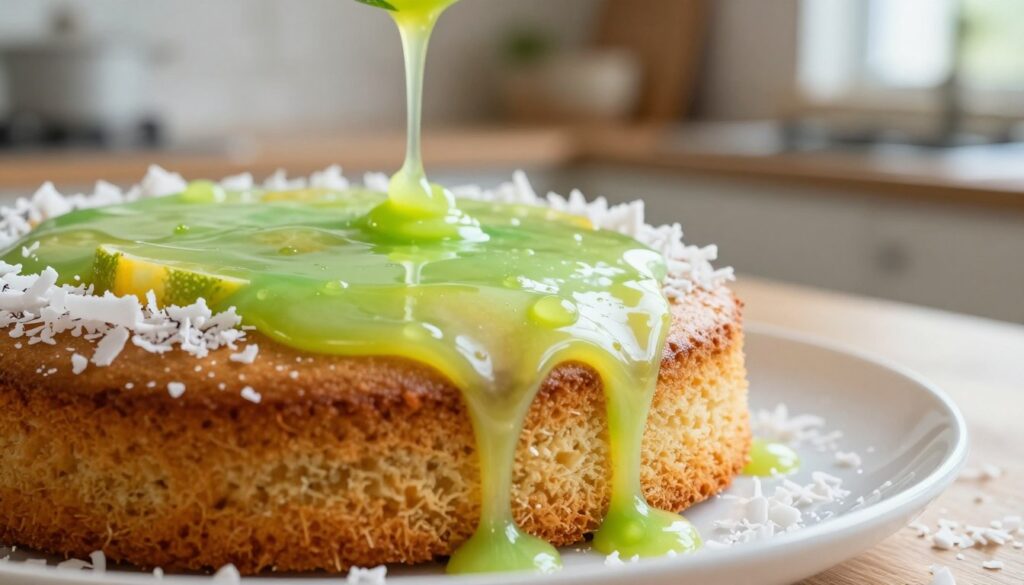
- Mix lime juice and sugar in a small bowl until slightly dissolved.
- Pour over the hot cake straight from the oven so it soaks in.
- Leave sugar crystals visible for a crunchy, glossy top.
- mary berry recommends this to boost citrus flavour without weighing the loaf down.
“A warm glaze gives flavour depth and a pretty finish—simple but essential.”
Expert Tips for a Moist Crumb
A few simple habits in preparation and timing keep the crumb light and moist. Follow these focused steps to avoid a dense result and get consistent bakes.
Avoiding overmixing
Work gently when you fold flour, desiccated coconut and zest into the batter. Stop as soon as you see even colour and no streaks of flour.
Why it matters: overworked batter tightens the gluten and creates a heavy texture. A light fold preserves trapped air and gives a soft texture.
Checking for doneness
Bake for the recommended 45–50 minutes but start checking a few minutes early. The loaf is ready when the top is lightly golden and springs back when touched.
Use a skewer inserted into the centre; it should come out clean. If the skewer comes out with crumbs or wet batter, return the tin to the oven for a few more minutes.
The importance of room temperature
Bring butter, eggs and milk to room temperature before mixing. Warm ingredients blend more evenly and produce a smoother batter with better rise.
Consistent temperature reduces the chance of strange curdling and gives a finer crumb that stays moist for days.
- Use fresh lime zest and juice rather than bottled — acidity affects texture and flavour.
- If the top browns early, cover the tin loosely with foil so the centre finishes without drying out.
- Storage: keep the loaf in an airtight container for up to 3 days to preserve texture.
“Folding gently and checking with a skewer are small steps that bring professional results.”
Creative Variations and Flavour Swaps
Adjusting one or two ingredients lets you reduce fat, add nuttiness or boost zest without fuss.
For a lower-fat version of this cake, replace 50g of butter with natural yoghurt. This keeps the crumb moist while cutting fat and adds a slight tang.
Try a flour swap by using 175g spelt flour for a nuttier texture. Spelt pairs well with desiccated coconut and emphasises the coconut lime character.
- Boost flavour: add extra lime zest rather than more sugar to heighten citrus notes without over-sweetening.
- Texture swap: use finely chopped coconut flakes instead of standard desiccated coconut for a chewier bite and a fresh coconut lime zest effect.
- Finish: a light lime drizzle or a dusting of icing sugar makes for a pretty, classic look.
“Small swaps preserve the loaf’s balance while making it suit your pantry and preferences.”
Note that changes to fat or flour can alter baking time and required temperature slightly. Keep an eye on the oven and test with a skewer. Stored at room temperature in an airtight tin, the loaf will still keep well for a few days.
Serving Suggestions for Afternoon Tea
A bright, zesty loaf becomes truly memorable when matched with the right tea and a soft, creamy side. For a clean, citrus lift, offer a fragrant Earl Grey or a gentle green tea to complement the lime notes.
Keep servings simple: a slice with a dollop of lightly whipped cream balances the zing and tempers sugar without hiding flavour.
- Serve with a hot mug of English Breakfast or Earl Grey for contrast and warmth.
- Add fresh pineapple or mango for a cooling, tropical pairing that plays well with coconut.
- Offer vanilla custard for guests who prefer a warmer, more indulgent option.
- Scatter raspberries or strawberries on the plate for colour and a tart finish.
Presentation tip: keep slices neat, use a small dusting of icing sugar and a thin lime zest curl to signal flavour. This loaf makes a charming centrepiece at any afternoon tea or casual gathering.
Conclusion
Finish with confidence: simple steps give a golden, tender loaf every time. This berry coconut, coconut lime recipe is reliable for baking at home and shines when you use fresh ingredients.
Keep an eye on oven temperature and timing so the top browns in the recommended minutes and a skewer comes clean. Fold in desiccated coconut and lime zest gently, then pour a warm lime juice drizzle so sugar soaks into the batter.
Store the loaf at room temperature in an airtight tin; the texture will stay moist for days. Follow the method to make mary berry style bakes and enjoy sharing this zesty treat with friends and family.
FAQ
What temperature should I set the oven to for this loaf?
Can I use desiccated coconut or should I use shredded?
Do I need self-raising flour or plain with baking powder?
How do I know when the loaf is cooked through?
Should ingredients be at room temperature?
How much lime zest and juice should I use?
Can I make this in a round cake tin instead of a loaf tin?
How do I avoid overmixing the batter?
What’s the best way to add the coconut and zest without knocking out air?
How should I store the loaf and how long will it keep?
Can I freeze the cake or the drizzle?
Any tips for making the lime drizzle glossy and not runny?
What’s a good substitute for caster sugar?
How can I make variations like adding white chocolate or a toasted coconut top?
Is this recipe suitable for afternoon tea or special occasions?
Mary Berry Coconut And Lime Cake
This classic British sponge pairs the warm, nutty notes of desiccated coconut with the bright zing of fresh lime zest and juice, resulting in a soft, moist loaf perfect for afternoon tea.
Ingredients
- 175 g unsalted butter
- 175 g caster sugar
- 175 g self-raising flour
- 1 teaspoon baking powder
- 75 g desiccated coconut
- zest of 2 limes
- 3 large eggs
- 2 tbsp milk
- 3 tbsp fresh lime juice
- extra lime juice for drizzle
- caster sugar for drizzle
Method
- Preheat the oven to 180°C (160°C fan).
- Line a loaf tin with baking parchment.
- In a large mixing bowl, combine self-raising flour, baking powder, softened butter, caster sugar, eggs, and milk.
- Beat the mixture for about 1 minute using an electric whisk until smooth.
- Add lime zest and lime juice to the batter and mix until combined.
- Gently fold in the desiccated coconut.
- Transfer the batter to the prepared tin and smooth the top.
- Bake in the preheated oven for 45-50 minutes until golden and a skewer inserted comes out clean.
- Let the loaf cool in the tin for a few minutes before transferring to a cooling rack.
- For the drizzle, mix fresh lime juice and caster sugar until partially dissolved.
- Pour the drizzle over the warm loaf to soak in and create a glossy finish.