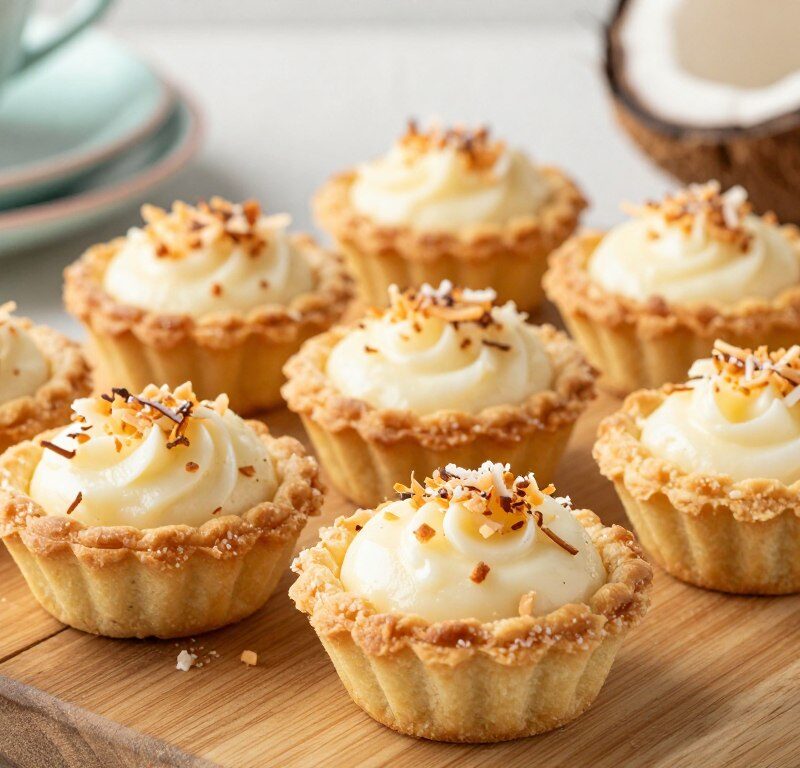
Classic little bakes, these small tarts pair a crisp pastry shell with a soft, sweet coconut filling. They suit afternoon tea, bake sales or an easy home baking session when you want something reliably traditional.
The recipe makes twelve individual portions, so there is no cutting or fuss. You simply use a 12-hole tart tin or a muffin tin to shape each delicate shell. Total preparation and baking time is about 50 minutes, ideal for a quick teatime treat.
These coconut tarts give a pleasing contrast of textures. The pastry remains snap-crisp while the filling stays gently moist. Many home bakers keep this recipe among favourite recipes because it is simple, elegant and consistent.
Key Takeaways
- Timeless classic: a British favourite with a crisp pastry shell and soft coconut filling.
- Yields 12 tarts, perfect for individual servings at afternoon tea.
- Requires a standard 12-hole tart tin for uniform shells.
- Quick to make — around 50 minutes total time from start to finish.
- Easy to prepare, making it a reliable recipe for home bakers.
The Timeless Appeal of Mary Berry Coconut Tarts
Each individual tart is a neat parcel of flavour: a crisp pastry shell that gives way to a soft, golden coconut centre. The balance is gently sweet and never heavy, making the bake ideal with a warm cup of tea.
The texture sits between a traditional tart and a chewy macaroon-style treat. That unique mouthfeel is the signature of this classic recipe.
- Contrast: crisp pastry meets a tender coconut filling.
- Portion size: individual tarts keep their shape and look elegant on the plate.
- Traditional finish: the filling sets to a soft, golden centre without overpowering the pastry.
Simple technique and careful baking deliver that perfect contrast every time. The result is a small, reassuringly classic bake that feels both refined and unfussy.
Essential Ingredients for Your Baking Pantry
Before you preheat the oven, check your pantry for a few key staples. Good measurement and quality make a simple bake succeed.
Selecting Quality Coconut
Use 100g of desiccated coconut for the filling. Choose a fresh, fine shred that smells clean and nutty. This gives the filling its signature texture and flavour.
Choosing the Right Flour
For the pastry you need 175g plain flour and 100g cold, cubed butter. Plain flour keeps the base thin and crisp; do not use self-raising flour.
- 100g caster sugar for the filling balances sweetness.
- Two large eggs provide structure; add one teaspoon vanilla to lift the taste.
- Use a standard measuring cup to keep proportions reliable.
- Real butter gives the best flavour; a block substitute works for dietary needs.
Preparing the Perfect Shortcrust Pastry
A reliable shortcrust brings structure to the tart and keeps the base delightfully crisp. Begin by rubbing 100g of cold butter into 175g plain flour until the mixture looks like fine breadcrumbs.
Add the egg yolk and 1–2 tablespoons of cold water to bind the mix. Use a light touch and stop as soon as the dough forms a soft ball.
Chill the dough for 20 minutes before rolling. This resting time helps the pastry case stay in shape and reduces shrinkage when you place it in the tart tin.
When lining the tin, press the pastry gently into the corners for an even thickness. Prick the base with a fork so steam can escape during the initial bake minutes.
- Blind bake at 180°C for 10 minutes to set the base and ensure a crisp pastry.
- Mastering this technique makes the coconut tart filling sit on a professional, sturdy pastry case.
Tip: Keep ingredients cold and handle the dough quickly to get the best results when baking this recipe.
Mastering the Coconut Filling Mixture
Begin with a simple bowl: desiccated coconut, caster sugar and warm melted butter form the base of the filling.
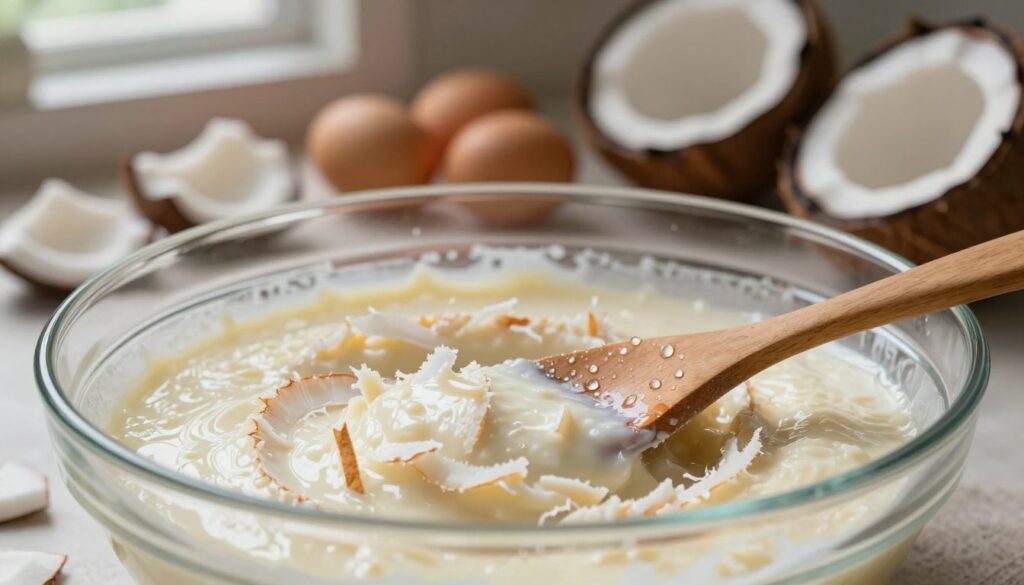
To make the coconut mixture, combine 100g desiccated coconut with 100g caster sugar and 50g melted butter. Whisk in two large eggs so the mixture binds and sets to a soft, chewy centre.
Add a single teaspoon of vanilla and a pinch of salt to balance the sugar. The salt lifts flavour and keeps the filling from tasting flat.
Balancing Sweetness and Texture
Fold the ingredients gently; do not overwork the mixture. Over-mixing can make the texture dense and tough.
Spoon the filling into the pastry shells just below the top edge. This prevents overflow during baking and keeps each coconut tart neat.
- Use a standard measuring cup for consistent ratios.
- Ensure the mixture is even so each tart receives the same flavour.
- For extra richness, stir in one add egg yolk from a large egg before filling.
Tips for Achieving a Crisp Pastry Base
Small steps before baking will keep your pastry case thin and pleasantly crunchy.
Chill the shortcrust pastry for 20 minutes before you roll it. A well‑chilled dough keeps the butter solid and reduces shrinkage when the tart tin hits the hot oven.
Prick the base with a fork before the blind bake. This stops the dough puffing up during the initial 10 minutes of bake minutes and helps the base stay flat and crisp.
After blind baking, allow the pastry to cool slightly. Cooling for a few minutes firm up the base so the filling does not make the pastry soggy.
- Prepare the tin: use a loose‑bottom tart tin to ease removal without breaking the finished tarts.
- Add a little cold water to the flour and butter mix to bind the dough—just enough to make it pliable.
- If the pastry becomes warm while handling, pop the tin back into the fridge for a few minutes to chill again.
Follow these simple tips and your coconut tart will have a crisp pastry base that balances the soft filling. Good timing and correct handling make the difference in this classic recipe.
Assembling Your Tarts for the Oven
Prepare each pastry case on the bench, ready for a neat jam and coconut layer. Grease the tart tin with a little butter using a pastry brush so the shortcrust pastry releases easily after baking.
Lining the Tins
Press the chilled pastry gently into each hole, easing it into the corners for a smooth pastry case. Prick the base once with a fork to stop puffing during the blind bake minutes.
Adding the Jam Layer
Measure 3/4 of a teaspoon of raspberry jam and spread it thinly over the base of each shell. Use a teaspoon so every tart gets the same sweet base before the filling is added.
Spoon the coconut mixture into each shell, filling just below the top to allow for slight expansion. A cup of desiccated coconut in the filling binds with egg and melted butter to give the classic texture.
| Step | Amount | Purpose |
|---|---|---|
| Grease tin | Brush of butter | Prevent sticking |
| Jam layer | 3/4 tsp per base | Fruity contrast |
| Filling | Fill to just below top | Avoid overflow |
| Oven | 180°C | Set pastry and filling |
Baking to Golden Perfection
Aim for 15–18 minutes in an oven preheated to 180°C. This gives the pastry time to crisp while the coconut mixture sets to a soft centre.
Watch the bake minutes closely near the end. The coconut browns quickly and a few extra minutes can change the top from lightly golden to overly dark.
Remove the tin when the centres are just set. The filling will continue to firm as it cools, so do not wait for it to be rock solid in the oven.
A golden top signals caramelisation of the sugar in the coconut filling, adding flavour and an attractive finish. Let the tart cases cool slightly in the tin so each pastry case holds its shape.
- Bake 15–18 minutes at 180°C for golden colour and even cooking.
- Monitor closely — the coconut can brown fast in a hot oven.
- Remove when centres are just set; the texture will finish as they cool.
- Ensure oven temperature stays steady so every tart cooks the same way.
Troubleshooting Common Baking Issues
Common faults like shrinkage, overflow or a soft base have quick fixes. Check dough chill, oven temperature and fill level first. Small changes at this stage often solve the problem.
Practical checks:
- If the pastry shrinks, chill the dough at least 20 minutes before pressing into the tart tin.
- To stop filling overflow, fill each pastry case slightly lower so the mixture can rise during bake minutes.
- If tarts darken too fast, lower the oven temperature by 10–15°C for a gentler bake.
- A soft base means the case needs a blind bake of 10 minutes before adding the filling.
- If the filling turns dry, remove the tarts when centres are just set — do not overstay the recommended time.
| Issue | Likely Cause | Quick Fix |
|---|---|---|
| Shrinking pastry | Dough too warm or not chilled | Chill 20+ minutes before lining the tin |
| Overflowing filling | Overfilled cases | Fill lower; allow room for rise |
| Dark tops | Oven too hot | Reduce temperature slightly; watch bake minutes |
| Soft base | No blind bake | Blind bake pastry case 10 minutes |
Handle shortcrust pastry gently to keep a crisp pastry and a moist, tender filling. With these tweaks, your coconut tart should come out reliably well.
Creative Variations and Flavour Twists
A bright twist can lift this classic bake into something new and memorable. Try adding lemon zest to the shortcrust pastry for a fresh, citrus note that cuts through the sweetness.
For a lighter filling, replace part of the butter with natural yoghurt. This yields a softer texture while keeping the flavour balanced with a little caster sugar.
- Swap the raspberry jam for strawberry or blackberry jam to change the fruit profile.
- Add a cup of desiccated coconut to the mixture and stir in a teaspoon of lime zest for tropical flair.
- Top each tart with flaked almonds for crunch, or use almond extract instead of vanilla for a nuttier finish.
Quick tip: a single egg yolk in the filling adds richness without heaviness. These easy recipes let you personalise the coconut tart for afternoon tea or a bake sale.
Serving Suggestions for Afternoon Tea
Serve these small sweets at room temperature so the filling firms and the pastry stays crisp. Room temperature gives the best balance between texture and flavour.
A fresh pot of tea is the classic partner. The warm drink complements the sweet coconut and jam notes and cuts through the richness of butter and sugar.
Add a handful of fresh berries on the side to offset sweetness. The tart fruit gives a bright contrast to the jam base and desiccated coconut filling.
“A light dusting of icing sugar over the top adds a simple, elegant finish.”
If you prefer them warm, heat briefly in a low oven to revive aroma. Avoid the microwave so the pastry remains crisp and the top does not soften.
- Room temperature: ensures filling sets and pastry stays crisp.
- Tea pairing: highlights sweet coconut and jam flavours.
- Fresh berries: add colour and tart balance.
- Warm option: low oven only; keep an eye on temperature.
Storing and Freezing Your Baked Goods
Simple storage steps let you enjoy perfect pastry and filling for days after baking.
Once cooled, place the tarts in an airtight container and keep at room temperature for up to 2 days. This preserves the crisp pastry case and stops the filling from drying out.
If you need longer storage, freeze the baked tarts for up to one month. Use a sturdy container and lay them in a single layer — do not stack — so the delicate filling keeps its shape.
Unfilled pastry cases freeze well and save time. Defrost on the worktop, add the filling and bake as needed. Always bring frozen items to room temperature before serving.
Reheating tip: warm briefly in a low oven at 160°C for a few minutes to revive crispness. Avoid the microwave; it softens the pastry and ruins the texture you worked to achieve.
- Short term: airtight container at room temperature — up to 2 days.
- Long term: freeze up to 1 month; avoid stacking.
- Unfilled cases: freeze for convenience and bake fresh later.
| Storage Type | Container | Time | Notes |
|---|---|---|---|
| Room storage | Airtight container | Up to 2 days | Keeps pastry crisp; keep at room temperature |
| Frozen (baked) | Sturdy container | Up to 1 month | Single layer, defrost before serving |
| Frozen (unfilled) | Freezer-safe tin or box | Up to 1 month | Fill and bake from frozen for fresher results |
Conclusion
This recipe turns basic pantry items into an elegant, familiar treat. It shows how simple ingredients and straight‑forward technique deliver a crisp pastry and soft, sweet filling every time.
Coconut tarts are versatile: swap jams or add zest to make the flavour your own. With clear steps and modest prep time, these small bakes slip easily into your repertoire of trusted recipes.
Enjoy making these coconut tarts for afternoon tea or a bake sale. They bring nostalgia, balance and reliable results for home bakers of any level.
FAQ
What makes these coconut tart recipes so popular?
Which type of coconut should I use for the filling?
How do I choose the right flour for the pastry base?
Any tips for making perfect shortcrust pastry?
How do I get the coconut filling texture right?
What’s the best way to line tart tins?
Should I add jam under the coconut filling? If so, which kind?
How long and at what temperature should I bake the tarts?
My pastry turned out soggy. How can I avoid that?
Can I add flavour variations to the coconut filling?
How should I store and freeze these tarts?
Any serving suggestions for afternoon tea?
Mary Berry Coconut Tarts
Classic little bakes, these small tarts pair a crisp pastry shell with a soft, sweet coconut filling. They suit afternoon tea, bake sales or an easy home baking session when you want something reliably traditional.
Ingredients
- 175g plain flour
- 100g cold, cubed butter
- 100g caster sugar
- 100g desiccated coconut
- 2 large eggs
- 1 teaspoon vanilla extract
- 50g melted butter
- 3/4 teaspoon raspberry jam
- pinch of salt
Method
- Preheat the oven to 180°C.
- Rub the cold butter into the plain flour until it resembles fine breadcrumbs.
- Add the egg yolk and 1-2 tablespoons of cold water to bind the mixture into a soft ball.
- Chill the dough for 20 minutes before rolling it out.
- Press the chilled pastry into a 12-hole tart tin, ensuring even thickness, and prick the base with a fork.
- Blind bake the pastry for 10 minutes to set the base.
- In a bowl, combine the desiccated coconut, caster sugar, and melted butter.
- Whisk in the eggs, vanilla extract, and a pinch of salt until well combined.
- Spread a thin layer of raspberry jam over the base of each pastry shell.
- Spoon the coconut mixture into each shell, filling just below the top edge.
- Bake in the preheated oven for 15-18 minutes until the tops are golden.
- Remove from the oven and let cool slightly in the tin before serving.