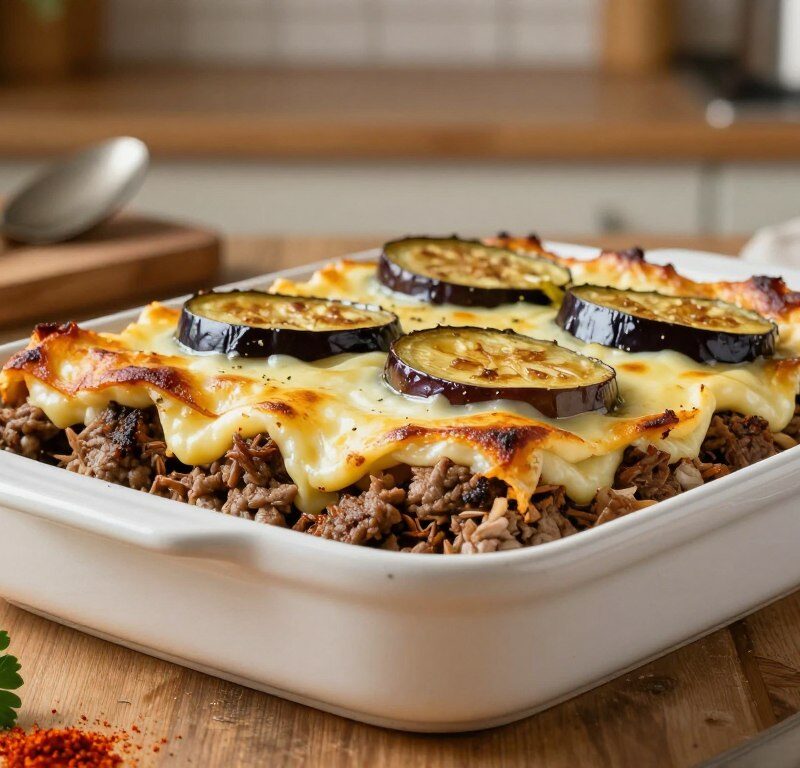
This classic Greek-inspired bake layers spiced minced meat with tender aubergines, ripe tomatoes and a creamy white sauce for a comforting result. The recipe balances bold savoury notes with a velvety finish that feels special without fuss.
When you make this mary berry lamb dish at home, it suits slow weekend cooking and relaxed family meals. Each portion offers a pleasing contrast of textures: soft veg, rich meat and a smooth topping that browns beautifully.
Expect a show-stopping centrepiece that echoes lasagne in its layers but stays lighter by using vegetables instead of pasta. It is approachable, modern and steeped in Mediterranean flavour.
Key Takeaways
- Layered bake using aubergines, spiced minced lamb and a creamy sauce.
- A comforting recipe ideal for family dinners and entertaining.
- Combines traditional Greek flavours with an accessible method.
- Vegetable-based layers make it lighter than a pasta bake.
- Delivers bold savoury taste with a satisfying, velvety texture.
The Appeal of Mary Berry Lamb Moussaka
The appeal lies in its layers: spiced, tender mince, soft grilled aubergine and a golden, creamy topping. This moussaka classic tastes indulgent yet wholesome, and it looks impressive on the plate.
Ground lamb gives deep, savoury flavour that lifts the whole dish. The béchamel adds a silky finish that everyone enjoys.
This recipe is ideal for a family dinner or a special gathering. It is flexible too — you can tweak herbs and spices to suit your taste.
- Comforting and showy: great for entertaining.
- Feed a crowd: feeds a hungry family with minimal fuss.
- Customisable: swap herbs, add veg or spice to personalise the bake.
Essential Ingredients for Your Moussaka
Start by collecting the core items—meat, vegetables and a few pantry staples—to keep the recipe straightforward. Having everything ready saves time and helps the assembly flow.
Meat and Vegetable Components
500g minced lamb provides the rich meat base for this mary berry lamb dish. Use 2 large aubergines, sliced into rounds, for the layered vegetable structure.
Pantry Staples
For the béchamel sauce, you need 40g butter and 40g plain flour to make a roux, then whisk in 400ml milk until smooth.
Season the meat with 1 tsp ground cinnamon, 1 tsp dried oregano, 2 garlic cloves and 400g chopped tomatoes. Keep olive oil, salt and pepper close at hand to season both vegetables and meat.
- Finish: 50g grated cheese for a golden top.
- Extras: quality tomato purée and fresh garlic cloves will boost aroma and depth.
Preparing the Aubergines for Perfect Texture
A few simple steps turn aubergines into tender, flavourful layers that hold up in the bake. Begin by slicing the aubergines into even rounds so they cook uniformly.
Salting and Roasting Techniques
Lay the slices on a tray and lightly sprinkle with salt to draw out excess moisture and any bitterness. Leave them for about 10 minutes, then pat each slice dry so the oil adheres properly.
Brush each round with a little olive oil so they brown evenly. Place the tray in a preheated oven at 200°C (400°F) and roast for 15 minutes until the aubergines are soft and tender.
Roasting rather than frying helps the vegetables absorb less oil, giving a lighter texture in the finished dish. Use high-quality oil for the best flavour and a lovely golden finish.
- Tip: Pat dry after salting to avoid soggy slices.
- Tip: Keep slices similar thickness to ensure even roasting.
Crafting the Rich Lamb Filling
Begin by heating 1 tbsp of olive oil in a large pan. Gently sauté the onion and 2 garlic cloves until they soften and smell fragrant.
Add 500g of minced lamb and brown thoroughly, breaking the mince up so it cooks evenly. Stir in 1 tsp ground cinnamon and 1 tsp dried oregano to build the classic spice note.
Tip: pour a splash of red wine with 400g chopped tomatoes and 2 tbsp tomato purée to form a deep, savoury sauce. Simmer for 15 minutes until the liquid reduces and the sauce coats the meat.
“A good filling tastes of herbs and tomato, not just heat.”
- Season with salt and freshly ground pepper to taste.
- Adjust herbs and garlic for a personalised finish.
| Step | Action | Time |
|---|---|---|
| 1 | Sauté onion & garlic in olive oil | 3–4 minutes |
| 2 | Brown mince, add spices | 5–6 minutes |
| 3 | Add tomatoes, purée & red wine, simmer | 15 minutes |
This mary berry lamb filling becomes the savoury heart of your lamb moussaka. It delivers rich tomato depth and balanced spice that lifts the whole bake.
Mastering the Velvety Béchamel Sauce
Nailing a creamy white sauce lifts every bite and ties the layers together. A smooth béchamel should be glossy, pourable and able to hold its shape on top of the meat and vegetables.
Creating the Roux
To make béchamel, melt 40g butter in a saucepan over medium heat. Whisk in 40g plain flour to form a pale roux and cook for a minute to remove any raw flour taste.
Achieving the Right Consistency
Gradually add 400ml milk, whisking constantly so the sauce stays smooth. Keep the heat low and stir for about 5 minutes until the béchamel thickens and coats the back of a spoon.
Season with a pinch of nutmeg, salt and a little pepper. When you make béchamel, remove it from the heat once thick, then stir in grated cheese if you want extra richness.
“A velvety sauce is worth the few minutes of patience it needs.”
- Tip: If lumps appear, whisk briskly off the heat or strain into a bowl.
- Tip: Let the sauce cool slightly before spreading so it sits evenly over the layers.
Layering Your Moussaka for Success
Place a neat layer of roasted aubergines across the base of your ovenproof dish. This gives a stable foundation and helps the bake hold its shape when you slice it.
Spread half of the rich lamb mixture over the aubergines, making sure the meat reaches all edges so every portion is well balanced. Add a second layer of aubergine slices, then the remaining lamb to build firm, even strata.
Pour the creamy sauce over the final meat layer. Smooth the top so the béchamel seals the filling and browns evenly in the oven.
Proper layering is the secret to a successful berry lamb moussaka. It lets flavours meld while preserving distinct textures: soft veg, rich meat and a silky topping.
- Base: roasted aubergines.
- Middle: half the lamb, repeat aubergines, remaining lamb.
- Top: pour béchamel sauce and level.
| Stage | What to do | Why it matters |
|---|---|---|
| Base | Roasted aubergines | Foundation for structure and moisture control |
| Middle | Evenly spread lamb | Ensures balanced flavour in each slice |
| Top | Béchamel sauce | Seals and browns to create a silky finish |
Baking to Golden Perfection
Get the oven hot and watch the bake transform: this final step seals the flavours and creates a golden top.
Preheat the oven to 200°C (400°F). Slide the assembled dish onto the middle shelf and bake for 25–30 minutes.
Watch for the béchamel to bubble and turn a rich, golden brown. The cheese on the top will melt and caramelise, adding savoury crunch that balances the soft aubergines and tender lamb.
If the surface browns too quickly, loosely cover the bake with foil. This lets the centre heat through without burning the top.
“This mary berry lamb moussaka is ready when the sauce bubbles and the top feels firm to the touch.”
- Use a deep, ovenproof dish to prevent spillages while baking.
- Bake until the top is lightly browned and bubbling for best texture.
- Allow the heat to finish melding the layers for a cohesive, flavourful result.
| Action | Temperature | Timing |
|---|---|---|
| Preheat oven | 200°C / 400°F | — |
| Bake assembled dish | 200°C / 400°F | 25–30 minutes |
| Protect top if needed | 200°C / 400°F | Cover with foil until centre heated through |
The Importance of Resting Before Serving
A short pause after baking helps the layers set so each slice stays intact.
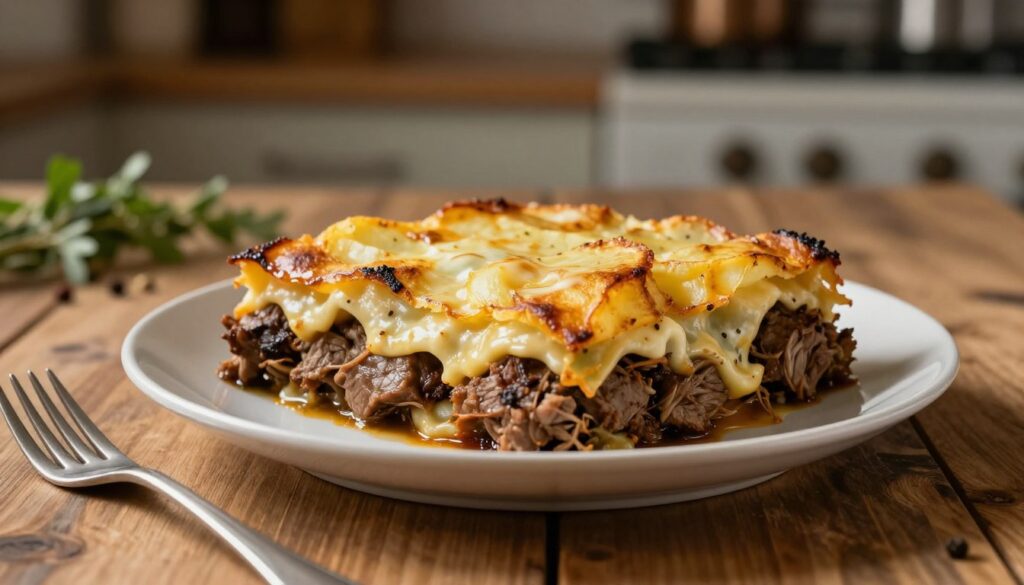
After you remove the dish from the oven, let the moussaka rest for at least 10 minutes before you try to slice it. This simple pause gives the sauce and layers time to firm up.
The moussaka rest period is essential because the filling settles and the internal temperature stabilises. When that happens, the texture improves and the slices hold together better.
If you cut too soon the layers may slip apart and the plate can look messy. A proper moussaka rest makes the difference between a rushed serving and a neat, professional presentation for guests.
“Allowing the bake to rest is a small step that rewards you with cleaner slices and fuller flavour.”
- Remove from oven and wait at least 10 minutes.
- Use a sharp knife and steady slices after the moussaka rest.
- Serve warm so the texture and flavours are at their best.
Recommended Side Dishes to Complement the Meal
A few well-chosen accompaniments lift this rich oven dish into a complete meal. Pick sides that add freshness, texture and contrast to the creamy top and spiced meat beneath.
Refreshing Greek Salad Pairings
Fresh Greek salad with tomato, cucumber and olives dressed in quality olive oil brightens every bite. The crisp veg and a splash of oil cut through the richness of the sauce and main.
- Warm pita for scooping up any leftover lamb sauce on the plate.
- Garlic bread for a crunchy contrast to the soft, creamy topping.
- Steamed greens or roasted veg to add colour and balance the hearty dish.
- Tzatziki — a cool cucumber and yogurt dip that refreshes the palate.
- Light rice pilaf to make the meal more filling for guests.
| Side | Why it works | Best served with |
|---|---|---|
| Greek salad | Fresh acidity and crunch | Tomato, cucumber, olive oil |
| Pita or garlic bread | Great for mopping up sauce | Warm, lightly toasted |
| Steamed greens | Light, healthy contrast | Seasoned simply with oil and garlic |
Expert Tips for Enhancing Flavour
Seasoning during assembly makes a real difference. Salt and pepper each layer so every bite tastes balanced and full.
Boost the spiced filling with a pinch of cinnamon and extra oregano. This deepens aroma and gives the recipe a classic Mediterranean character.
Grill the aubergines with a little extra oil before layering to add a smoky note. Use fresh garlic in the meat for a brighter, more complex taste than powdered alternatives.
For a richer top, sprinkle a mix of parmesan and feta cheese over the béchamel before baking. This browns beautifully and adds salty tang.
“Always taste the lamb sauce before you assemble — adjust herbs and seasoning until it feels just right.”
| Tip | Action | Why it helps |
|---|---|---|
| Layer seasoning | Salt & pepper each layer | Ensures even taste in every slice |
| Herb boost | Add cinnamon & oregano | Richer, more aromatic sauce |
| Veg prep | Grill aubergines with oil | Smoky depth and firmer texture |
| Finish | Parmesan + feta on top | Golden, flavourful crust |
Dietary Substitutions and Variations
Small swaps in proteins and vegetables can change the character of this layered oven bake.
Meat options: If you prefer, replace the lamb with beef mince or a mix of both to make a richer sauce. Using ground beef gives a firmer texture and a slightly different savoury note.
Vegetarian choices: For a meat-free version, use hearty lentils or extra vegetables such as courgettes and mushrooms. These keep the body of the dish while adding natural texture and flavour.
Layer swaps: Short on aubergines? Thin potato slices work well as an alternative layer — just pre-cook them so they soften and hold the bake together.
Lightening the béchamel: Swap full-fat milk for almond milk or low-fat milk and reduce the butter and flour slightly. This cuts calories while keeping a creamy finish.
Extra flavour tips: Add a splash of red wine to the tomato base for extra depth. You can also swap olive oil for another cooking fat if dietary needs demand it.
| Substitute | Use instead of | Why it works |
|---|---|---|
| Beef mince | Lamb | Creates a firmer, familiar flavour for those who prefer beef |
| Lentils / Courgettes | Minced meat | Keeps texture and bulk for a vegetarian option |
| Thin potato slices | Aubergines | Pre-cooked potatoes hold layers and add comfort-food appeal |
| Almond / Low-fat milk | Full-fat milk | Lightens béchamel without losing creaminess |
Storing and Reheating Leftovers
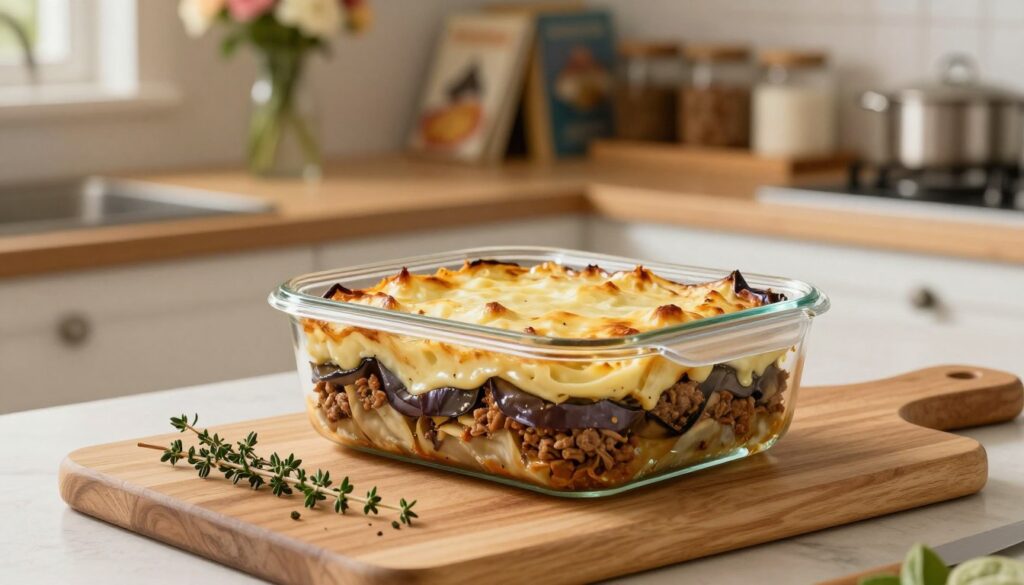
Turning tonight’s bake into tomorrow’s dinner is simple if you follow a few easy storage rules. Cool the dish completely before packing to avoid condensation and soggy layers.
Refrigeration Guidelines
Store any leftover mary berry lamb moussaka in an airtight container in the fridge. It will stay fresh for 3 to 4 days when chilled promptly.
If you plan to reheat in the oven, transfer to an ovenproof dish and add a splash of olive oil to help the top stay moist. Reheat at 180°C (350°F) for 15–20 minutes until hot and bubbling.
Freezing for Future Meals
This bake freezes beautifully for up to 3 months. Allow the layers to cool completely, then wrap tightly or use a freezer-safe container to preserve texture.
When ready to eat, thaw overnight in the fridge. Reheat in the oven at 180°C for 20–30 minutes from chilled, or shorter from fully thawed. If using a microwave, heat in short intervals to avoid drying the sauce and tender lamb meat.
“A rested and properly stored portion often tastes even better the next day as flavours continue to meld.”
| Storage | Method | Time |
|---|---|---|
| Fridge | Airtight container, cool first | 3–4 days |
| Freezer | Wrap tightly or use freezer-safe box | Up to 3 months |
| Reheat (oven) | Preheat oven, cover if needed | 180°C for 15–20 minutes |
| Reheat (microwave) | Short bursts, stir or check centre | Until hot throughout |
Troubleshooting Common Moussaka Issues
A few quick checks while you cook will prevent the usual pitfalls that make this dish watery or bland.
If the bake is watery: simmer the lamb sauce for at least 15 minutes so excess liquid reduces before assembly. This concentrates flavour and stops the layers from sliding.
To avoid lumpy béchamel: whisk the milk into the butter and flour mixture steadily for about 5 minutes until completely smooth. Keep the heat low and stir off the heat if lumps appear.
Bitter aubergines? Salt slices for 15 minutes, then pat dry before roasting. That simple step improves the overall taste and texture of the vegetables.
Layers that slip: allow the moussaka to rest for 10 minutes after baking so the meat and vegetables set. If the top is browning too fast, cover the dish with foil for the last 10 minutes.
Low flavour in the mince: boost garlic, cinnamon and oregano, or add a splash of red wine to deepen the meat sauce.
“Small timing, seasoning and resting changes make a big difference to the final dish.”
| Problem | Fix | Timing |
|---|---|---|
| Watery bake | Reduce sauce by simmering | 15 minutes |
| Lumpy sauce | Whisk milk into roux slowly | 5 minutes |
| Bitter aubergines | Salt and pat dry before roasting | 15 minutes |
| Burning top | Cover with foil for final bake | 10 minutes |
Conclusion
This comforting, layered recipe brings tender meat, soft aubergine and a silky béchamel together for a satisfying finish.
It works well for a cosy family dinner or a special occasion. Flavours deepen after a day, so leftovers taste even better.
Make this mary berry lamb centrepiece to impress guests with classic Mediterranean textures and warmth. The method is approachable and ideal when you want to make mary berry style dishes at home.
Enjoy the robust flavours of this moussaka classic and the simple pleasure of serving a homemade, crowd-pleasing bake.
FAQ
What oven temperature should I use to bake this classic moussaka?
How do I prepare aubergines so they are not soggy or bitter?
Can I swap lamb mince for beef or a mix of both?
What spices and aromatics work best in the meat sauce?
How do I make a smooth béchamel without lumps?
What consistency should the béchamel have before baking?
Do I need to rest the moussaka after baking? If so, for how long?
Can I prepare parts of the recipe in advance?
How should I store and reheat leftovers?
Are there good vegetarian or lighter variations?
What side dishes pair well with this dish?
Why did my moussaka become watery, and how can I fix it?
Can I add cheese to the top, and what type works best?
How long does the assembled dish take to bake?
Mary Berry Lamb Moussaka
This classic Greek-inspired bake layers spiced minced meat with tender aubergines, ripe tomatoes and a creamy white sauce for a comforting result. The recipe balances bold savoury notes with a velvety finish that feels special without fuss.
Ingredients
- 500g minced lamb
- 2 large aubergines, sliced into rounds
- 40g butter
- 40g plain flour
- 400ml milk
- 1 tsp ground cinnamon
- 1 tsp dried oregano
- 2 garlic cloves, minced
- 400g chopped tomatoes
- 1 tbsp olive oil
- 50g grated cheese
- Salt and pepper to taste
Method
- Preheat the oven to 200°C (400°F).
- Slice the aubergines into even rounds and sprinkle with salt. Let them sit for 10 minutes, then pat dry.
- Brush the aubergine slices with olive oil and roast in the oven for 15 minutes until soft.
- In a large pan, heat 1 tbsp of olive oil and sauté the onion and minced garlic until fragrant.
- Add the minced lamb to the pan and brown thoroughly, breaking it up as it cooks.
- Stir in ground cinnamon and dried oregano, then add chopped tomatoes and tomato purée. Simmer for 15 minutes.
- In a saucepan, melt 40g butter over medium heat, then whisk in 40g plain flour to form a roux.
- Gradually add 400ml milk while whisking constantly until the sauce thickens. Season with nutmeg, salt, and pepper.
- Layer half of the roasted aubergines in an ovenproof dish, followed by half of the lamb mixture.
- Add another layer of aubergines and the remaining lamb mixture on top.
- Pour the béchamel sauce over the final layer and smooth the top.
- Bake in the preheated oven for 25–30 minutes until the top is golden brown and bubbling.
- Let the moussaka rest for at least 10 minutes before slicing and serving.