Mary Berry’s classic white sauce turns ordinary ingredients into beloved comfort food. It starts with a traditional roux and ends as a silky, lump-free topping that lifts pasta, cauliflower and baked vegetable dishes.
Simple to make and reliably creamy, this recipe is ideal for a quick weeknight supper or a special Sunday meal. The method gives a gentle flavour that complements roasted or steamed vegetables without overpowering them.
Follow a few easy steps and you will have a versatile sauce ready to pour over cauliflower cheese, pasta bakes or other comforting dishes. Home cooks value its smooth texture and consistent results.
Key Takeaways
- The recipe relies on a traditional roux for a silky, lump-free finish.
- It is versatile: great with cauliflower, pasta and baked vegetables.
- Simple steps yield restaurant-quality results at home.
- Perfect for both quick weeknight meals and Sunday roasts.
- Produces a gentle, creamy flavour that complements many dishes.
The Appeal of Mary Berry Cheese Sauce
The real charm of a classic creamy topping lies in its balance of flavour and ease of use. This particular recipe is celebrated across the UK for turning basic storecupboard staples into memorable family meals.
Beginner-friendly and forgiving, the method produces a velvety texture that lifts simple pasta or tender cauliflower without fuss. It suits weeknight cooking and special Sunday roasts alike.
Many home cooks praise these recipes because they deliver consistent results. A good roux and gentle stirring mean a smooth finish every time.
Rooted in British food culture, this sauce often stars in comforting gratins and classic cauliflower cheese. Using high-quality cheese ensures richness and depth for the ultimate comfort experience.
- Versatile with pasta and vegetables
- Easy technique, reliable texture
- Elevates simple ingredients to satisfying dishes
Essential Ingredients for a Perfect Roux
Start with precise measurements to build a dependable roux every time. Use exactly 50g of butter and 50g of plain flour. Cook the mixture for one minute to remove any raw flour taste.
Selecting the Right Cheese
Choose flavour and meltability. For a robust finish, grate 100g of mature cheddar finely. Finely grated cheese melts faster and blends into the sauce without clumps.
The Importance of Quality Milk
Pour in 600ml of whole milk for a silky, rich texture. Fresh milk gives the best body and keeps the flavour clean.
- Butter: Melt fully but do not brown; browning changes the taste.
- Flour: Equal weight to butter ensures a smooth thickener.
- Technique: The roux is the thickening heart of the sauce — whisk steadily as you add milk.
Mastering the Mary Berry Cheese Sauce Method
Start over a low flame and gently melt the butter in a medium saucepan to form the base of your roux. Add the flour and stir for a minute to cook out any raw taste.

Now, slowly pour in 600ml of milk while stirring constantly. Do this in a steady stream so the mixture remains smooth and free of lumps.
Bring the mixture to a gentle simmer and cook for 3–4 minutes until it thickly coats the back of a spoon. This short cooking time gives the right body without over-thickening.
Remove the pan from the heat and season with salt, white pepper and a pinch of nutmeg. Stir in 1 teaspoon of Dijon mustard for a subtle tang.
For the final addition, fold in the grated cheese off the heat so the cheese melts to a glossy finish. The result is ideal for cauliflower cheese, pasta bakes or as a classic topping.
Troubleshooting Common Consistency Issues
Small mistakes can spoil the texture, but most problems fix quickly with a calm approach and a few smart moves.
Fixing a Lumpy Sauce
If you spot lumps, act while the mixture is warm. Whisk vigorously in the saucepan; rapid motion often breaks clumps into a smooth blend.
If whisking fails, strain the mixture through a fine sieve into a clean pan. This restores the velvety consistency prized in a good cheese sauce.
Correcting a Floury Taste
A raw, floury flavour means the roux needed more cooking. Next time, cook butter and flour for at least 1 minute over gentle heat.
Right now, simmer the sauce gently for a few extra minutes to mellow the flour taste. Add a small pinch of nutmeg and a drop of mustard to help season and balance flavour.
Adjusting Thickness
Too thick? Stir in small splashes of warm milk and reduce heat. Too thin? Simmer gently until the sauce coats the back of a spoon.
If the base begins to scorch, remove the pan from the heat at once and stir frequently to stop further burning.
| Problem | Likely Cause | Quick Fix | Timing |
|---|---|---|---|
| Lumps | Milk added too fast | Whisk or sieve | Immediate |
| Floury taste | Roux undercooked | Simmer & season with nutmeg | 2–5 minutes |
| Too thick | Over-reduction | Add warm milk | 1–2 minutes |
| Scorched base | High heat | Remove from heat, stir | Immediate |
Creative Flavour Variations
Experimenting with flavours helps you tailor the creamy base to your dinner mood.
Add fresh herbs like parsley, thyme or chives for a bright lift. These give a clean contrast to the richness and work well stirred in at the end.
For heat, try chilli flakes or smoked paprika. A small pinch changes the tone without hiding the underlying flavour of the sauce.
Swap the cheddar for Gruyère or Red Leicester to deepen the flavour. Roasted or minced garlic also adds a savoury note for family dinners.
| Variation | Primary Flavour | Best Use |
|---|---|---|
| Herb mix | Fresh, green | Vegetable bakes, pasta |
| Smoked spice | Smoky, warm | Grilled veg, macaroni |
| Alternative cheese | Nutty or sharp | Au gratin, tartlets |
These small changes keep the base method intact while expanding the range of recipes you can create. Mary Berry notes such swaps brighten classic family favourites.
Serving Suggestions for Classic British Dishes
Finish in the oven for twenty minutes to create a bubbling, caramelised top that delights at the table.
Cauliflower cheese bakes brilliantly at 200°C for 20 minutes until the top is golden and bubbling. Serve with a grind of black pepper and a crisp green salad for contrast.
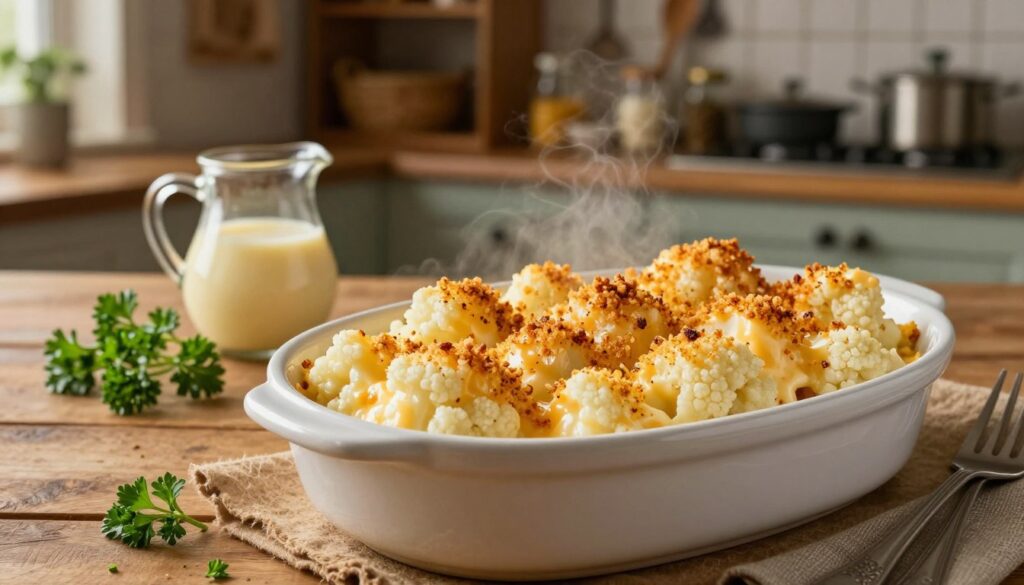
This rich sauce pairs well with roast chicken or grilled fish to lift everyday roasts into special meals. Try spooning it over poached broccoli and leeks for a luxe vegetable side.
For a family favourite, stir the mix through cooked pasta to make a creamy mac cheese. Transfer to a dish and bake until piping hot for a comforting one-dish supper.
| Dish | Best Use | Oven / Time |
|---|---|---|
| Cauliflower cheese | Top and bake | 200°C / 20 minutes |
| Mac cheese | Stir into pasta, bake | 180–190°C / 15–20 minutes |
| Roast chicken or fish | Spoon on after resting | No bake needed |
| Vegetable gratin | Layer and bake | 190°C / 25–30 minutes |
Storing and Reheating Your Sauce
Airtight storage and gentle reheating are the secrets to a reliable make-ahead sauce. Cool the pan until the mixture reaches room temperature before transferring it to an airtight container. Chill in the fridge to keep quality for up to 3 days.
When it is time to reheat, use low heat and take your time. Warm slowly on the hob and use stirring constantly so the texture stays smooth. If the sauce has thickened during storage, add a splash of milk to restore the original consistency.
For longer keeping, freeze in a suitable container for up to 1 month. Thaw in the fridge, then reheat gently and stir well after thawing. Mary Berry advises cooling completely first to maximise freshness and avoid bacterial growth.
Nutritional Benefits of Homemade Cheese Sauce
One portion of the homemade mix comes in at roughly 210 calories, with 9g of protein and 17g of fat. This makes it a balanced treat for a family meal.
Milk and mature cheddar add valuable calcium, which helps keep bones strong. A serving also supplies protein from the dairy base and a little healthy fat from butter.
Pairing the topping with vegetables boosts nutrition. Cauliflower used in cauliflower cheese adds vitamin C and fibre. That makes the dish more filling and lower in net carbs than heavy pasta bakes.
Small swaps cut calories easily. Use reduced-fat cheese or plant-based milk to lower energy without losing creaminess. Add a pinch of nutmeg, a grind of pepper and a little salt to season, and stir in a tiny dash of mustard for depth.
“A homemade mix can be both comforting and nutritionally sensible when you choose quality ingredients.”
Conclusion
Master this simple recipe and you will lift basic ingredients into flavoursome family favourites. The method is forgiving and quick, so it suits busy evenings as well as weekend cooking.
Use the practical tips provided to keep the texture smooth and the seasoning balanced. Small steps save time and ensure consistent results across many dishes.
These recipes are versatile and rewarding. With a little practice you will feel confident serving creamy, comforting food that the whole household will enjoy.
FAQ
What makes this recipe so popular?
Which cheddar should I use for the best result?
Can I use skimmed milk instead of whole milk?
How do I make a perfect roux without lumps?
My sauce turned lumpy — how can I fix it?
The sauce tastes floury. What went wrong?
How do I adjust the thickness for different dishes?
Any simple flavour variations to try?
What pairs well with this sauce in British dishes?
How should I store leftover sauce?
Can I freeze the sauce?
Is this sauce suitable for children or those watching calories?
Mary Berry Cheese Sauce
Mary Berry’s classic white sauce turns ordinary ingredients into beloved comfort food. It starts with a traditional roux and ends as a silky, lump-free topping that lifts pasta, cauliflower and baked vegetable dishes.
Ingredients
- 50g butter
- 50g plain flour
- 600ml whole milk
- 100g mature cheddar, grated
- Salt to taste
- White pepper to taste
- Pinch of nutmeg
- 1 teaspoon Dijon mustard
Method
- Melt the butter in a medium saucepan over low heat to form the base of your roux.
- Add the flour and stir for one minute to cook out any raw taste.
- Slowly pour in the milk while stirring constantly to keep the mixture smooth.
- Bring the mixture to a gentle simmer and cook for 3–4 minutes until it thickly coats the back of a spoon.
- Remove the pan from the heat and season with salt, white pepper, and a pinch of nutmeg.
- Stir in the Dijon mustard for a subtle tang.
- Fold in the grated cheese off the heat until it melts to a glossy finish.