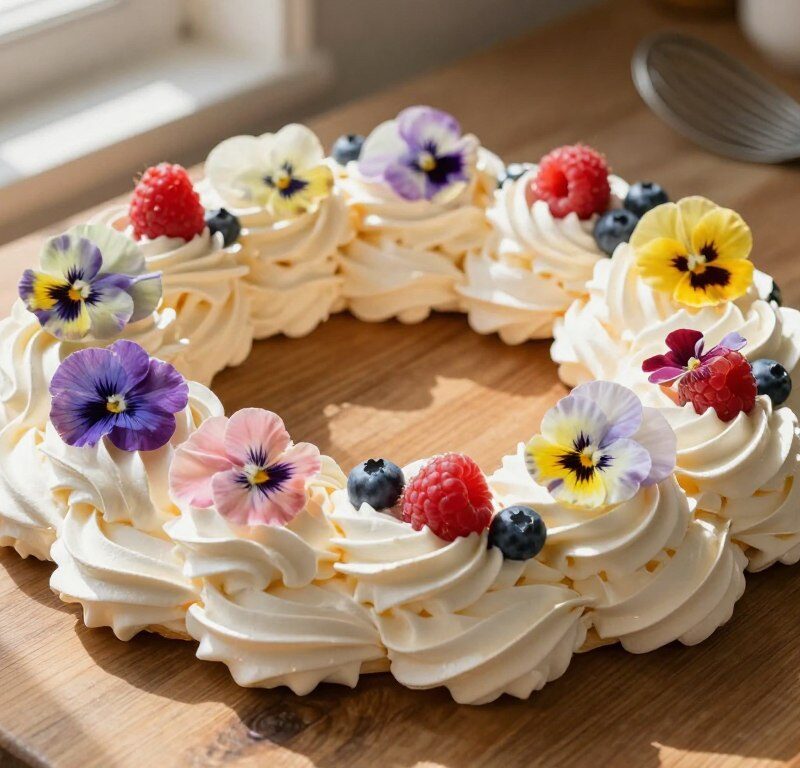
This exquisite centrepiece brings a touch of elegance to any festive table. The classic pavlova twist combines a crisp, marshmallow-like base with rich, creamy toppings for a showstopping dessert that delights guests.
The recipe is surprisingly simple to master, even for those new to baking. We guide you through clear steps so you can create a beautiful ring of baked meringue topped with seasonal fruit and cream.
Every bite offers a lovely contrast between airy sweetness and lush toppings, making this pavlova variation ideal for celebrations. Follow practical tips and enjoy a homemade centrepiece that tastes as good as it looks.
Key Takeaways
- The Mary Berry Meringue Wreath makes a striking festive centrepiece.
- The pavlova-style base is crisp outside and soft within.
- The recipe is accessible for novice bakers.
- Sweet, airy texture pairs perfectly with creamy fruit toppings.
- Step-by-step guidance helps you achieve consistent results.
Why the Mary Berry Meringue Wreath is the Ultimate Festive Centrepiece
The circular pavlova design turns a simple dessert into a seasonal showstopper. Its ring shape mimics a traditional decoration, so it feels at home on a Christmas table or any special occasion.
Customisable toppings are a big part of the appeal. Pile on whipped cream and bright fruit for contrast. Raspberries add colour, while crushed gingerbread crumbs give a festive crunch.
This centrepiece also wins on practicality. Many home cooks prefer it because it can be made ahead, freeing time on the big day. The mix of crisp shell and soft interior makes the pavlova a light, crowd-pleasing dessert.
- Decorative shape suits seasonal settings.
- Easy to customise with seasonal berries or biscuits.
- Make-ahead friendly for stress-free entertaining.
- Textural contrast appeals to varied tastes.
Essential Ingredients for Your Meringue Base
Start with six large eggs at room temperature. This gives the best volume when you whisk and helps the pavlova rise evenly.
Carefully separate the egg whites so no yolk contaminates the mix. Even a small trace of fat will stop the whites reaching stiff peaks.
Measure 1 tsp white wine vinegar and 1 tsp cornflour. The vinegar and cornflour work together to stabilise the egg whites and create that soft, marshmallow centre.
Use good caster sugar because fine grains dissolve quickly into the egg. A clean, dry bowl is essential; any residue will prevent the egg whites from whipping properly.
- Six large eggs, room temperature, separated with care.
- 1 tsp white wine vinegar (or wine vinegar) and 1 tsp cornflour to stabilise.
- High‑quality caster sugar and a spotless mixing bowl.
Tip: Some recipes call for a splash of white wine or a tsp white for flavour, but the stabilising role of the vinegar is the key to a reliable base.
Preparing Your Workspace and Equipment
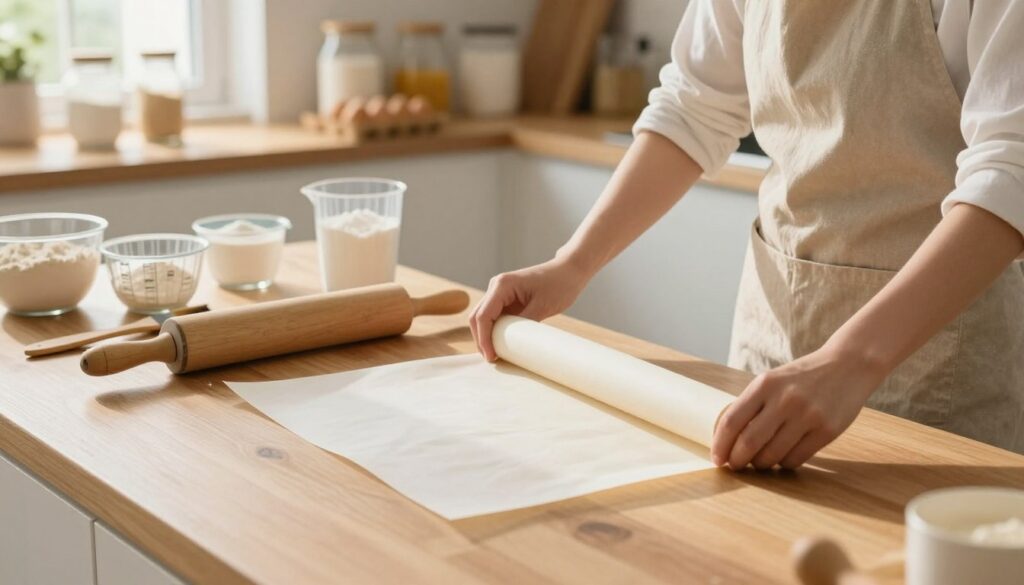
A calm, organised workspace makes baking a precise ring much easier. Clear a flat surface and lay out a 30–32cm platter for later. This saves time when it comes to serving.
Choosing the right tray
Pick a stable surface
Use a large baking tray that will fit a 30cm circle without crowding the oven. If your kitchen lacks a wide tray, the underside of a roasting tin gives a flat, stable surface.
Preparing the baking paper
Marking the guide
Use non-stick baking paper, not greaseproof paper, so the delicate meringue won’t stick. On the paper, draw a 30cm outer circle and a 15cm circle in the middle. This circle middle guide creates a uniform ring for the pavlova.
| Item | Recommendation | Why it matters |
|---|---|---|
| Baking tray | Large, flat tray (or roasting tin underside) | Prevents overcrowding in the oven and supports shape |
| Baking paper | Non-stick baking paper | Stops the meringue sticking to the surface |
| Guide circles | 30cm outer / 15cm middle | Ensures an even ring and consistent circle shape |
| Serving board | 30–32cm platter or cake board | Fits the finished ring for easy decoration |
Mastering the Perfect Meringue Mixture
Getting the right texture takes patience, a steady hand and a clean bowl. Begin with perfectly separated egg whites in a spotless mixing bowl. Any trace of yolk or grease will slow whisking and reduce volume.
Achieving Stiff Peaks
Whisk the egg whites on a medium setting for roughly 5 minutes until they reach soft peaks. This stage should be glossy but still fold when the whisk lifts.
Once soft peaks form, gradually add the sugar. Increase to the highest speed and continue whisking for 7–10 minutes. The mixture should become glossy and hold stiff peaks.
- Start whisking egg whites in a clean mixing bowl; aim for soft peaks in about 5 minutes.
- Add sugar slowly to keep the mix smooth and stable.
- Stabilise with a tsp of white wine vinegar and 1 tsp cornflour for structure during baking.
- Test readiness by turning the bowl upside down — if it stays put, the peaks are stiff.
| Step | Action | Timing |
|---|---|---|
| Whisk to soft peaks | Medium speed; egg whites only | ≈ 5 minutes |
| Add sugar | Gradually, increase speed | 7–10 minutes |
| Stabilise | Add white wine vinegar & cornflour | Before final whisk |
| Check | Bowl inversion test | Immediate |
This Mary Berry recipe is forgiving if you take the correct time for whisking and mixing. With patience, you’ll have a sturdy base ready for cream and fruit.
Shaping and Baking Your Mary Berry Meringue Wreath
Build the pavlova ring by spooning the glossy mix on to the marked circle. Use the circle middle you drew on the paper as a clear guide. Carefully spoon meringue onto the ring, using the back of a spoon to create swirls and small peaks for a decorative edge.
Preheat oven to 160C (gas mark 3, 140Fan) before you place the pavlova inside. As soon as the ring is in the oven, lower the temperature to 140C (gas mark 1, 120Fan). This keeps the exterior crisp and the colour white, preventing browning.
The total bake hour is 1 hour and 15 minutes. After that time, turn oven off and leave the ring inside for at least 1 hour or overnight. Slow cooling helps the centre set and stops cracks forming.
- Spoon meringue carefully on to the paper guide.
- Follow the oven 160c instructions to avoid premature browning.
- Leave in the oven for the hour overnight to dry out gently.
Creating the Delicious Cream and Fruit Toppings
Finishing the pavlova is all about balance: silky cream, sharp coulis and fresh fruit. These layers give the dessert its texture and lift the sweet base with bright acidity.
Whipping the Cream
Pour double cream into a large mixing bowl. Add 2 tbsp icing sugar and a splash of vanilla.
Whisk until the mixture reaches stiff peaks. This creates a stable bed for the fruit and stops the cream from weeping.
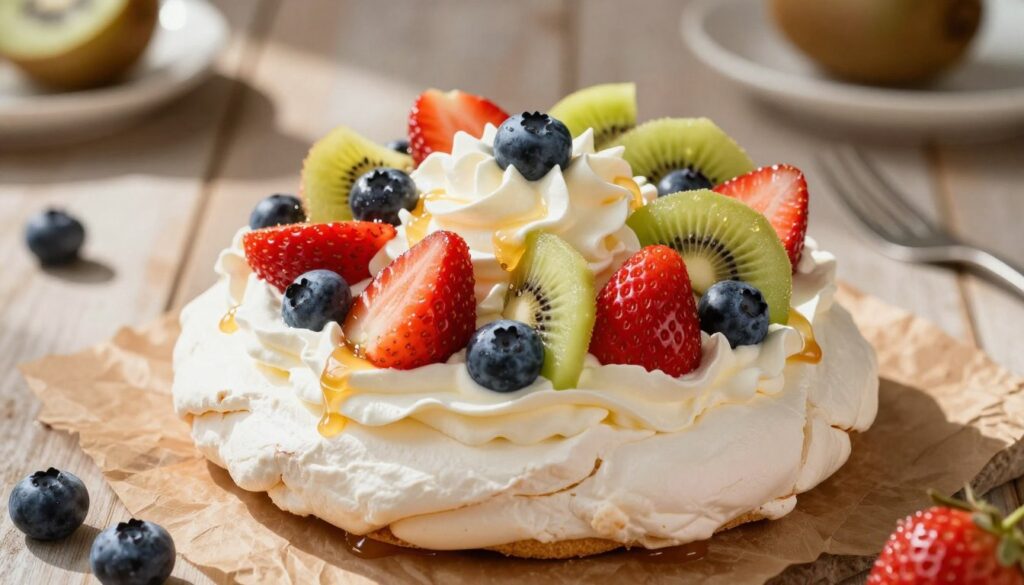
Preparing the Strawberry Coulis
Simmer 150g chopped strawberries with 50g icing sugar for 10 minutes. Stir until the fruit breaks down.
Pass through a sieve for a smooth, glossy coulis. The tart sauce cuts through the rich cream and complements fresh raspberries.
Assembling the Wreath
Spooon the whipped cream generously over the cooled meringue ring to form a soft bed.
- Drizzle the strawberry coulis over the cream for colour and acidity.
- Scatter fresh strawberries and raspberries across the top for a festive finish.
- Assemble just before serving so the crisp shell stays crunchy and the cream fruit topping looks pristine.
Expert Tips for Success
Follow a few simple habits and your pavlova will behave like a pro-level dessert.
Use older eggs where possible: the proteins in older egg whites break down more easily and whip to better volume. Always work in a spotless bowl to avoid fat contaminating the whites.
When you add sugar, do so gradually and whisk until fully dissolved. This stops syrup leaking during the bake and keeps the surface glossy.
If the pavlova colours brown, your oven was too hot or baking time was too long. Reduce temperature and extend gentle drying time.
- You can make the base up to a month ahead if stored airtight and dry.
- Check dryness by piercing with a skewer — it should come out clean and dry.
- Assemble with cream and fruit close to serving time so the crisp shell stays crisp.
| Issue | Fix | Why it matters |
|---|---|---|
| Soggy centre | Lower oven temp; extend drying time | Prevents browning and keeps white surface |
| Flat whites | Use older eggs; clean bowl | Gives better volume and structure |
| Weeping topping | Whisk cream to stiff peaks; add sugar slowly | Stops runny topping and soggy base |
How to Store and Make Ahead
A well-stored pavlova base keeps its crunch and can save hours on busy serving days. Plan storage before you add cream and fruit so the crisp shell stays intact.
Freezing and Long-term Storage
Plain meringue bases freeze well for up to one month in an airtight container. Seal them carefully so they do not absorb moisture from the freezer.
If you do freeze a base, defrost it in a dry room. Do not unwrap it in a humid kitchen. This keeps the delicate, crisp texture.
Make the pavlova base ahead and store it in a well-sealed bag for up to one month. Add whipped cream and fruit only just before serving to preserve contrast of textures.
- Store your ring in an airtight container to avoid humidity.
- Bake for an extra 30–60 minutes and leave in the oven hour overnight to test dryness.
- Finish and serve within 24 hours of adding cream and fruit for best flavour.
| Storage Method | Duration | Key Tip |
|---|---|---|
| Room, airtight | Up to 1 month | Keep away from heat and humidity |
| Freezer, airtight | Up to 1 month | Defrost in a dry room before decorating |
| Finished dessert (fridge) | Max 24 hours | Add cream and fruit at serving time |
For a trusted finishing idea, see this strawberry pavlova guide which shows simple assembly steps and topping options.
Conclusion
Finishing this pavlova brings a real sense of occasion to your table. Simple steps — steady whisking, the right oven settings (fan or gas) and careful sugar addition — give a crisp shell and soft centre that wow guests.
Use fresh raspberries and double cream for bright flavour, and remember the quality of fruit and sugar matters. This mary berry recipe is forgiving and lets you experiment with toppings to make the dessert unique.
Master these techniques and you will have a showstopping centerpiece for any celebration. Enjoy sharing this homemade treat and have fun trying other recipes that build on the same, reliable base.
FAQ
What oven temperature should I use to bake the meringue ring?
How long does the meringue need to bake and cool?
How do I get soft peaks when whisking egg whites?
Can I use caster sugar or granulated sugar for the meringue?
What is the role of vinegar or wine in the mixture?
How do I shape a neat ring on the baking tray?
Should I use baking paper or a silicone mat?
How do I whip the cream for topping without overbeating?
What fruits work best to dress the pavlova-style wreath?
Can I make the strawberry coulis in advance?
What is the best way to store leftovers or make the meringue ahead?
How can I prevent the meringue from cracking?
Is it safe to use raw egg whites for this dessert?
How do I adapt the recipe for high altitude or humid weather?
Can I add flavourings to the meringue?
Mary Berry Meringue Wreath
This exquisite centrepiece brings a touch of elegance to any festive table. The classic pavlova twist combines a crisp, marshmallow-like base with rich, creamy toppings for a showstopping dessert that delights guests.
Ingredients
- 6 large eggs, room temperature, separated
- 1 tsp white wine vinegar
- 1 tsp cornflour
- 250g caster sugar
- 300ml double cream
- 2 tbsp icing sugar
- 1 splash vanilla extract
- 150g chopped strawberries
- 50g icing sugar for coulis
- Fresh strawberries and raspberries for topping
Method
- Preheat the oven to 160C (gas mark 3, 140Fan).
- Draw a 30cm outer circle and a 15cm inner circle on non-stick baking paper.
- Whisk the egg whites in a clean bowl until soft peaks form, about 5 minutes.
- Gradually add the caster sugar while whisking at high speed for 7-10 minutes until stiff peaks form.
- Add the white wine vinegar and cornflour, whisking until combined.
- Spoon the meringue mixture onto the marked circle, creating swirls and peaks.
- Bake in the preheated oven for 1 hour and 15 minutes, then turn off the oven and leave the meringue inside for at least 1 hour or overnight.
- To make the cream, whisk the double cream with icing sugar and vanilla until stiff peaks form.
- For the strawberry coulis, simmer the chopped strawberries with icing sugar for 10 minutes, then pass through a sieve.
- Once the meringue is cooled, spread the whipped cream over the top.
- Drizzle the strawberry coulis over the cream and scatter fresh strawberries and raspberries on top.
- Assemble just before serving to maintain the crispness of the meringue.