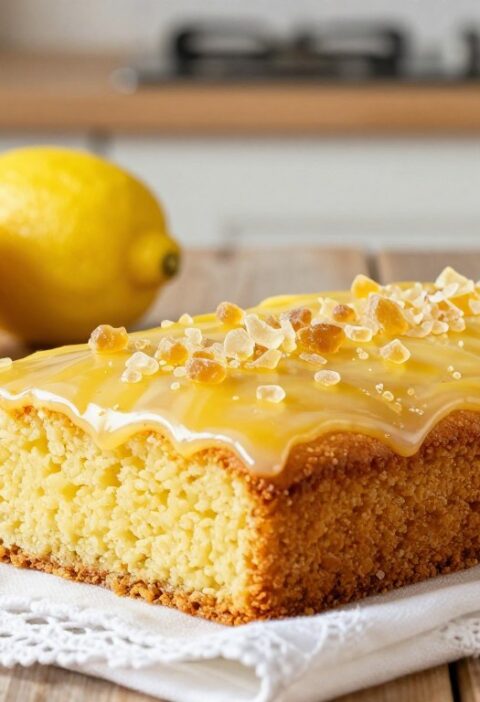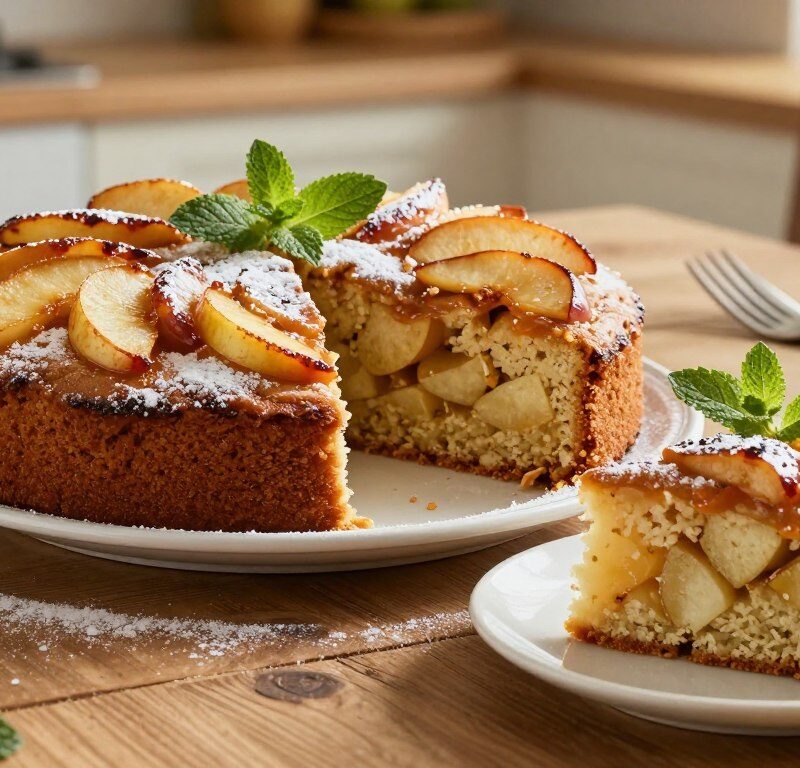
This classic farmhouse-style sponge has been adapted so everyone can join afternoon tea with confidence.
The all-in-one mixing method delivers maximum flavour with minimal washing up, giving a moist, golden sponge packed with tender fruit and a hint of cinnamon.
The inclusion of ground almonds keeps the crumb light and soft, mimicking the texture of wheat flour while avoiding common dryness problems.
This reliable recipe takes just over an hour from bowl to cooling rack, and it serves as a cosy, crowd-pleasing pudding for family gatherings.
For full instructions and measurements, follow this trusted recipe guide to bake with ease and confidence.
Key Takeaways
- Adapted recipe keeps the texture moist using ground almonds.
- All-in-one method saves time and reduces washing up.
- Ready in just over an hour for a perfect afternoon tea.
- Designed to be enjoyed by guests with and without dietary needs.
- Simple ingredients and steps make this a reliable baking choice.
Why This Mary Berry Gluten Free Apple Cake is a Classic
This farmhouse-style sponge endures because it pairs tart fruit with a tender, moist crumb that feels familiar to generations of bakers. The adapted version is safe for coeliacs, yet it keeps the warm, sweet profile expected of a British dessert.
The all-in-one method cuts prep time and makes the recipe approachable for anyone who wants to cook without fuss. Novice bakers can achieve the same soft sponge texture as traditional creaming techniques.
Caramelised demerara sugar and sharp, sliced apple give the bake its signature balance. Guests without dietary needs often cannot tell the difference between this and a standard wheat-based pudding.
- Balanced flavour: tart fruit meets rich, caramel notes.
- Reliable texture: avoids the dryness or grittiness found in some gluten-free recipes.
- Easy to cook: the all-in-one approach suits Sunday tea and cosy autumn evenings.
Essential Ingredients for Your Gluten Free Bake
Gathering the right staples makes baking simpler and boosts your chance of a perfect finish. Use quality brands where possible to avoid surprises in texture or flavour.
Choosing the Right Flour
Start with 225g of gluten-free self-raising flour, such as a reliable Doves Farm blend. This gives the structure needed to support the fruit and lift from baking powder.
Add 1 tsp of certified gluten-free baking powder to help the batter rise under the weight of the fruit. Use a 20cm round cake tin for even baking.
The Role of Ground Almonds
Fold in 50g of ground almonds. They add moisture and a gentle, nutty note that keeps the crumb soft for days.
Also measure 225g of caster sugar and 225g of softened butter. These ingredients dissolve and cream together to create a light, even sponge.
- 225g flour: foundation for the sponge.
- 50g ground almond: retains moisture and improves crumb.
- 225g caster sugar: fine crystals for a tender texture.
- 225g butter: softened for best flavour.
- 1 tsp baking powder and firm cooking apples for a tart contrast.
- Optional: sprinkle flaked almonds on the top for crunch.
Preparing Your Kitchen and Ingredients
Settle in at your workspace and arrange tins, utensils and ingredients so the cook flows without fuss. Start by preheating the oven to 160°C (140°C Fan / Gas 3). This temperature protects the delicate almond base and helps the sponge rise evenly without burning the top.
Grease a 20cm cake tin well and line the base with baking parchment. A lined tin makes it easy to release the sponge once it’s cooled.
Peel, core and cut the apples into thin slices. Toss them in a little lemon if you are working slowly to stop browning. Keep the fruit ready so it folds into the batter quickly during mixing.
Use a large mixing bowl and have all ingredients measured out: butter at room temperature, sugar and flour ready to go. Organisation is key when following mary berry recipes that rely on the all-in-one method.
- Preheat the oven to 160°C (140°C Fan / Gas 3).
- Grease and line a 20cm cake tin.
- Peel, core and thinly slice the apples; toss with lemon if needed.
- Use a roomy bowl and ensure butter is at room temperature.
The All-in-One Mixing Method
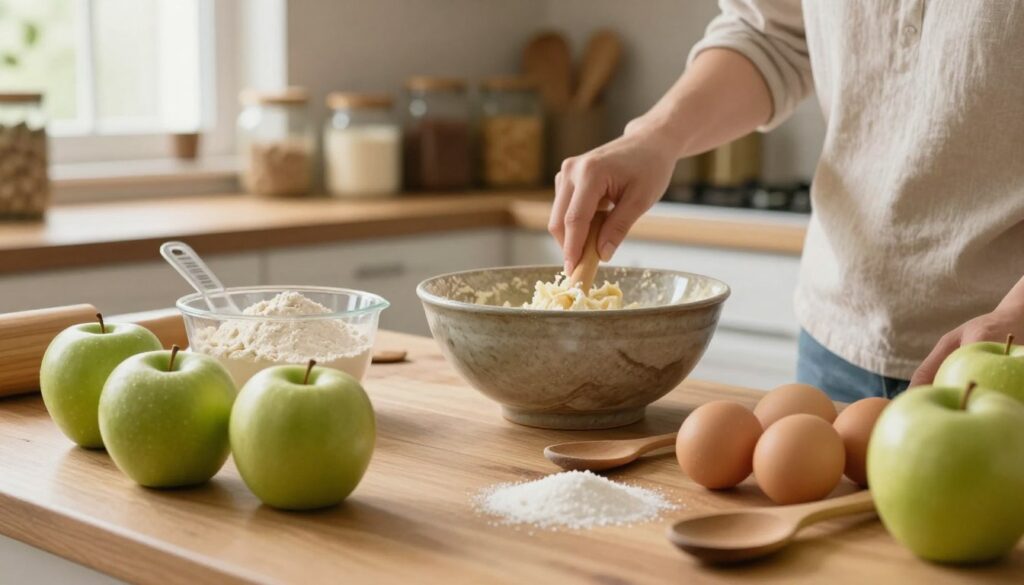
Combine all your measured ingredients in one bowl to save time and keep the method foolproof. This approach is ideal for busy cooks who want a reliable result without fuss.
Start cold or room-temperature depending on the recipe — for this version, room temperature ingredients help the batter come together smoothly.
Achieving the Perfect Batter Consistency
Place butter, caster sugar, self-raising flour, ground almonds, baking powder and eggs into a single bowl. Use an electric hand whisk and beat for about 2 minutes until the mixture is pale and smooth.
Stop once the cake mixture looks uniform. Over-beating will hurt the rise and make the crumb dense.
- Ensure 225g of flour is fully folded in with no dry lumps.
- Add a drop of almond extract if you want a subtle nutty note.
- Keep ingredients at room temperature to avoid curdling.
| Step | Time | Note |
|---|---|---|
| Prepare ingredients in a bowl | 3 minutes | Measure accurately for best results |
| Whisk all ingredients | 2 minutes | Stop when pale and creamy |
| Fold in fruit or extras | 1–2 minutes | Be gentle to retain air |
| Pour into tin and bake | 55–65 minutes | Follow oven settings in recipe |
Assembling the Cake Layers
Place half of the batter into the prepared tin and smooth the surface so the fruit sits evenly during baking.
Arrange half of the thin slices of apple across the base. Spread them evenly so each slice is spaced to give fruit in every bite.
Spoon the remaining cake mixture over the apples. It may look scant at first; the batter will spread as it warms in the oven.
Neatly arrange the remaining apple slices on the top to create a rustic, attractive finish.
For a final touch, scatter a few flaked almonds across the top if you want extra crunch and a professional look.
- Spoon half the mixture into the prepared tin to form a steady base.
- Layer half the apples; cover with remaining batter.
- Top with the rest of the slices and, optionally, flaked almonds.
Baking to Golden Perfection
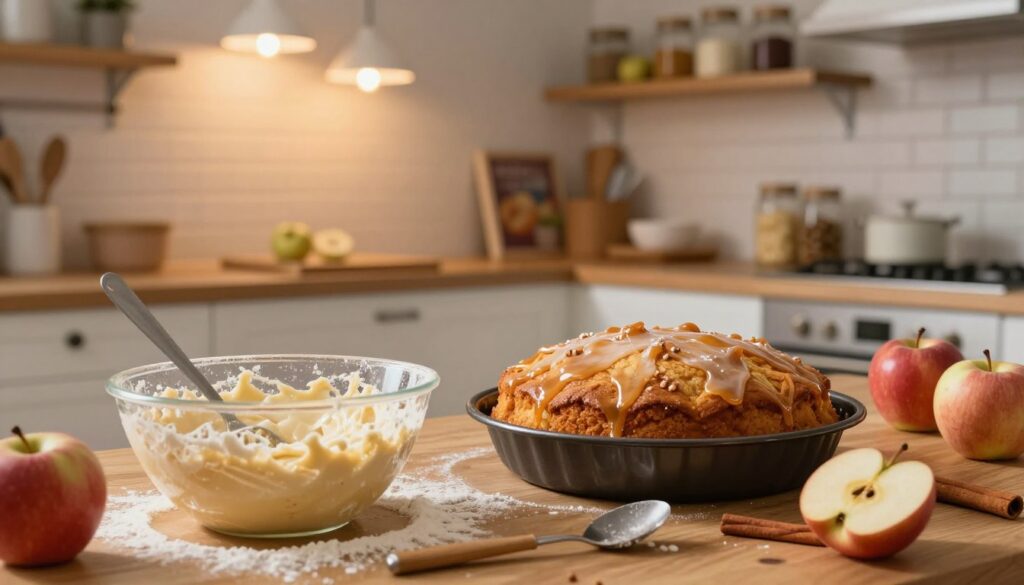
Position the cake tin in the oven centre to ensure even heat and a steady rise. Preheat to the temperature in your recipe and bake for 1 hour to 1 hour 15 minutes until the sponge is cooked through.
Test for doneness by inserting a skewer into the centre; it should come out clean with no wet batter clinging. The top must be a clear golden brown, showing the sugar and fruit have caramelised nicely.
When baking finishes, leave the tin to rest for 10–15 minutes. This pause lets the structure set and helps fragile gluten-free sponges hold their shape.
Turn the cake out onto a wire rack to cool fully. This prevents a soggy base and keeps the crumb light.
- Place in centre of the oven for even heat.
- Check with a skewer; expect a clean pull.
- Rest in the prepared tin for 10–15 minutes.
- Cool on a wire rack to preserve texture.
| Stage | Action | Timing |
|---|---|---|
| Start | Place tin on middle shelf | 0 minutes (preheat ready) |
| Bake | Cook until golden brown on top | 60–75 minutes |
| Rest | Leave in prepared tin to set | 10–15 minutes |
| Finish | Turn out and cool on wire rack | Until room temperature |
Follow these baking steps and your Mary Berry inspired cake will be evenly cooked, with a caramelised top and a stable, tender crumb. A scatter of flaked almonds adds texture at the end if you wish.
Troubleshooting Common Gluten Free Baking Issues
A few practical fixes will help your bake rise evenly and keep fruit suspended where you want it. Below are quick checks you can make during mixing and while the tin is in the oven.
Preventing sinking fruit
If your apples keep sinking, slice them thinner and toss the pieces in a tablespoon of flour. That light dusting increases friction and helps the fruit stay in the sponge rather than sliding to the base.
Managing oven temperatures
Set the oven to 160°C and avoid opening the door before 50 minutes. This temperature gives a steady lift and prevents dry edges while allowing the centre to cook to a golden brown.
Avoiding gummy textures
A gummy crumb usually comes from too much binder or old baking powder. Use a standard flour blend, check your baking powder, and keep xanthan gum to the recipe amount. Also ensure butter and eggs are at the same temperature before you mix in the large bowl.
- Tip: If the batter is tight, a drop of almond extract or a pinch of ginger can balance flavour without thinning the batter.
- Check: Use cooking apples for firm slices that hold shape and help the top finish well.
| Issue | Quick fix |
|---|---|
| Sinking fruit | Thin slices + flour toss |
| Dry edges | 160°C oven; avoid overbaking |
| Gummy sponge | Fresh powder; correct binders |
Serving Suggestions for Every Occasion
Serve a warm slice with a generous spoonful of thick Cornish clotted cream for a truly indulgent finish. The cream complements the nutty almonds and brings out the gentle sweetness from the sugar and butter in the sponge.
For a modern twist, drizzle salted caramel sauce over a warm portion. The sauce pairs especially well with the almond notes and soft fruit in each bite.
If you prefer something lighter, a side of fresh crème fraîche will cut through the sweetness and refresh the palate. You can also add a pinch of ginger or other warming spices to customise the flavour.
To revive leftovers, warm slices in a low oven for 15 minutes to release the cinnamon aroma and soften the apples. This cake works equally well as a dinner-party dessert or a simple treat with morning coffee.
- Tip: check custard or cream packaging if serving guests with strict diets to ensure all accompaniments are certified gluten-free.
Conclusion
With the right balance of ingredients and attention to timing, you can produce a professional-style dessert at home. This simple approach keeps the process friendly and reliable for everyday baking.
This recipe shows that dietary needs do not mean you must miss out on comforting treats. Using the all-in-one method and quality staples like ground almonds and butter gives a moist, tender result every time.
Follow the baking powder and eggs ratios, and the structure will stay sound. Serve warm with cream or enjoy cold — the fruit stays lovely and the texture remains consistent.
Thank you for following this guide. Now step into your kitchen and cook with confidence.
FAQ
What flour should I use for this recipe?
Can I replace ground almonds with another ingredient?
How do I prepare cooking apples so they don’t make the cake soggy?
What size tin and baking time should I use?
Is there an easy way to check the cake is fully cooked?
Can I reduce the sugar or use a substitute?
How long does the cake keep and how should I store it?
Can I add spices like ginger or cinnamon to the mixture?
How do I prevent the fruit from sinking during baking?
My cake turned out gummy — what went wrong?
Should I use almond extract and how much?
Can I turn this into a layered sponge with cream or custard?
Mary Berry Gluten Free Apple Cake
This classic farmhouse-style sponge has been adapted so everyone can join afternoon tea with confidence. The all-in-one mixing method delivers maximum flavour with minimal washing up, giving a moist, golden sponge packed with tender fruit and a hint of cinnamon.
Ingredients
- 225g gluten-free self-raising flour
- 1 tsp certified gluten-free baking powder
- 50g ground almonds
- 225g caster sugar
- 225g softened butter
- 3 large eggs
- 2-3 firm cooking apples, peeled, cored, and thinly sliced
- Optional: flaked almonds for topping
Method
- Preheat the oven to 160°C (140°C Fan / Gas 3).
- Grease and line a 20cm cake tin.
- Peel, core and thinly slice the apples; toss with lemon if needed.
- In a large mixing bowl, combine the butter, caster sugar, gluten-free flour, ground almonds, baking powder, and eggs.
- Using an electric hand whisk, beat the mixture for about 2 minutes until pale and smooth.
- Pour half of the batter into the prepared tin and smooth the surface.
- Arrange half of the apple slices over the batter evenly.
- Spoon the remaining batter over the apples and arrange the remaining apple slices on top.
- Optionally, sprinkle flaked almonds on top.
- Bake in the preheated oven for 60-75 minutes until golden brown and a skewer inserted comes out clean.
- Allow the cake to rest in the tin for 10-15 minutes before turning it out onto a wire rack to cool completely.