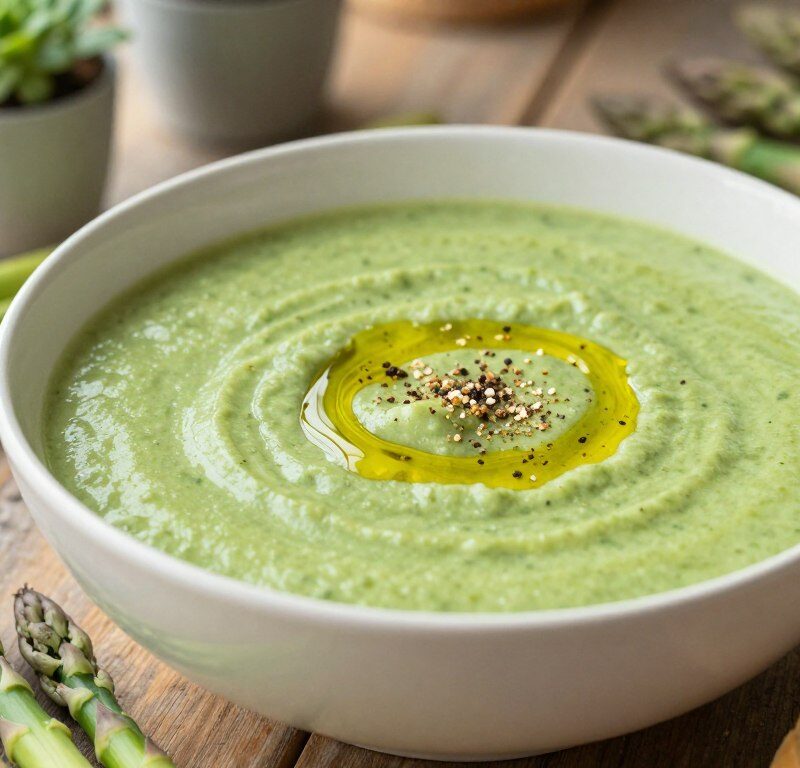
Mary Berry presents a classic starter that takes around 40 minutes from pan to plate. This elegant dish celebrates fresh spring produce and gentle techniques to create a smooth, velvety result.
The recipe relies on a flavourful stock to underpin the green notes of the vegetable. A small splash of cream at the end lifts the texture and adds a luxurious finish.
Accessible for home cooks, this asparagus soup gives a restaurant-quality experience without fuss. It works beautifully as a starter for a dinner party or as a light, comforting lunch.
Key Takeaways
- The recipe takes about 40 minutes to prepare.
- Fresh asparagus is key to a bright, seasonal taste.
- A good stock provides depth and balance.
- A little cream makes the texture luxuriously smooth.
- Simple steps deliver a refined, crowd-pleasing dish.
The Appeal of Mary Berry Cream Of Asparagus Soup
This dish captures springtime freshness while offering the kind of home-cooked comfort that endures all year. The asparagus soup balances bright green notes with a silky finish for an elegant starter.
The Classic British Style
Classic British cooking values good produce and restrained seasoning. Using fresh, locally sourced asparagus gives a clean, true flavour. The approach highlights texture and balance rather than heavy spice.
Seasonal Freshness
In the UK, tender spears are prized during the short spring season. Yet, with basic preservation and smart sourcing, this recipe works well any time of the year.
- Fresh produce elevates taste and appearance.
- Simple methods let natural sweetness stand out.
- Follow a few expert tips to keep results consistent.
| Feature | Why it matters | Benefit |
|---|---|---|
| Fresh asparagus | Peak flavour and texture | Brighter colour and taste |
| Light cream | Rounds texture without masking | Silky, indulgent mouthfeel |
| Simple seasoning | Allows vegetable to lead | Balanced, elegant finish |
Essential Ingredients for Your Soup
Good results begin with clear choices: 500g of fresh asparagus is the star ingredient and should be vibrant and firm. Trim the woody ends before cooking to keep the flavour bright.
A small potato adds natural thickness so you need no flour or roux. Use one peeled, diced potato to create a smooth mouthfeel as the vegetables soften.
Choose a light vegetable stock for a clean finish, or pick chicken stock if you prefer a richer base. Either option makes a reliable liquid for this recipe.
- A splash of double cream at the end gives the signature silkiness.
- Season with salt and black pepper to lift the natural flavours.
- Finish with chopped chives as a bright, mild onion garnish.
Use top-quality food ingredients and pick firm, fresh asparagus spears. Small choices — a good stock, ripe produce and careful seasoning — make this an elegant, family-friendly starter.
| Ingredient | Amount | Role |
|---|---|---|
| Fresh asparagus | 500g | Primary flavour |
| Potato | 1 small | Thickener |
| Stock | 600–800ml | Liquid base |
Necessary Kitchen Equipment
A few reliable pieces of kit will help you make a consistently smooth and tasty dish. Before you start the recipe, gather the tools so the cooking moves without interruption.
A large saucepan is essential to hold the stock and vegetables while they simmer. Use one big enough so nothing spills when you stir.
Choose a sturdy chopping board and a sharp knife for neat, safe preparation. These two items speed up prep and give tidy, even pieces.
- Large saucepan for sautéing and simmering.
- Sharp knife and solid chopping board for prep.
- High-quality blender or immersion blender for a silky finish.
- Measuring jug to get the stock quantities right.
- Ladle for serving once you have finished with the final touch.
Keep your tools clean and at hand. A reliable blender makes it simple to make soup with a velvety texture, and basic kit means the process is pleasant for any home cook.
Preparing Your Fresh Asparagus
Treat the spears gently: clean, trim and reserve the tips to keep the texture perfect.
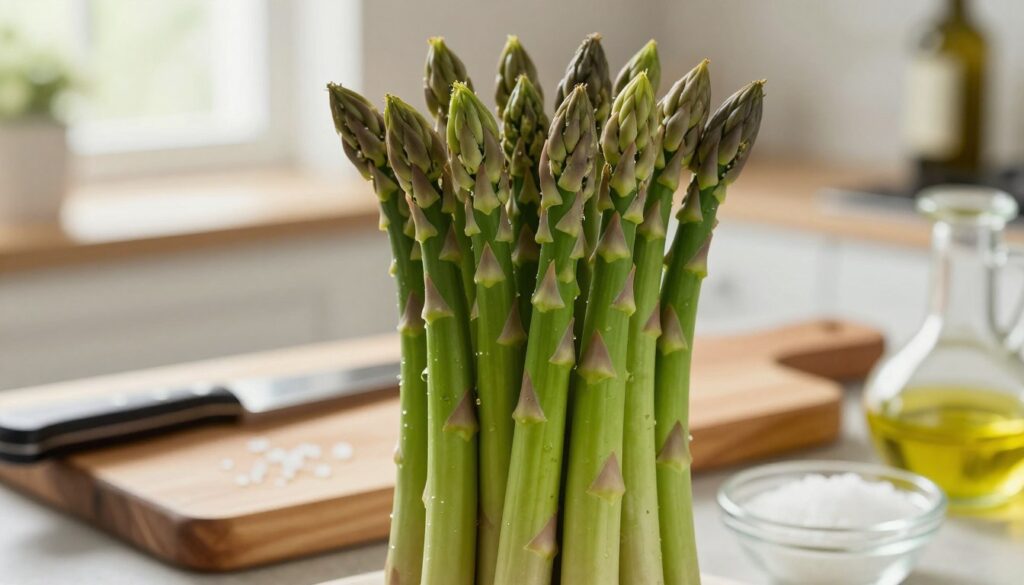
Washing matters. Start by rinsing the fresh asparagus under cold running water to remove any grit. Handle the stalks carefully so you do not bruise them.
Trim the woody ends. Snap or slice away the tough bases from the 500g of stalks. Those woody parts are fibrous and will spoil the mouthfeel of the final dish.
Trimming Woody Ends
Keep the tips separate as you work. The reserved asparagus tips will be blanched and used as a bright, decorative garnish when serving.
- Chop the tender stalks into small, even pieces so they cook uniformly.
- Blanch the reserved asparagus tips briefly to keep their colour and snap.
- Careful prep of this vegetable guarantees a silky, fibre-free finish.
Taking time at this stage improves both flavour and presentation. Proper preparation lets the delicate flavour of the stalks shine through in the finished dish.
Sautéing the Aromatics
Start by warming a large saucepan so the butter melts evenly and the aromatics can soften gently.
Use a low to medium heat. Melt butter over medium to create a rich base. Add the finely sliced leek and onion and cook for 5 minutes until soft and translucent.
The brief addition of minced garlic brings a subtle fragrance that complements the asparagus and potato. Add the garlic near the end of the 5 minutes so it does not burn.
Stir in the chopped asparagus and diced potato and let them cook for a few minutes to absorb the buttery flavours. Monitor the heat carefully to keep the vegetables pale and tender.
This gentle sautéing step builds the balanced foundation typical of the Mary Berry method. A calm pan and mindful timing ensure a bright colour and a clean, savoury depth.
| Step | Action | Result |
|---|---|---|
| Heat pan | Melt butter over medium | Even, rich base |
| Sauté aromatics | Cook leek & onion for 5 minutes | Soft, translucent vegetables |
| Add veg | Stir in asparagus & potato | Flavours meld; ready to simmer |
Simmering the Vegetable Base
Use a good-quality stock and a calm simmer to coax the best from your vegetables. This stage builds the savoury foundation that lets the asparagus shine in the finished dish.
Choosing Your Stock
Pick a high-quality vegetable or chicken stock. A litre (about 4 cups) gives the right liquid to cover the diced potato, onion and asparagus pieces. The stock you choose will shape the final taste, so avoid thin or overly salty options.
Simmering Times
Bring the saucepan to a boil, then reduce the heat to a gentle simmer. Cover the pan to keep moisture in and cook evenly.
- Simmer for 15–20 minutes until the potato is soft and the asparagus is tender.
- Season lightly with salt and pepper, tasting after 10 minutes and again before blending.
- Once tender, the vegetables are ready for blending to create a silky texture.
| Action | Why it matters | Timing |
|---|---|---|
| Pour stock (1 litre / 4 cups) | Covers vegetables for even cooking | Immediate |
| Bring to boil then simmer | Develops depth without overcooking | 15–20 minutes |
| Keep saucepan covered | Retains flavour and moisture | Throughout simmer |
Tip: mary berry recommends this calm simmer as key to a classic, well-balanced soup. Use the time to check seasoning and adjust the heat if needed.
Blending for a Silky Texture
A careful blend transforms cooked vegetables and stock into a silky, unified purée. Use a high‑powered blender or an immersion blender to process the cooked mix until it is completely smooth.
Let the pan cool a little before you blend. This keeps the process safe and avoids steam bursts.
If you want an ultra‑refined finish, push the purée through a fine sieve to catch any fibres. Straining gives a restaurant‑quality texture and lets the delicate flavour spread evenly.
- Blend in batches if needed so everything purees evenly.
- If the mixture is too thick, add a little extra stock to reach the right consistency.
- Return the smooth base to the pan for the final addition of cream and seasoning.
| Tool | Benefit | Consideration |
|---|---|---|
| High‑powered blender | Very smooth texture | Work in small batches; hot mix must cool slightly |
| Immersion blender | Simple and quick | Less splatter; best for shallower pans |
| Fine sieve | Removes fibres for extra silkiness | Requires some effort to press through |
Finishing with Cream and Seasoning
At the final stage, a careful addition of dairy and acid lifts the whole bowl. Return the blended base to a clean saucepan and stir in 100ml of double cream slowly so the texture stays velvety.
Warm the soup gently over low heat for 2–3 minutes. Do not let it boil; high heat can make the cream split and spoil the finish.
Add a teaspoon of lemon juice to brighten the flavour and balance the richness. Then taste and season with salt and pepper to suit your preference.
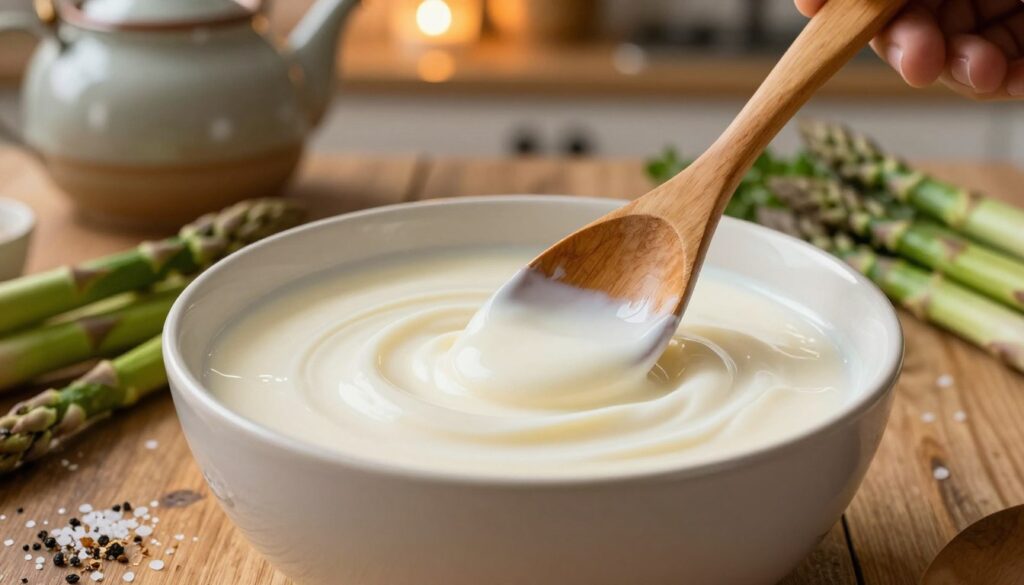
“Slowly stirring in the cream and finishing with lemon keeps the soup smooth and lively.”
- Fold the double cream in gradually to preserve silkiness.
- For a dairy-free version, use coconut cream for similar richness.
- Garnish with finely chopped chives to add colour and mild onion notes.
| Finish step | Action | Why it matters |
|---|---|---|
| Stir double cream | Add 100ml slowly | Keeps texture smooth and rich |
| Low heat | Warm 2–3 minutes, no boiling | Prevents separation and maintains flavour |
| Lemon juice & seasoning | 1 tsp lemon; adjust salt pepper | Brightens taste and balances richness |
Serving Suggestions for a Perfect Lunch
A careful presentation turns a simple lunch into a memorable spring meal. Serve the purée hot so the flavours and textures stay vivid. Warm bowls beforehand to keep each portion at the ideal temperature.
Garnishing with Tips
Ladle the hot soup into individual bowls and place the reserved asparagus tips on top for colour and contrast. Scatter finely chopped chives over each bowl for a fresh, mild bite.
- Top each bowl with the blanched reserved asparagus tips for texture and visual appeal.
- Sprinkle chopped chives as a simple, elegant garnish.
- Offer crusty bread or savoury scones to add a crisp counterpoint to the smooth purée.
- Serve as a spring lunch starter or make it the main course with a light salad on the side.
- Keep portions warm in pre-warmed bowls and finish with a small drizzle of good olive oil if liked.
“Simple garnishes and warm bowls make the dish feel finished and professional.”
| Element | Why it matters | Practical note |
|---|---|---|
| Reserved asparagus tips | Adds texture and colour | Blanch briefly to keep bright |
| Chives | Fresh, mild onion lift | Chop finely and sprinkle |
| Warm bowls | Retain heat and aroma | Pre-warm in oven or with hot water |
Note: mary berry recommends keeping the stock balanced and the garnish modest. These small touches make the meal feel thoughtful and complete.
Tips for Maintaining Vibrant Colour
Preserving that bright green matters. Use the freshest produce you can find and handle the stalks gently to keep colour and flavour lively.
Blanching the reserved asparagus tips in boiling water for exactly 2 minutes locks in a vivid hue and keeps the garnish crisp. Shock them immediately in cold water to stop cooking.
- Avoid overcooking the main stalks: too much heat turns bright green to dull olive and harms the taste.
- Blend the vegetables soon after simmering; quick processing preserves the fresh green appearance.
- Add a small splash of lemon juice when finishing — it brightens flavour and helps stabilise the colour.
- Do not boil the pot after you stir in the cream; gentle warming keeps texture and brightness intact.
- If saving leftovers for a few days, cool quickly and store in an airtight container to reduce oxidation.
“Simple timing and a cold shock after blanching are the easiest ways to keep a dish looking as good as it tastes.”
Adjusting the Soup Consistency
Getting the texture right often needs only a few simple adjustments at the finishing stage.
Achieving the perfect consistency is a matter of balancing the amount of stock with the starch from the potato. If the purée feels thin, simmer it gently over low heat so some liquid evaporates and the body concentrates.
Should the mix be too thick after you blend soup, loosen it with a splash of stock or plain water until you reach the desired flow. Stir slowly and reheat for a minute to integrate the change.
If you use coconut cream as a dairy-free swap, expect a slightly different thickness. Add liquid in small amounts and taste as you go.
“Test consistency before adding the final garnish — that moment is easiest for tweaks.”
- Potato acts as a natural thickener; add a little more if needed.
- Simmer to reduce or add stock/water to loosen.
- A splash of lemon juice brightens and lightens the mouthfeel.
| Issue | Quick fix | When to use |
|---|---|---|
| Too thin | Simmer on low to reduce liquid | After blending; before garnish |
| Too thick | Add stock or water, stir over low heat | After blending; adjust gradually |
| Thinner with dairy-free | Reduce added liquid; use less coconut cream | When substituting for cream |
Storing and Reheating Leftovers
A little forethought makes leftover portions taste almost as good as when first served. Cool the purée quickly and move it to an airtight container before chilling.
Freezing for Later
Refrigerate the dish for up to 3 days. For longer storage, freeze for up to 2 months.
Important: Do not freeze after adding double cream. Freeze the plain base and add dairy when you reheat.
Reheating Methods
Warm gently on the hob over low heat, stirring occasionally to heat evenly. If the mix has thickened, add a splash of vegetable chicken stock or water to loosen it.
Only stir double cream into the soup after it is hot. That prevents curdling and keeps the texture silky.
- Use a saucepan and heat for several minutes until steaming; avoid rapid boiling.
- Stir regularly and taste for seasoning before serving in warm bowls.
- Approximate energy: about 220 kcal per serving, handy for quick meals on busy days.
“Cool quickly, pack well and add cream at the end — simple tips to enjoy leftovers without losing quality.”
Conclusion
This classic finale celebrates seasonal flavours and simple technique in one elegant bowl. It brings a bright, spring touch to your table and is friendly for cooks of any level.
mary berry has crafted an asparagus soup that pairs delicate green notes with a silken finish. Stir in a little double cream at the end and gently season to lift the natural taste.
Serve with a modest garnish of blanched tips and chopped chives to add colour and texture. This reliable recipe makes a refined starter or light main and invites you to personalise the dish with your favourite finishing touches.
FAQ
What makes this asparagus soup a classic British dish?
Can I use vegetable stock instead of chicken stock?
How should I prepare fresh asparagus before cooking?
What is the best way to keep the asparagus colour vibrant?
Do I need to add potato to the soup?
Can I replace double cream with a non‑dairy alternative?
How long should I simmer the vegetable base?
What equipment do I need to make a silky soup?
When should I add reserved asparagus tips?
How do I adjust the soup consistency?
What garnishes work best for serving?
Can I freeze the soup?
What is the best method to reheat leftovers?
Mary Berry Cream Of Asparagus Soup
A classic starter that celebrates fresh spring produce, this elegant asparagus soup is smooth, velvety, and perfect for any occasion.
Ingredients
- 500g fresh asparagus
- 1 small potato, peeled and diced
- 600–800ml vegetable or chicken stock
- 100ml double cream
- Salt and black pepper to taste
- 1 teaspoon lemon juice
- Chopped chives for garnish
Method
- Rinse the fresh asparagus under cold running water and trim the woody ends.
- Chop the tender stalks into small, even pieces and reserve the tips for garnish.
- In a large saucepan, melt butter over medium heat and sauté finely sliced leek and onion for 5 minutes until soft and translucent.
- Add minced garlic and cook for an additional minute.
- Stir in the chopped asparagus and diced potato, cooking for a few minutes to absorb the flavors.
- Pour in the stock to cover the vegetables and bring to a boil, then reduce to a gentle simmer for 15–20 minutes until the potato is soft and the asparagus is tender.
- Blend the mixture until smooth using a high-powered blender or immersion blender.
- Return the blended soup to the pan and stir in the double cream slowly over low heat for 2–3 minutes without boiling.
- Add lemon juice and season with salt and pepper to taste.
- Ladle the soup into bowls and garnish with reserved asparagus tips and chopped chives before serving.