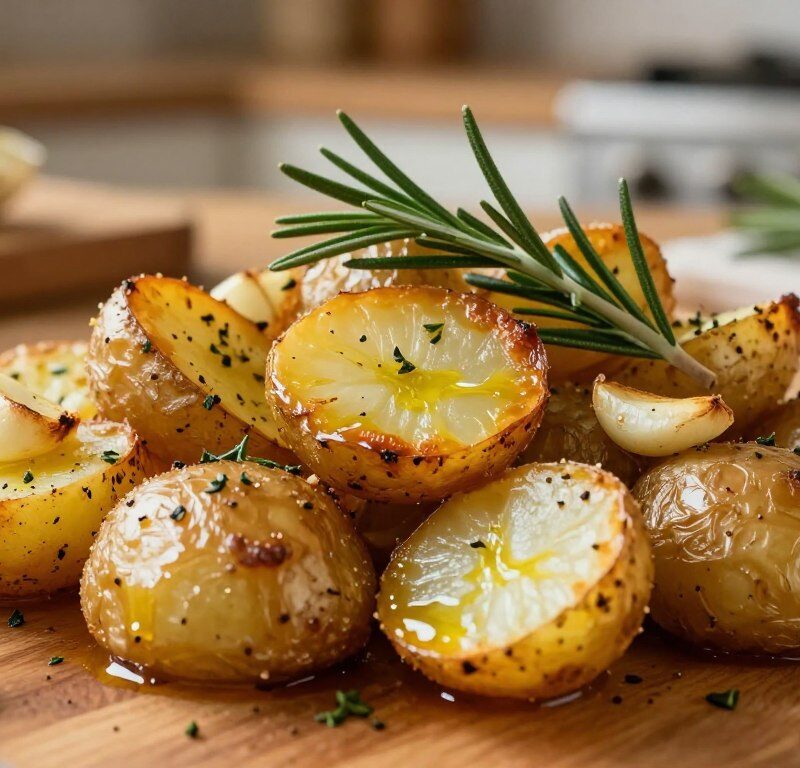
This simple recipe lifts everyday spuds into a memorable side dish. A smart blend of herbs and oil turns a basic oven method into something special. The aim is a crisp exterior and a fluffy interior every time you cook.
Beginners will find the steps straightforward, while hosts will love the results. Use fresh sprigs to flavour the oil before the high-heat bake. Consistent oven temperature and a high-smoke point oil are the real secrets to a golden finish.
Key Takeaways
- Fresh herbs and quality oil create deep, aromatic flavour.
- Parboiling then roasting helps achieve a fluffy centre and crisp skin.
- Maintain steady oven heat for even browning.
- Use a high-smoke point oil to protect delicate aromatics.
- This recipe is ideal for a classic Sunday dinner in the UK.
Why Roast Potatoes With Garlic And Rosemary Are the Ultimate Side
A truly great roast side delivers a crisp shell and an airy centre every time. This recipe aims for that contrast by using simple steps that boost texture and aroma.
Fresh herbs and a light crush of aromatics lift ordinary spuds into a memorable dish. The rosemary garlic infusion soaks into the surface, giving a fragrant, earthy depth in every bite.
Home cooks in the UK favour these rosemary potatoes because they sit between a crunchy chip and a creamy mash. The natural starch reacts with hot oil to form that superior crust only achieved by roasting.
- Versatile enough to pair with any main, not just a Sunday roast.
- Simple to prepare yet delivers a restaurant-quality result.
- Satisfying crunch outside, light and fluffy inside.
Try the semolina method as an extra tip — it helps roughen the surface for more crispness and can be found in this short guide: semolina method.
Selecting the Best Potato Varieties
Picking the right tuber is the single most important choice for crisp results. The variety you use will affect texture, browning and how well the oil adheres during baking.
Choosing Between Maris Piper and King Edward
In the UK, Maris Piper and King Edward are top picks. They have the ideal starch level for this recipe and hold shape in the pan while forming a golden crust.
If you live in the US, Yukon Gold works very well. It gives a similar creamy interior for roasted potatoes without falling apart.
- Selecting the right potato prevents a mushy centre and ensures even roasting.
- All-round varieties such as estima, melody or marfona are reliable when you want consistent results.
- Cut spuds into uniform chunks so each piece cooks evenly during the roasting phase.
| Variety | Best Use | Notes |
|---|---|---|
| Maris Piper | Oven baking, high-heat roasting | High starch; crisp exterior, fluffy centre |
| King Edward | Roasting in a pan | Classic choice; holds shape well |
| Yukon Gold / All-rounders | Versatile: baking, roasting, mashing | Creamy texture; good US alternative |
The Importance of Parboiling
A seven-minute parboil primes the surface starch so hot fat can work its magic.
Parboiling the potatoes helps create the crisp crust we all want. Boil for roughly 7 minutes or until a sharp knife slips in with slight resistance.
After draining, shake the pan or rough up the pieces by hand. This gives the potato more surface area and creates the rough edges that brown best.
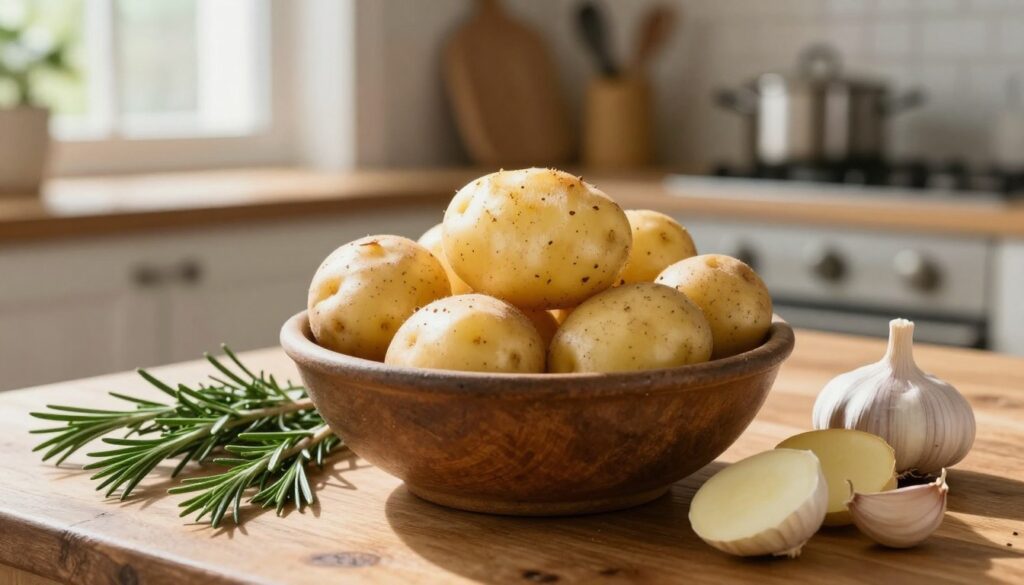
If you skip this step the fat cannot penetrate the skin properly. That means a less crispy finish and a softer exterior.
- Seven minutes is the traditional way to ready the starch layer.
- Cut potatoes into irregular shapes to increase crunchy edges.
- Ensure knife resistance so pieces hold their shape in the oven.
“A short boil is a small time investment that pays off in golden, crunchy results.”
| Step | Timing | Result |
|---|---|---|
| Parboil | 7 minutes | Surface starch ready to crisp |
| Rough up pieces | Immediate | More golden, crunchy edges |
| Roast | As recipe directs | Even browning; fluffy interior |
Preparing Your Ingredients for Maximum Flavour
Good prep makes all the difference to flavour and texture before the dish even hits the oven. A little organisation at the bench saves time and improves the final result.
Using Fresh Rosemary vs Dried
Use fresh rosemary whenever possible. Fresh herbs release volatile oils that lift the taste in a way dried sprigs cannot.
If you only have dried rosemary, use roughly half the amount of fresh. Dried leaves are more concentrated and can feel harsh if overused.
The Benefits of Unpeeled Garlic
Leave the cloves unpeeled. The papery skins protect the flesh from burning while allowing aromatic oils to infuse the oil and coat the cut potatoes.
- For 1.5kg, cut potatoes into large, even chunks so pieces cook uniformly.
- Measure salt and oil before you start; it speeds up the baking stage.
- Use good-quality olive oil to add subtle richness without overpowering the herbs.
- Unpeeled garlic cloves and fresh rosemary give the deepest, most balanced flavour.
Techniques for Achieving the Perfect Crisp
Crisp edges start long before the oven: a short steam-dry and a good toss set the scene.
Steam Drying Your Potatoes
Moisture is the enemy of crispness. After parboiling, leave the potato chunks in a colander for several minutes so steam can escape.
Shake the colander to rough up the surfaces and create rough edges. This helps hot fat cling and form a crunchy crust.
Dry pieces brown faster in the tray, so resist the urge to transfer them while wet.
Safety Tips for Hot Oil
Hot oil can splash when cold food hits it. Always stand back and use oven gloves when adding the potatoes to the preheated pan.
- Wear sturdy gloves and long sleeves when handling a hot tray.
- Use a heavy-duty pan or tray for even heat distribution during roasting.
- Season with salt and a pinch of black pepper before baking to boost flavour.
- Remember that olive oil has a smoke point—choose a suitable fat for high heat.
“Let the pieces dry and roughen; small prep makes all the difference.”
Heating the Oil and Tray
Getting the pan and oil to smoking temperature is the step that defines the finish. Preheat your oven to 190°C (fan-assisted) or 210°C (non-fan) before you do anything with the pan.
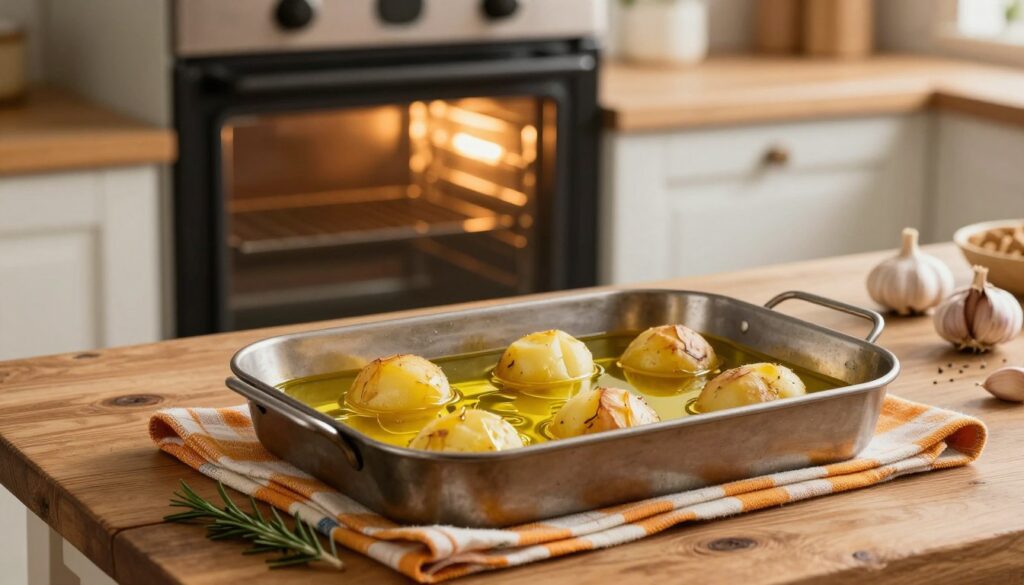
Place 4 tbsp sunflower oil into a roasting tin and slide it into the hot oven. Leave the tray for 5–10 mins until the oil is smoking hot. This warming time ensures the oil can start crisping the surface the moment the pieces hit the metal.
Steam Drying Your Potatoes
Drying is as important as heat. After draining, put the potato pieces in a colander and let steam escape for a few minutes.
Rough the edges by shaking the colander; these rough edges create more surface area for the oil to cling to. Only add the pieces to the smoking tray when the oil is ready, and arrange them in a single layer so they roast rather than steam.
Safety Tips for Hot Oil
Hot oil and moisture do not mix well. Stand back when you add the potato to the pan to avoid splashes.
- Use oven gloves and long sleeves when handling the tray.
- Season with sea salt and black pepper as soon as pieces hit the tray so flavours begin to penetrate.
- Using 4 tbsp of sunflower or olive oil coats the pieces without pooling, giving a golden finish rather than an oily one.
- Wait the full 5–10 mins to heat the tray; that time is crucial for even browning and a crisp crust.
“Careful prep of the oil, tray and pieces protects you and guarantees a crunchy result.”
Cooking and Turning for Golden Results
Even heat and regular turning are the small acts that create a stunning golden finish.
Preheat oven until the tray and oil are very hot. Slide the pan in and add the cut potatoes in a single layer so air circulates freely.
Cook for up to 1 hour, turning every 20 minutes. Use a sturdy spatula and be gentle so the chunks keep their fluffy interior.
After the first turn, season with extra salt and black pepper to taste. This mid-roast seasoning lets you adjust the flavour as the pieces crisp.
In the final 10–15 minutes add 6 garlic cloves and 4 sprigs of fresh rosemary. This timing keeps the herbs from burning while the cloves soften and scent the fat.
- Turn every 20 minutes for uniform colour and crunch.
- Keep the tray in a single layer throughout baking.
- Preheat oven correctly so browning begins immediately.
“Consistent turning is the secret to a perfect, crunchy exterior.”
| Stage | Timing | Key Action |
|---|---|---|
| Initial bake | 0–20 mins | Single layer on hot tray; begin browning |
| Mid roast | 20–40 mins | Turn pieces; season with salt and pepper |
| Final stage | 40–60 mins | Add garlic cloves and fresh rosemary; crisp up |
Serving Suggestions for Your Roast Dinner
Serve these crisp spuds beside a rich stew to balance deep, slow-cooked flavours. The herby aromatics and hot oil coating make them ideal for absorbing sauce while keeping a crunchy edge.
Try to keep the tray warm before transferring. A heated dish helps retain crispness and keeps the pieces at the right temperature for serving.
Pairing with Slow Cooker Stews
These potatoes work wonderfully with Slow Cooker Beef & Ale Stew, Slow Cooker Pork & Mustard Stew and a Slow Cooker Chicken Casserole. The robust meat flavours soak into the outer crust without making the interior soggy.
- Traditional roast chicken: a classic match—crispy contrast to tender, juicy meat.
- Hearty stews: use them to mop up gravies from beef or pork casseroles.
- Casual meals: pair with a chicken casserole for family-friendly comfort food.
- Finish with a light sprinkle of sea salt for a professional touch.
| Serving Situation | Best Match | Why it Works |
|---|---|---|
| Sunday dinner | Roast chicken | Crisp texture contrasts tender meat; holds up to carving juices |
| Comfort meal | Beef & Ale Stew | Starchy surface soaks up rich gravy without falling apart |
| Midweek supper | Chicken Casserole | Quick pairing; adds crunch and herb flavour to a simple dish |
| Casual feast | Pork & Mustard Stew | Pungent sauces cling to the rough edges for extra flavour |
Conclusion
Strong, simple steps bring consistent results. Follow the recipe and your oven will reward you with crisp, golden pieces that stay fluffy inside.
Mastering this method needs care at every stage — choosing the right tuber, a brief parboil and steady heat for the correct minutes. These actions are the secret to a standout side that lifts any meal.
Use the timing and tips here as reliable information. By repeating the technique you will build confidence and serve a dish that guests remember. Enjoy the simplicity and the flavour.
FAQ
How long should I parboil the potato chunks?
Which variety gives the best texture—Maris Piper or King Edward?
Can I use dried rosemary instead of fresh?
Do I need to peel the garlic cloves?
What oil is best for high-heat roasting?
How hot should I preheat the oven and tray?
How often should I turn the potatoes while roasting?
Any tips to keep the pieces from sticking together?
How much garlic and herb should I use for a tray serving four?
Can I prepare these ahead and reheat successfully?
What safety steps should I follow when using hot oil?
Any serving suggestions beyond a classic roast chicken?
How can I achieve extra-crispy edges without more fat?
Roast Potatoes With Garlic And Rosemary
This simple recipe lifts everyday spuds into a memorable side dish. A smart blend of herbs and oil turns a basic oven method into something special.
Ingredients
- 1.5 kg Maris Piper or King Edward potatoes
- 4 tbsp sunflower oil
- 6 unpeeled garlic cloves
- 4 sprigs fresh rosemary
- Sea salt
- Black pepper
Method
- Preheat the oven to 190°C (fan-assisted) or 210°C (non-fan).
- Peel and cut the potatoes into large, even chunks.
- Parboil the potato chunks in boiling water for 7 minutes until slightly tender.
- Drain the potatoes and let them steam dry in a colander for a few minutes.
- Rough up the edges of the potatoes by shaking the colander.
- Heat the sunflower oil in a roasting tin in the oven for 5-10 minutes until smoking hot.
- Carefully add the roughened potato chunks to the hot oil in a single layer.
- Roast the potatoes for 60 minutes, turning every 20 minutes for even browning.
- In the last 10-15 minutes of roasting, add the unpeeled garlic cloves and fresh rosemary to the tray.
- Season with sea salt and black pepper before serving.