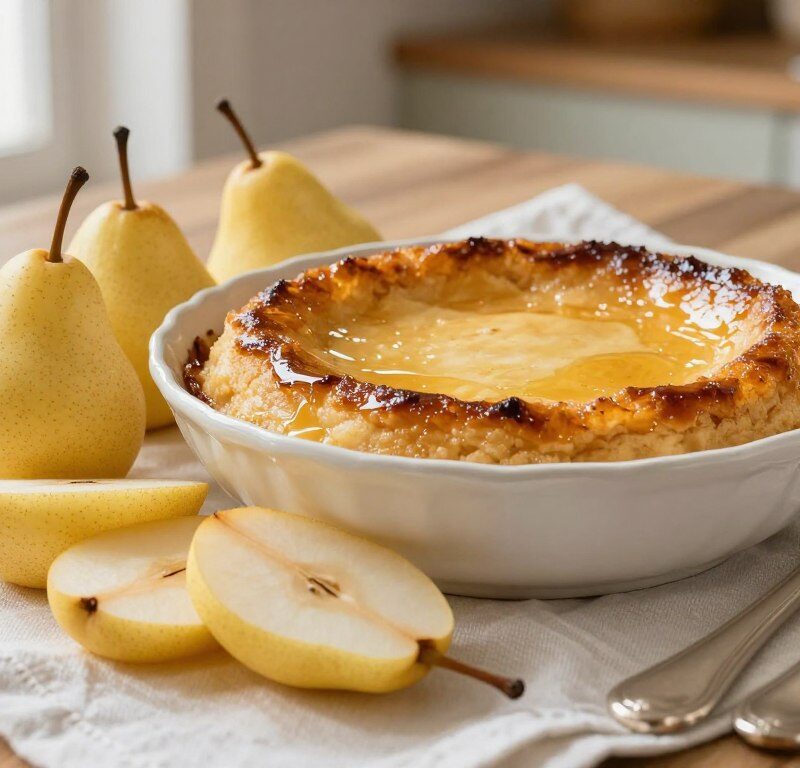
Mary Berry Pear Pudding is a comforting British dessert that combines soft, juicy fruit with a light sponge topping.
This classic recipe suits cosy evenings and relaxed Sunday lunches. It uses fresh pears and simple baking ingredients, so you do not need advanced skills.
Preparation is straightforward. Mix basic ingredients in a bowl, arrange the fruit in an ovenproof dish, and spoon over a sponge batter. The whole cake-like pudding takes about 45 minutes to make for a family of six.
Serve it warm to bring out the natural sweetness of the fruit and the soft sponge. The result feels homely yet professional, ideal for sharing around the table.
Key Takeaways
- Simple to follow: uses basic ingredients and equipment.
- Quick to make: about 45 minutes from start to finish.
- Serve warm: warmth enhances fruit sweetness and sponge texture.
- Family favourite: perfect for cosy meals or casual gatherings.
- Classic British style: straightforward, comforting and reliable.
The Charm of a Classic Mary Berry Pear Pudding
The appeal of this British classic lies in its unpretentious mix of soft fruit and airy cake. Mary Berry shapes the recipe around balance: tender pears that keep their shape, not a mushy mess, and a golden, light sponge that lifts the whole dish.
Much like a traditional sticky toffee pudding, the joy comes from contrasts — a soft fruit base beneath a warm sponge. Some cooks add black treacle or a rich toffee sauce, but the classic keeps the fruit’s gentle sweetness at the centre.
“Ensure the pears stay tender rather than overcooked; texture is the secret to a perfect pudding.”
Serve warm with a light pouring cream or a drizzle of homemade toffee sauce for extra indulgence. This comforting dessert doubles as a simple family cake and a reliably crowd-pleasing finish to any meal.
- Texture first: tender pears, airy sponge.
- Optional extras: treacle or toffee for richness.
- Serve warm: pairs well with cream or sauce.
Essential Ingredients for Your Sponge
A gentle sponge starts with the right balance of pantry staples and measured technique. Gather everything before you begin so the batter comes together quickly and evenly.
Pantry Staples
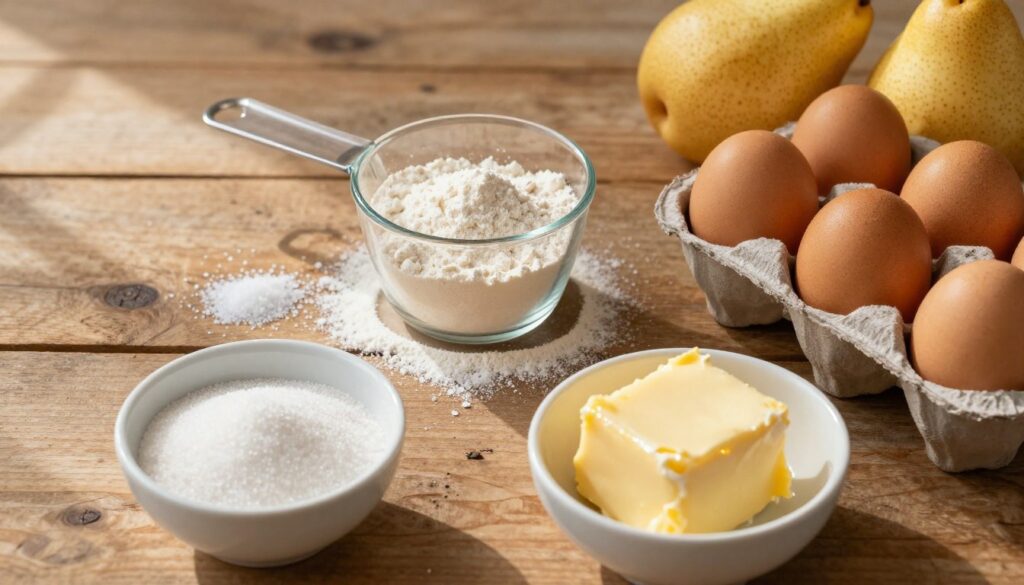
Measure 125g softened unsalted butter and 150g caster sugar. Cream these together first to trap air for a light cake.
Add 125g self-raising flour; or use plain flour with baking powder if needed. Stir in 2 large eggs, 2–3 tbsp milk and 1 tsp vanilla in the bowl.
Selecting the Best Pears
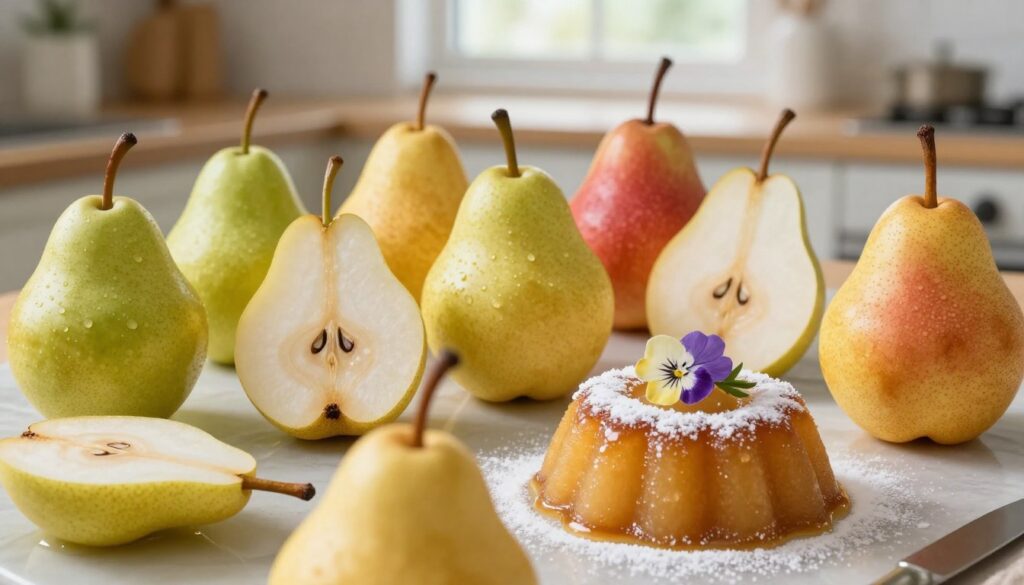
Use 750g ripe but firm pears (Conference or Williams). Firm fruit keeps its shape and gives a neat base for the sponge.
Slice the fruit evenly so the top bakes uniformly. For extra depth, swap a little caster for light muscovado sugar or add a pinch of ground ginger.
| Ingredient | Quantity | Purpose | Tip |
|---|---|---|---|
| Softened unsalted butter | 125g | Structure and moisture | Cream with sugar until pale |
| Caster sugar / muscovado option | 150g / 25-50g | Sweetness and flavour | Use light muscovado for richer taste |
| Self-raising flour | 125g | Lift and crumb | Use plain flour + baking powder if needed |
| Pears (ripe but firm) | 750g | Fruit base | Slice evenly for an even top |
Preparing the Fruit Base
Start by preheating the oven to 180C (160C fan) and lightly grease an ovenproof dish. This step ensures the sponge bakes at a steady temperature and releases easily.
Place the sliced pears into a medium saucepan with 50g of sugar and 2 tbsp water. Gently cook for 5–7 minutes until the fruit is just tender; this prevents them from becoming mushy in the final bake.
Once softened, spoon the fruit evenly into the base of your prepared dish to form a consistent layer. If you plan to add toffee sauce or treacle, allow extra drainage space and use a dish that can cope with added moisture.
Let the fruit cool slightly before adding the sponge batter so the mix does not sink. Always check your oven is at the correct temperature; a steady 180C (160C fan) helps the sponge to rise and brown evenly.
| Step | Action | Timing / Measure |
|---|---|---|
| Preheat and grease | Preheat oven and oil dish | 180C (160C fan) |
| Cook fruit | Sliced pears, sugar and water in saucepan | 50g sugar, 2 tbsp water, 5–7 minutes |
| Assemble base | Spoon evenly into dish and cool | Allow to cool slightly before topping |
Mixing the Perfect Batter
A smooth, airy batter begins at room temperature and with patient creaming—this is where good bakes are made. Using soft butter and sugar in a large bowl traps air and gives a pale, fluffy base for the sponge.
Achieving the Right Consistency
Cream the softened butter and sugar until light. Beat in the eggs one at a time, mixing fully after each addition. This helps the mixture stay emulsified and steady.
Fold in the dry ingredients gently. Use self-raising flour or plain flour plus a little baking powder. Keep movements light so the batter stays airy and not dense.
Add milk, a splash of vanilla and optional lemon zest to reach a thick, spoonable texture. If using light muscovado sugar for extra flavour, ensure it is creamed well to avoid lumps.
- Tip: room-temperature ingredients blend more smoothly.
- Tip: spoon the batter gently over the pears, spreading to the edges without pressing.
Baking Techniques for Golden Results
Controlling the oven gives you a reliable rise and an even, golden top on your sponge. Preheat oven to 180C (160C fan) and keep the temperature steady. This helps the batter set and the fruit underneath to stay moist.
Oven Temperature Control
Maintain 180C (160C fan) throughout the full 30–35 minutes. A steady heat prevents sudden sinking or uneven browning. If the top begins to darken too fast, loosely tent the dish with foil for the last few minutes.
Using the Middle Shelf
Always bake on the middle shelf. This position gives the best air circulation and stops the top from burning while the centre cooks through. Place the dish centrally in the oven for even results.
Testing for Doneness
Insert a skewer into the centre; it should come out clean. The sponge will also spring back when pressed, a sign the structure has set.
- Timing: 30–35 minutes on the middle shelf.
- Tip: while the pudding bakes, use a clean saucepan to cook any sauce so you save time.
- Rest: once baked, let it stand for 5 minutes before serving to allow layers to settle.
For more ideas on warm fruit desserts and sauces, try this related rhubarb crumble recipe for inspiration.
Creative Variations and Flavour Twists
Experimenting with fruit, spice and texture gives you many tasty directions.
For a spiced version, add a pinch of ground ginger or cinnamon to the fruit before you cook it for a warm lift. Try stirring in a tablespoon of black treacle for depth.
Add orange zest to the sponge batter for a bright citrus note. Sprinkle flaked almonds on the top before baking for crunch and colour.
For a lighter take, replace half the butter with Greek yoghurt and swap some white flour for whole-wheat. If you prefer richer, serve with a scoop of vanilla ice cream or cold pouring cream.
Mix a few raspberries or blackberries into the fruit base to add tartness and a pop of colour. Keep variations balanced so the delicate pear flavour still shines.
| Variation | Key change | Effect |
|---|---|---|
| Spiced pear | Pinch ground ginger or cinnamon | Warm, autumnal flavour |
| Citrus lift | Orange zest in sponge | Brightens sweetness |
| Crunch top | Flaked almonds on top | Textural contrast |
| Richer base | Black treacle in fruit | Deep, toffee-like note |
Serving Suggestions for the Ultimate Dessert
A few thoughtful finishes transform a humble bake into a memorable dessert. Serve the warm sponge straight from the oven for the best contrast between soft fruit and a light top.
Pairing with custard and cream: Pour a generous ladle of hot custard over the warm pudding for classic comfort. Cold pouring cream gives a cool, luxurious contrast that guests always appreciate.
Finishes and presentation
If you have made toffee sauce, drizzle it over each portion just before serving to add richness and shine. A light dusting of icing sugar on the sponge lifts the look and adds a hint of sweetness.
- Formal option: turn the bake out of a 1.2 litre basin for a neat presentation.
- Casual serving: spoon straight from the dish — it is equally inviting.
- Storage: keep leftovers in an airtight container in the fridge for up to 2 days and reheat gently in the microwave.
“Whether custard, cream or a warm sauce, always serve while the sponge is still warm — flavour and texture are at their best.”
Avoid freezing — the delicate sponge may change texture when thawed. If you cook a sticky toffee pudding-style sauce or add black treacle to the fruit, keep the sauce separate until serving for maximum gloss and heat control.
Conclusion
Mary Berry‘s classic pear pudding remains a quintessential British dessert that pairs the natural sweetness of fruit with a light, airy sponge. Follow this simple recipe and you will have a warm, cake-like treat in about minutes that feels both homely and special.
Each serving is roughly 300 kcal, so it sits well within traditional home baking expectations. Use firm fruit and handle the batter gently to keep the top light and golden every time.
Serve with custard, cold cream or a drizzle of rich toffee or dark treacle for extra depth. Enjoy sharing this comforting pudding with friends and family this season.
FAQ
What are the essential ingredients for this classic sponge?
Can I substitute self-raising flour with plain flour?
How do I prepare the pears so they don’t turn mushy during baking?
What oven temperature and shelf position give the best results?
How long should I bake the sponge and how do I test for doneness?
Can I make a sticky toffee-style sauce to serve with it?
Are there good flavour variations to try?
How should I store leftovers and can it be reheated?
What are the best serving suggestions?
Can this recipe be made ahead or frozen?
Mary Berry Pear Pudding
A comforting British dessert that combines soft, juicy fruit with a light sponge topping, perfect for cosy evenings and relaxed Sunday lunches.
Ingredients
- 125g softened unsalted butter
- 150g caster sugar (or light muscovado sugar)
- 125g self-raising flour (or plain flour with baking powder)
- 2 large eggs
- 2-3 tbsp milk
- 1 tsp vanilla extract
- 750g ripe but firm pears (Conference or Williams)
- 50g sugar (for cooking pears)
- 2 tbsp water (for cooking pears)
Method
- Preheat the oven to 180C (160C fan) and lightly grease an ovenproof dish.
- Place the sliced pears into a medium saucepan with 50g of sugar and 2 tbsp of water. Gently cook for 5–7 minutes until the fruit is just tender.
- Spoon the cooked pears evenly into the base of your prepared dish and let them cool slightly.
- In a large bowl, cream together the softened butter and caster sugar until light and fluffy.
- Beat in the eggs one at a time, mixing fully after each addition.
- Fold in the self-raising flour gently, then add the milk and vanilla extract to reach a thick, spoonable texture.
- Spoon the batter gently over the pears, spreading it to the edges without pressing.
- Bake in the preheated oven for 30–35 minutes until the sponge is golden and springs back when pressed.
- Let the pudding stand for 5 minutes before serving warm with custard, cream, or a drizzle of toffee sauce.