Mary Berry Mini Dauphinoise Potatoes are rich, creamy and perfectly portioned individual bakes that bring a touch of elegance to any meal. This gentle, fuss-free take on a classic gratin proves that simple techniques can yield stunning results.
The recipe turns humble potatoes into a silky, indulgent side that suits festive dinners and cosy suppers alike. Mary makes easy work of the process, guiding home cooks to consistent texture and a balanced garlic flavour.
Expect smooth layers, golden tops and a dish that impresses without stress. Follow this guide to master individual dauphinoise portions and serve a classic with confidence.
Key Takeaways
- Individual bakes offer an elegant twist on a traditional gratin.
- The method is simple and suited to cooks of all levels.
- Results are creamy with a balanced garlic note.
- A reliable recipe for festive or everyday meals.
- Designed to deliver consistent, professional-looking portions.
Why Mary Berry Mini Dauphinoise Potatoes Are a Dinner Party Essential
Individual baked portions create a refined side that’s effortless to portion and present.
Mini dauphinoise bring elegance with minimal fuss. These compact bakes are ideal for dinner parties and festive meals. They give neat presentation and consistent portions straight from the oven.
The creamy interior and golden top turn humble potatoes into a memorable side. They pair wonderfully with roast lamb, grilled salmon or vegetarian mains. Guests get a restaurant-style small dish without extra work.
“Serve these when you want a reliable, polished side that frees you to enjoy your guests.”
- Individual baking keeps each portion perfectly formed.
- Mary Berry offers recipes that make easy, dependable results.
- Best for supper menus where presentation matters.
| Occasion | Best Pairings | Why it Works |
|---|---|---|
| Festive dinner | Roast lamb, glazed roots | Elegant portions, rich cream texture |
| Casual supper | Grilled salmon, roasted veg | Comforting, easy to plate |
| Dinner party | Beef, vegetarian mains | Polished look, consistent results |
Essential Kitchen Equipment for Perfect Portions
A handful of reliable kitchen items ensures each individual bake holds its shape and charm.
Using Dariole Moulds
Dariole pudding moulds are the star tool for this recipe. These little domed metal dariole pudding shapes give structure and a neat finish.
For consistent results, use eight metal dariole pudding moulds. Grease each mould with melted butter using a pastry brush so the layers release cleanly.
- Eight metal dariole pudding moulds are essential for individual portions.
- Grease moulds thoroughly with a pastry brush and melted butter before adding ingredients.
- High-quality metal dariole pieces help replicate a professional presentation at home.
- These pudding moulds are versatile and useful across many recipes—Mary makes easy work of using them.
“Good moulds make plating and portioning quick and reliable.”
Tip: store and dry your metal dariole carefully to avoid dents. Well-kept moulds give the best results in a busy kitchen.
Selecting the Best Ingredients for Creamy Results
Choosing top-quality produce and dairy is the simple secret to a lusciously creamy bake. Use 750 g of waxy potatoes such as Charlotte or Maris Peer, peeled and ready for very thin slicing.
Choosing the Right Potato Variety
Waxy varieties hold their shape and give a pleasing texture. Slice each potato about 2–3 mm thick so layers cook through evenly and absorb the cream.
The Importance of Double Cream
Double cream is essential for a smooth, rich sauce—use 300 ml to coat the slices and carry the garlic flavour through every layer.
- Optional 50 g grated Gruyère or cheddar adds savoury depth if desired.
- Keep 25 g unsalted butter to grease moulds; this prevents sticking and helps release neat portions.
- Fresh ingredients make the difference: the simple mix of potato, cream and garlic needs quality components.
“Good ingredients do half the work—choose well and the oven will do the rest.”
Preparing Your Potatoes and Garlic Cream
Start by preparing a gentle garlic cream that will soak into every thin slice for an even, savoury finish.
Mix double cream and crushed garlic in a jug and season well with salt and freshly ground black pepper. This is the simplest way to ensure the cream garlic carries flavour through every layer.
Pour the cream into a saucepan and warm it gently. Do not let it boil; keeping the heat low prevents the cream from curdling and preserves a smooth texture.
Grease each buttered dish, then arrange the thinly sliced potatoes neatly so the cream can penetrate every slice. Season each layer lightly with salt and black pepper as you build the dish.
- Tip: press the layers down gently so the cream settles between slices for consistent texture.
- Use a jug to mix the double cream and garlic — it makes pouring even and mess-free.
“Warm the cream slowly and season each layer — small steps give rich, even flavour.”
| Step | Action | Why it Matters |
|---|---|---|
| Mix | Combine double cream and garlic in a jug; season with salt and freshly ground black pepper | Ensures even seasoning and easy pouring |
| Warm | Heat cream gently in a saucepan without boiling | Prevents curdling and keeps sauce silky |
| Layer | Place thin slices in buttered dishes, season each layer and press down | Promotes even cream absorption and uniform texture |
The Art of Layering and Baking
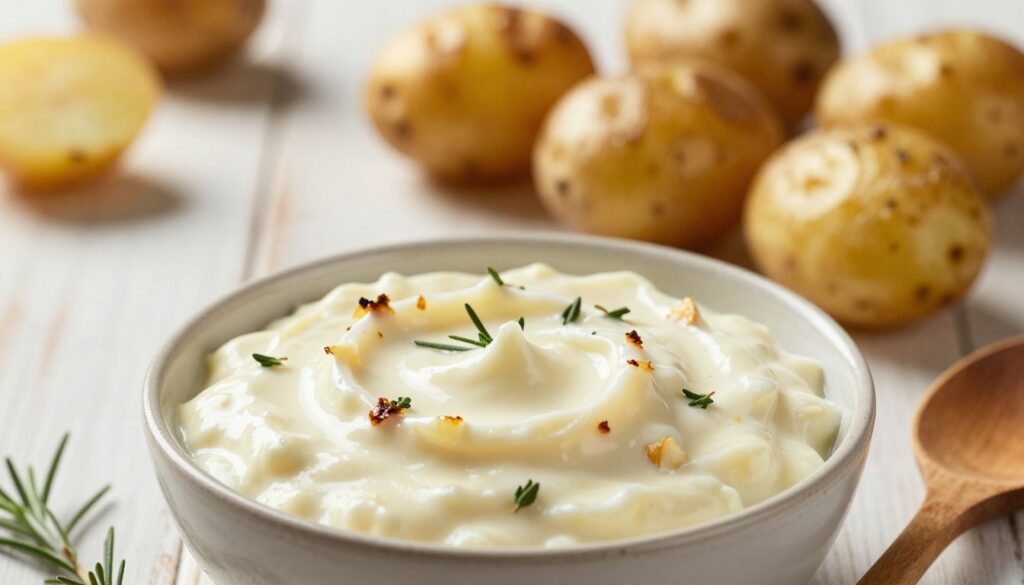
Layering well is the key to a silky interior and a tidy finished dish. Start by placing a small square of baking paper in the base of each pudding mould to help the slices release cleanly.
Achieving Even Layers
Arrange thin slices in overlapping rows so the cream reaches every surface. Season each layer lightly with salt and freshly ground pepper as you build.
Press gently to remove air pockets and ensure the cream spreads evenly between layers. This helps the potato cook through without gaps in texture.
The Role of Foil in Baking
Cover the tops tightly with kitchen foil to trap steam and keep the cream from drying out. Place the sealed moulds on a baking tray before they go into the oven.
Bake at 170°C (150°C fan) for 45–55 minutes until the stacks are tender. The foil creates a steaming effect that softens the layers without over-browning the top.
Adding the Cheese Topping
Remove the foil, sprinkle the remaining cheese over the top and return the dishes to the oven.
Continue baking for a further 15–20 minutes until the top is golden and cheese is bubbling. Leave the moulds minutes bubbling until movement stops so the layers set before turning out.
- Use baking paper squares in each mould base for neat release.
- Seal with foil to steam the cream and tenderise the potato evenly.
- Bake at 170°C (150°C fan) for 45–55 minutes; then add cheese and bake 15–20 minutes.
| Stage | Action | Result |
|---|---|---|
| Layering | Thin slices with cream between layers; season each layer | Even cooking and consistent flavour in every portion |
| Covered baking | Seal moulds with foil; bake at 170°C (150°C fan) for 45–55 minutes | Potato becomes meltingly tender while retaining moisture |
| Finishing | Remove foil, add cheese, bake 15–20 minutes until golden | Golden, bubbling top and set layers for clean turning out |
For a warm, comforting main to pair with these portions, try a classic chicken hotpot with potato topping alongside.
Serving Suggestions for Your Mini Dauphinoise
Place a warm individual bake next to roasted lamb or air-fried salmon to balance richness with crisp sides.
Classic pairings include roast lamb and grilled salmon; the creamy dauphinoise complements rich meats and oily fish alike.
For a lighter supper, serve the mini dauphinoise with steamed greens or a fresh salad to cut through the creaminess.
Vegetarian options work well too — try the dish alongside a nut roast or a mushroom-based main for a satisfying meat-free meal.
“Mary makes easy, elegant dining possible by providing a side that holds its shape and looks professional.”
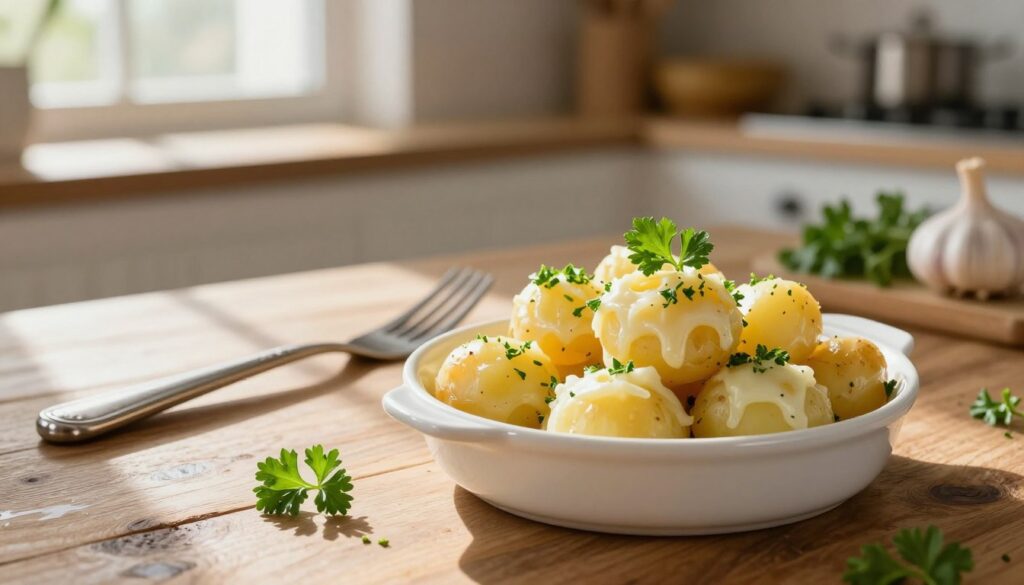
Presentation tip: turn each portion onto a warm plate, garnish with a sprig of thyme and place complementary elements around it for a polished finish.
| Occasion | Best Pairing | Why it Works |
|---|---|---|
| Festive dinner | Roast lamb | Richness of meat echoes the creamy texture |
| Casual supper | Air-fried salmon | Oily fish contrasts the cheese and cream |
| Vegetarian main | Nut roast or mushroom pie | Provides comfort and substance without meat |
Expert Tips for Avoiding Common Pitfalls
A few expert checks during preparation will rescue the bake if things begin to go wrong. These quick adjustments preserve texture and flavour so each individual dish turns out neat and creamy.
Reheating and Storage Advice
Cook up to one hour ahead and keep the portions in the fridge if needed. They are not suitable for freezing; freezing will damage the cream structure and ruin the top.
To avoid firm potatoes, slice very thinly. Thick slices will not cook through in the 45–55 minutes baking time.
- Warm the cream garlic gently; never let it boil or the cream may curdle.
- Store leftovers in the fridge for up to 2 days. Cool fully before covering to avoid condensation on the top.
- Reheat covered in a low oven to maintain texture; avoid long spells in the microwave as heating is uneven.
- For extra flavour, stir a little Dijon mustard or fresh thyme into the cream before baking.
“Reheat slowly and keep covered to retain the silky interior and crisp top.”
Conclusion
Perfectly portioned gratins give you restaurant-quality presentation with home-kitchen ease. Follow the timings and allow the final 15–20 minutes to brown the top for confident results.
These mini dauphinoise make a refined, comforting side that suits both festive menus and weeknight suppers. The recipe shows how thin slicing and the right dariole moulds create neat, creamy servings every time.
Try this as one of your reliable recipes when you want a polished dish that pairs with roasts or seafood. With simple steps and clear minutes, mary berry proves she makes easy cooking accessible and rewarding.
FAQ
What size dariole moulds work best for individual portions?
Can I substitute a different potato variety for creaminess?
Is double cream essential, or can I use single cream?
How should I prepare the garlic for the cream?
What thickness should I slice the potatoes for even cooking?
Do I need to pre-cook the potato slices before layering?
Should I cover the dish with foil while baking?
How much cheese should I add to the top for a golden finish?
Can I prepare the mini dauphinoise in advance for a dinner party?
What’s the best way to reheat leftovers without drying them out?
How long will leftovers keep in the fridge and can they be frozen?
How should I season the layers to avoid a bland result?
Are there good vegetarian or gluten-free variations?
Can I add herbs or other flavourings to the cream?
Mary Berry Mini Dauphinoise Potatoes
Rich, creamy and perfectly portioned individual bakes that bring a touch of elegance to any meal. This gentle, fuss-free take on a classic gratin proves that simple techniques can yield stunning results.
Ingredients
- 750 g waxy potatoes (such as Charlotte or Maris Peer), peeled and thinly sliced
- 300 ml double cream
- 2-3 cloves garlic, crushed
- 25 g unsalted butter, for greasing
- Salt and freshly ground black pepper, to taste
- Optional: 50 g grated Gruyère or cheddar cheese
Method
- Preheat the oven to 170°C (150°C fan).
- Grease eight metal dariole pudding moulds with melted butter.
- In a jug, mix the double cream and crushed garlic, then season with salt and black pepper.
- Pour the cream mixture into a saucepan and warm gently without boiling.
- Layer the thinly sliced potatoes in the greased moulds, seasoning each layer lightly with salt and pepper.
- Press the layers down gently to ensure the cream soaks in evenly.
- Cover the moulds tightly with kitchen foil and place them on a baking tray.
- Bake in the preheated oven for 45-55 minutes until the potatoes are tender.
- Remove the foil, sprinkle the cheese on top if using, and return to the oven for an additional 15-20 minutes until the top is golden and bubbling.
- Allow to cool slightly before turning out onto warm plates.