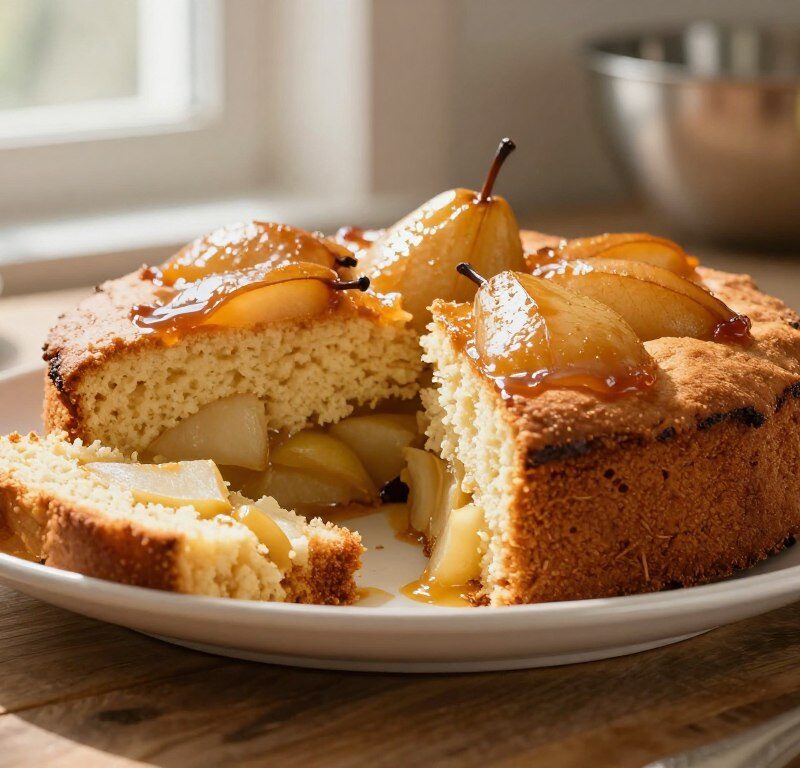
Discover a simple, classic British pudding that pairs soft, glossy fruit with a light, buttery sponge. This warming recipe uses 3–4 medium pears and a 20–22 cm round tin to create the ideal depth for the caramelised topping.
The method is forgiving, making it perfect for afternoon tea or a relaxed family gathering. Preheat the oven to 180°C (160°C fan) so the sponge rises evenly and gains a golden finish.
The technique highlights the seasonal sweetness of the fruit without making it overly syrupy. With straightforward steps you get a moist, easy-to-slice bake that looks impressive with minimal decoration.
Key Takeaways
- Uses 3–4 medium pears and a 20–22 cm tin for best texture.
- Preheat the oven to 180°C (160°C fan) for even rise and colour.
- Simple method yields a light sponge and glossy fruit topping.
- Ideal for afternoon tea or casual family occasions.
- Reliable recipe that slices and serves easily every time.
The Appeal of a Classic Mary Berry Pear Upside Down Cake
The charm comes from contrast. A light, buttery sponge meets tender, caramelised fruit. The textures play off one another for a comforting finish.
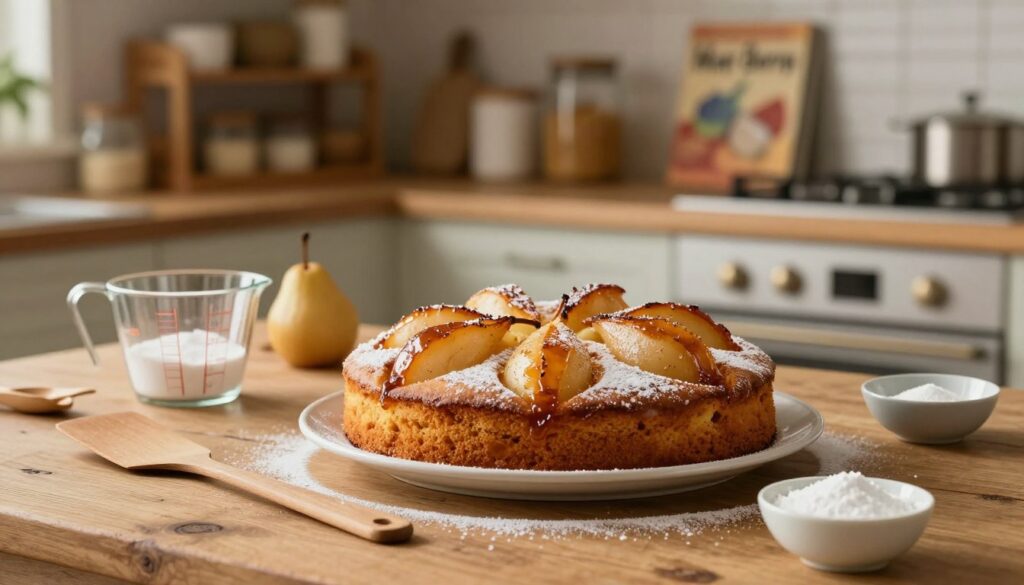
When you invert the tin, the caramelised base becomes the glossy top. This creates a stunning presentation that needs no extra icing.
Mary Berry’s technique keeps the pear slices naturally sweet and soft. This preserves fresh flavour while giving the bake a reliably moist texture.
The caramel layer adds deep, rich sweetness that balances the airy sponge. By arranging the pears at the base, each slice shows a fruit-forward design once turned out.
| Feature | What to expect | Benefit |
|---|---|---|
| Fruit placement | Pears arranged on the base | Even, decorative slices on the top |
| Caramel layer | Golden, slightly sticky coating | Rich flavour and glossy finish |
| Sponge balance | Light and moist | Easy slicing and pleasant mouthfeel |
| Serving | Warm or room temperature | Versatile for tea or dessert |
Essential Ingredients for Your Bake
Gathering the right ingredients makes the difference between a good bake and a great one. Measure carefully and use fresh produce for the best results.
Dry Ingredients
Key dry items: 150g self-raising flour and 1 teaspoon baking powder form the sponge’s structure. Add 150g caster sugar for the creamed mixture that gives lift and sweetness.
Wet Ingredients
The wet mix needs 150g softened unsalted butter, 3 large eggs, 2 tablespoons milk and 1 teaspoon vanilla extract. Soft butter is vital for proper creaming in this mary berry method.
| Component | Amount | Purpose |
|---|---|---|
| Self-raising flour | 150g | Structure and light crumb |
| Baking powder | 1 tsp | Extra lift |
| Caster sugar | 150g | Sweetness and aeration |
| Butter (softened) | 150g | Creaming for a light sponge |
| Eggs | 3 large | Bind and add richness |
| Brown sugar & pears | 75g + 3–4 pears | Caramel base and topping |
Tip: Always weigh ingredients with a kitchen scale and ensure butter is at room temperature for an even batter.
Preparing the Perfect Caramelised Pear Base
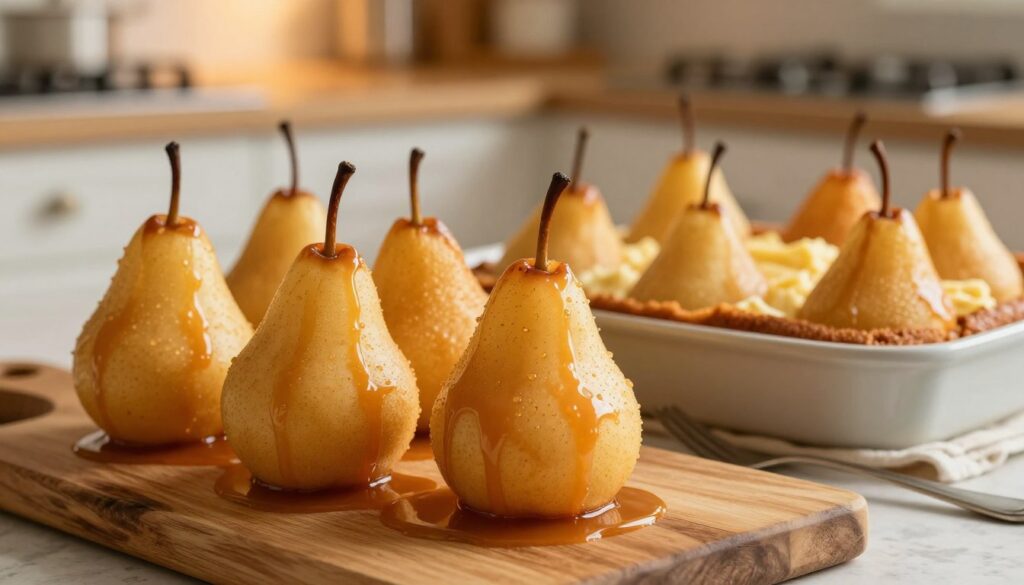
A smooth, golden caramel transforms plain fruit into a show-stopping topping. Begin by preheating the oven to 180°C (160°C fan) and greasing a 20–22 cm round tin with extra butter.
Layer the base: Sprinkle 75g soft light brown sugar evenly over the tin and dot with small pieces of butter. Neatly arrange the pear slices in a circular pattern over the sugar so each slice shows when the cake is turned out.
Make the caramel: Melt the sugar and butter in a pan over low heat. Stir only once the sugar has fully melted, then let the mixture turn a clear, golden brown.
“A touch of lemon brightens the caramel and keeps the fruit flavour fresh.”
Remove the pan from the heat and stir in a teaspoon of lemon juice. Allow the caramel to cool for 15–20 minutes so it thickens slightly and coats the back of a spoon.
Pour the cooled caramel over the arranged pear slices in the tin. Always place a baking tray on the bottom of the oven to catch any drips during baking.
Quick reference
| Step | Action | Reason |
|---|---|---|
| Preheat | Oven 180C / 160 fan | Ensures even rise and colour |
| Prepare tin | Grease with butter; add 75g sugar | Creates caramel base and prevents sticking |
| Arrange fruit | Pear slices in neat circles | Decorative, even distribution |
| Make caramel | Melt sugar & butter in pan; add lemon | Glossy, balanced topping |
Mastering the Sponge Batter
Begin in a large bowl by beating 150g of softened butter with 150g of caster sugar until the mix is pale, light and fluffy. This creaming step is the essential step that traps air for a fine sponge.
Add the 3 large eggs one at a time, beating well after each addition to keep the batter stable. If the mixture looks curdled, a spoonful of flour helps to bind it back.
Sift 150g of self-raising flour and 1 teaspoon of baking powder then gently fold them into the batter. Be careful not to overmix; folding preserves the air you worked to create.
Stir in 2 tablespoons of milk and 1 teaspoon of vanilla to loosen the batter to a spoonable consistency. Use a palette knife to spoon the batter evenly over the arranged pears in the tin, levelling the surface so the sponge rises uniformly.
“Thorough creaming of butter and sugar gives the light, airy crumb characteristic of this classic recipe.”
| Action | Amount | Why it matters |
|---|---|---|
| Cream butter & sugar | 150g + 150g | Incorporates air for lift |
| Add eggs one at a time | 3 large | Maintains batter stability |
| Sift and fold flour & powder | 150g + 1 tsp | Prevents lumps and keeps sponge light |
| Loosen batter | 2 tbsp milk + 1 tsp vanilla | Gives spoonable texture for even spread |
Baking and Turning Out Your Cake
Maintain steady heat and a watchful eye so the sponge turns golden while the caramel stays glossy.
Oven temperature settings
Preheat oven to 180C (160 fan) and position the tin on the middle shelf. Bake for 40–45 minutes until the top is golden and the sponge feels firm to the touch.
Always use oven gloves when handling the hot tin. The sugar and caramel will be extremely hot immediately after baking.
Testing for doneness
Insert a skewer into the centre of the sponge. If it comes clean, the cake is ready. A clean skewer plus a golden colour are your best cues.
Remove the tin and leave it to stand for 5 minutes. Run a palette knife around the edges before inverting.
“Turn the tin onto a plate while still warm to prevent the caramel and pear slices from sticking to the base.”
- If left too long, the caramel may harden and stick.
- Turn out carefully onto a serving plate while warm.
- Allow to cool slightly before slicing and serving.
Troubleshooting Common Baking Issues
A few easy checks while you bake prevent problems with the sponge and the glossy topping.
If the cake sticks to the tin: grease thoroughly and line the base with baking parchment before you arrange the pear slices. Turn the tin out while still warm so the caramelised base releases cleanly.
Dense sponge? Overmixing when you fold in the flour and baking powder causes a heavy crumb. Fold gently by hand and stop as soon as the streaks disappear.
Firm fruit after baking: choose riper fruit next time so they soften in the 40–45 minutes of cooking. Neat arrangement in the pan also helps the topping colour evenly.
Too sweet? Reduce caster sugar by 25g to balance richness without losing texture. Always test the sponge with a skewer in the centre — not the fruit — to check doneness.
“Add the eggs one time each, beating well to keep the butter sugar emulsion stable.”
For alternative ideas and variations, see the pineapple version for inspiration.
Creative Variations to Try
Experimenting with spices, nuts or alternative ingredients adds personality while keeping the bake reliable.
Spiced Additions
Add a pinch of cinnamon or nutmeg to the sponge for warming notes that match the fruit.
For a citrus lift, stir in a teaspoon of lemon zest to brighten the flavour.
These small touches change the aroma without altering the core technique of the recipe.
Nutty Textures
Sprinkle chopped almonds or walnuts under the fruit before you pour in the batter to add crunch.
To deepen flavour, replace some caster sugar with honey in the caramel base for a richer top.
A light toast of the nuts beforehand enhances their aroma and keeps the texture crisp after baking.
Dietary Swaps
For a lighter version, replace part of the butter with Greek yoghurt; this keeps the crumb moist but reduces fat.
Use a high-quality gluten-free self-raising flour blend if needed and fold gently as normal.
If vanilla is missing, a drop of almond essence pairs beautifully with the fruit and nuts.
Serving Suggestions for Afternoon Tea
Serve each slice warm to let the caramel perfume the room and soften the fruit for a perfect teatime treat. Offer a generous dollop of whipped cream or a scoop of vanilla ice cream to balance the sweet topping.
For a more refined touch, place individual slices on a decorative plate and dust lightly with icing sugar. A side of warm vanilla custard is comforting, especially on a cold afternoon.
If you prefer a tangy contrast, serve with Greek yoghurt instead of cream. Fresh berries add colour and a tart note that pairs well with the caramelised fruit.
“Serve while slightly warm to enhance the aroma and keep the fruit tender.”
Use a sharp knife to cut even portions and present them neatly. After turning the bake out, wash and dry the cake tin promptly so the tin is ready for your next bake.
| Serving | Best pair | When to use |
|---|---|---|
| Warm slice | Whipped cream | Classic afternoon tea |
| Warm slice | Vanilla custard | Cold days, comforting dessert |
| Room temperature | Greek yoghurt & berries | Light, tangy option |
Storage and Reheating Advice
Good storage and gentle reheating preserve the light crumb and caramel finish of this classic bake. Follow simple steps so the topping stays glossy and the sponge remains soft.
Short-term storage: Keep the cake at room temperature in an airtight container for up to two days. This keeps the sponge soft and stops the sugar layer from hardening.
Longer storage: Refrigerate for up to four days, but bring to room temperature before serving. Do not seal the tin or container while the bake is still warm, as condensation will make the sponge soggy.
Best Methods for Reheating
Warm individual slices in the microwave for 20–30 seconds. This is a quick method for single servings.
For a gentler finish, reheat in a low oven at 160°C (160°C fan) for about 10 minutes. Use oven gloves and check after a few minutes to avoid drying out the sponge.
Freezing: Wrap leftovers well in plastic wrap and foil and freeze for up to two months. Thaw slices at room temperature before using your preferred reheating method.
“Avoid overheating — rapid, high heat will dry the sponge and dull the caramel.”
- Tip: Reheat only what you will eat; repeated reheating shortens quality and texture.
- Tip: Allow standing time after reheating so the flavours settle before serving.
Conclusion
A balanced caramel top and light crumb make this recipe an approachable favourite for weekend baking.
Follow the steps and the fruit in the base will stay tender while the sponge stays moist. Test the centre with a skewer — when it comes clean your cake is done.
This recipe uses simple pantry staples such as flour and butter, with a touch of lemon to lift the flavour. The caramelised top gives a glossy finish that highlights the pears and other fruit.
Enjoy serving warm slices with cream or custard. Try this Mary Berry recipe for a reliable, impressive bake that family and guests will love.
FAQ
What type of tin is best for an upside-down cake?
What heat setting should I use for a fan oven?
How do I make a reliable caramel base without it going grainy?
Can I use self-raising flour or should I add baking powder?
How do I test the cake for doneness?
How long should the cake cool before turning out?
What pears work best for this recipe?
Can I add spices or nuts to the recipe?
Is it possible to make this cake egg-free or dairy-free?
How should I store leftovers and reheat slices?
Can I prepare parts of the cake ahead of time?
Why did my caramel sink into the sponge or become too runny?
How can I prevent the fruit from burning while baking?
Mary Berry Pear Upside Down Cake
A simple, classic British pudding that pairs soft, glossy fruit with a light, buttery sponge. This warming recipe is perfect for afternoon tea or a relaxed family gathering.
Ingredients
- 150g self-raising flour
- 1 teaspoon baking powder
- 150g caster sugar
- 150g softened unsalted butter
- 3 large eggs
- 2 tablespoons milk
- 1 teaspoon vanilla extract
- 75g soft light brown sugar
- 3–4 medium pears
- 1 teaspoon lemon juice
Method
- Preheat the oven to 180°C (160°C fan) and grease a 20–22 cm round tin with butter.
- Sprinkle 75g soft light brown sugar evenly over the tin and dot with small pieces of butter.
- Arrange the pear slices in a circular pattern over the sugar.
- Melt the sugar and butter in a pan over low heat until it turns a clear, golden brown, then stir in the lemon juice and allow to cool slightly.
- Pour the cooled caramel over the arranged pear slices in the tin.
- In a large bowl, beat 150g softened butter with 150g caster sugar until pale and fluffy.
- Add the eggs one at a time, beating well after each addition.
- Sift in 150g self-raising flour and 1 teaspoon baking powder, then gently fold into the batter.
- Stir in 2 tablespoons of milk and 1 teaspoon of vanilla extract to loosen the batter.
- Spoon the batter evenly over the arranged pears in the tin and level the surface.
- Bake for 40–45 minutes until the top is golden and the sponge feels firm to the touch.
- Let the cake stand for 5 minutes, then run a palette knife around the edges and invert onto a serving plate.