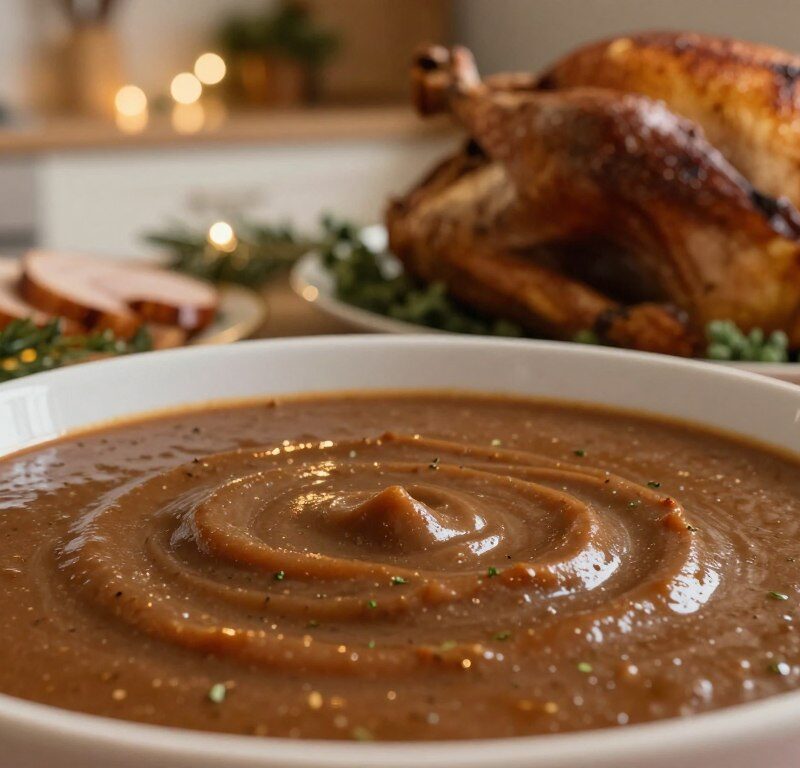
Make your roast turkey and roast potatoes sing with a classic, show-stopping sauce. This short guide shows how to prepare a rich, savoury gravy that lifts the whole meal.
Simple techniques and clear steps will help you match the quality of top BBC Food recipes and more advanced recipe collections.
Whether you serve turkey alongside salmon, lamb or seasonal vegetables, this sauce brings all the flavours together. Follow straightforward tips to get silky texture and deep taste that suits potatoes and every roast dish.
Key Takeaways
- One clear method helps you make dependable, flavourful gravy every time.
- Use pan juices from the roast turkey for best depth of flavour.
- Simple seasoning and careful reduction create a smooth texture.
- The recipe pairs well with roast potatoes, vegetables and alternative mains like lamb or salmon.
- Follow basic steps and you’ll achieve consistent, professional results.
Essential Ingredients for Mary Berry Christmas Gravy
A handful of well-chosen ingredients form the backbone of any reliable turkey gravy. Gather your roasting tin juices and spoon off 2 tbsp of fat before you start. This gives a clean, rich base.
Use a good quality stock — chicken or turkey stock works best. Mix it with the pan juices to deepen the flavour. When you add flour, cook it for 1 minute to remove the raw taste.
Prepare the onion and redcurrant jelly the day before to save time on the big day. Keep salt and freshly ground black pepper to hand for seasoning.
- Collect juices from the roasting tin and remove excess fat (2 tbsp).
- Use chicken or turkey stock for a full flavour profile.
- Cook flour briefly (1 minute) before adding stock and juices.
- Add a spoon of redcurrant jelly for depth — it lifts colour and taste.
- This base suits roast turkey, salmon or lamb and lets you simmer minutes while you finish other dishes.
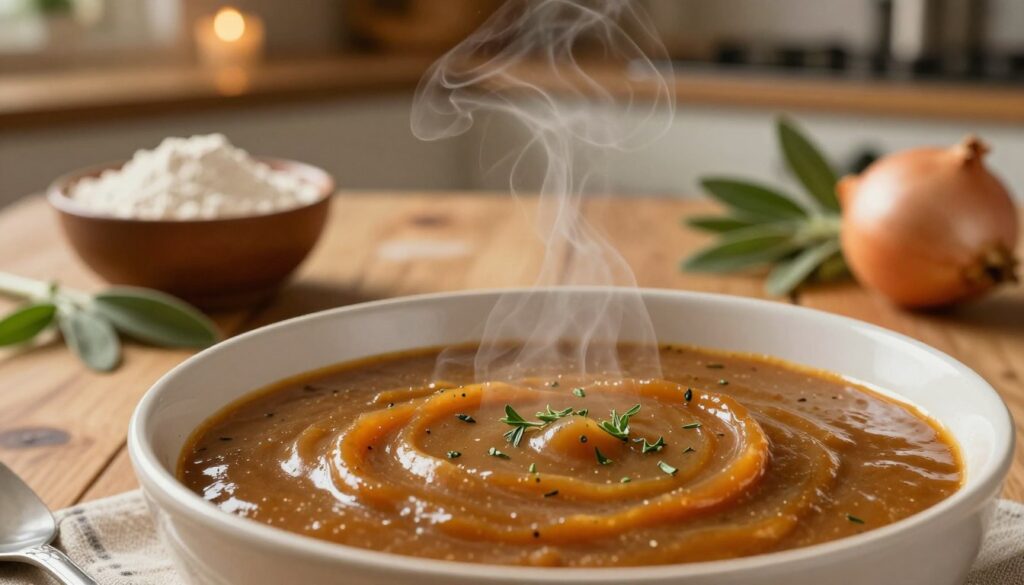
Preparing the Perfect Base from Roasting Tin Juices
Start by focusing on the roasting tin — it holds the browned bits and juices that make a sauce sing. Use a sturdy roasting tin that can sit on the hob so you can scrape up every caramelised scrap. If the tin won’t fit, transfer the sediment and juices into a saucepan to avoid losing flavour.
Selecting the right stock
Good stock lifts the whole sauce. If you have time, use homemade turkey stock made from the giblets. If not, a high‑quality chicken stock cube will do the job.
Combine the stock with the turkey juices and simmer gently. Add 1 tbsp of flour to the tin or saucepan and stir to thicken. This creates a rich texture that pairs well with roast potatoes and vegetables.
Resting the turkey
Rest the roast turkey for at least 20 minutes on a board. This lets the meat reabsorb juices and keeps the roasting tin full of flavour for your sauce.
Once the sauce is ready, strain it into a warmed jug to hold the temperature until serving. This simple care in the prep stage makes it easier to make gravy that complements salmon, lamb or any roast.
Techniques for Achieving the Ideal Consistency
Control of heat and a few simple fixes will restore a sauce to its ideal, pourable state. Keep the saucepan on a low heat and work calmly: small changes matter more than big ones.
If lumps form, act quickly. Pour the sauce through a fine sieve into a clean saucepan to remove bits and regain a professional texture. A hand-held blender also works well if the sieve alone does not smooth the sauce.
To thicken, mix 1 tsp of cornflour with a little cold water and stir it in before you bring the mixture to the boil. Always bring the sauce to the boil so the starch cooks and the gravy sets correctly.
Fixing lumpy gravy
- For a gentler thickener, knead 2 tsp plain flour with 2 tsp butter to make a beurre manié, then whisk in small pieces until the desired texture is reached.
- If the sauce becomes too thick, add extra chicken or turkey stock, or a splash of water, and simmer minutes while checking the consistency.
- Keep a spoon of pan juices or stock to hand; they help adjust mouthfeel without diluting flavour.
Final tip: Maintain a gentle heat and taste as you go. This approach ensures the sauce suits turkey, salmon or lamb and complements roast potatoes and vegetables.
| Problem | Quick fix | When to use |
|---|---|---|
| Lumpy sauce | Pour through a fine sieve; use hand-held blender | Immediately after lumps appear |
| Too thin | Mix 1 tsp cornflour with cold water, add and bring to the boil | After reducing for a few minutes |
| Too thick | Add chicken/turkey stock or water; simmer minutes | Before serving to reach pouring consistency |
| Needs shine and body | Add beurre manié (2 tsp plain flour + 2 tsp butter) | When sauce lacks mouthfeel |
Tips for Enhancing Flavour and Colour
Subtle boosts of flavour and colour after reducing the sauce give it real personality. These finishing touches turn basic pan juices into a sauce that complements roast turkey, salmon or lamb.
Adding depth with wine and jelly
A splash of wine or a spoonful of redcurrant jelly brightens the taste and deepens colour. Add wine once the stock has reduced and simmer for a few minutes to burn off the alcohol. Jelly gives sweetness and sheen without extra cooking time.
Using natural browning agents
For a richer hue, stir in a few drops of dark soy, gravy browning or a teaspoon of yeast extract. These small additions improve appearance and umami without masking the roast flavour captured from the roasting tin.
Frying onions for richness
Fry a sliced onion in butter until golden before adding stock. This layer of caramelised onion adds sweetness and body to the saucepan mixture. If you make the sauce the day before, strain through a fine sieve and reheat gently over low heat.
Conclusion
A silky, well-seasoned sauce will lift every slice from your roast to the plate, giving your meal a professional finish.
Mastering this christmas turkey gravy ensures your roast turkey is served with a rich, confident sauce. Store homemade gravy in the fridge for up to 2 days or freeze for 3 months in a lidded container.
Reheat until piping hot over gentle heat, adding a splash of water or stock to restore texture. This versatile sauce suits salmon, lamb, roast potatoes and all seasonal vegetables.
Follow these steps and techniques to rival the best recipes on BBC Food. For another comforting dish that pairs well with potatoes and vegetables, try the chicken hotpot with potato topping.
FAQ
How do I make gravy from the roasting tin juices?
Which stock should I use for the best-tasting gravy?
How long should I simmer the gravy?
My gravy is lumpy — how can I fix it?
Can I use plain flour instead of cornflour?
When should I rest the turkey before making gravy?
How can I enhance the colour and depth of the gravy?
Is it OK to use the meat juices from a chicken or lamb roast?
Any tips for preventing a bland gravy?
Can I prepare gravy in advance and reheat it?
Mary Berry Christmas Gravy
A classic, show-stopping sauce that enhances your roast turkey and potatoes with rich, savory flavors.
Ingredients
- Pan juices from roast turkey
- 2 tbsp fat from roasting tin
- Chicken or turkey stock
- 1 tbsp flour
- 1 spoon redcurrant jelly
- Salt
- Freshly ground black pepper
- 1 onion (optional)
- Splash of wine (optional)
- Dark soy sauce or gravy browning (optional)
Method
- Collect juices from the roasting tin and remove excess fat (2 tbsp).
- Use chicken or turkey stock for a full flavor profile.
- Cook flour in the roasting tin or saucepan for 1 minute to remove the raw taste.
- Combine the stock with the turkey juices and simmer gently.
- Add a spoon of redcurrant jelly for depth and flavor.
- If using, fry a sliced onion in butter until golden before adding stock.
- Strain the sauce into a warmed jug to hold temperature until serving.
- To fix lumpy gravy, pour through a fine sieve or use a hand-held blender.
- To thicken, mix 1 tsp of cornflour with cold water and stir in before boiling.
- For a gentler thickener, knead 2 tsp plain flour with 2 tsp butter to make a beurre manié.
- Taste and adjust seasoning as needed.